

The cost of therapy can feel like one more problem to solve when you are already carrying anxiety, grief, relationship stress, or burnout. Therapy financial assistance is not a single program or a one-size-fits-all solution. It is a group of options that can make care more manageable, depending on your income, insurance, location, and the type of support you need.
You do not have to wait until your budget is perfect to start looking. Many therapists and mental health organizations expect cost to be part of the conversation. Asking about price is not awkward or selfish. It is a practical step toward finding care you can continue using.
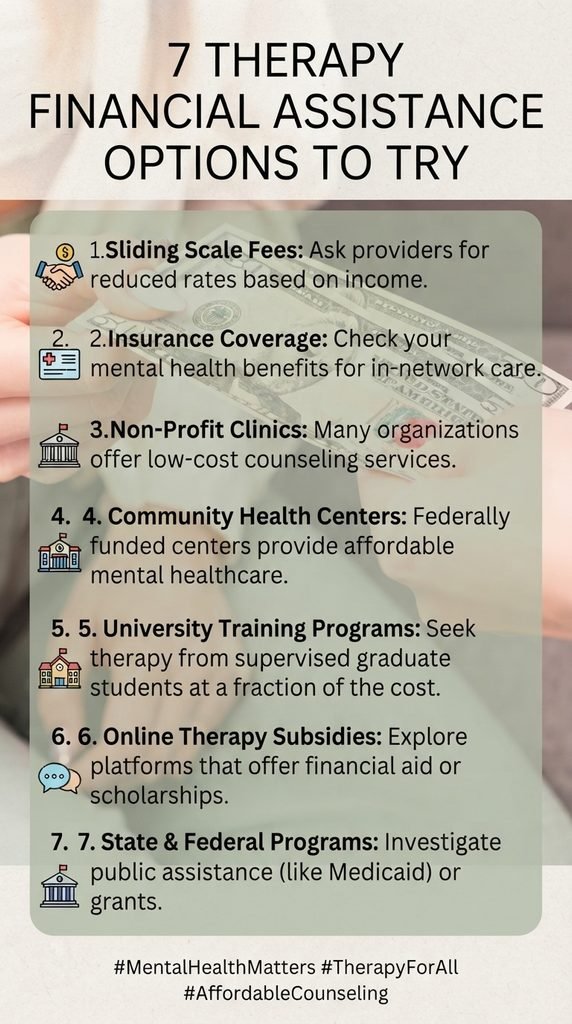
1. Start with your health insurance benefits
If you have health insurance, begin by reviewing your behavioral health or mental health benefits. Some plans cover therapy through a separate network or require you to use a specific virtual care provider. Others cover out-of-network therapy after you meet a deductible.
Call the number on the back of your insurance card and ask direct questions: What is my copay for outpatient psychotherapy? Do I have a deductible to meet first? Do I need a referral or prior authorization? Is telehealth covered? Can I submit receipts for an out-of-network provider?
The answers can make a meaningful difference. A plan with a low copay may be the most affordable route, but an in-network list is only helpful if providers are accepting new clients and are a good fit. If your preferred therapist is out of network, ask whether they can provide a superbill, which is an itemized receipt you may submit to your insurer for possible reimbursement.
2. Ask therapists about sliding-scale fees
A sliding scale means a therapist adjusts their session fee based on financial circumstances, often income, household size, employment status, or significant expenses. Not every provider offers one, and available spots may be limited, but it is always reasonable to ask.
Be clear about what you can realistically afford per session. You do not need to share every detail of your finances. A simple statement such as, “My budget is closer to $60 per session. Do you have a sliding-scale opening or a lower-fee referral?” gives the therapist useful information.
There can be trade-offs. A reduced rate may involve a waitlist, less flexible appointment times, or a limited number of sessions at that price. Still, a transparent conversation can help you avoid starting with a fee that becomes unsustainable after a few weeks.
3. Check employee assistance programs
Many employers offer an Employee Assistance Program, often called an EAP. These programs may include a set number of free short-term counseling sessions for employees, and sometimes for household members. They can also help with referrals for ongoing therapy, financial stress, caregiving concerns, or substance use support.
EAP counseling is typically designed for immediate, short-term support. That can be especially helpful if you need someone to talk to now or want help clarifying what kind of therapist to seek. If you need long-term therapy, use those initial sessions to discuss a care plan and affordable next steps.
Privacy concerns are common. In most cases, your employer receives general usage information, not the details of what you discuss in counseling. Ask the EAP directly how confidentiality works before you enroll so you understand the boundaries.
4. Look into community mental health resources
Community mental health centers, nonprofit counseling organizations, university training clinics, and local support agencies can provide lower-cost care. Some offer services based on income, while others receive public funding that helps reduce client fees.
University clinics can be a strong option when they are supervised well. Graduate interns or doctoral trainees may provide therapy under the guidance of licensed clinicians. This often makes sessions more affordable, though availability and the length of care may vary with the academic calendar.
You may also find specialized programs for veterans, survivors of violence, caregivers, LGBTQ+ clients, college students, or people managing specific health conditions. Specialized programs can be valuable because they understand the practical realities around a particular life experience. They may also have eligibility requirements, so check those before relying on a program for ongoing care.
5. Consider federally supported and public coverage options
Medicaid provides mental health coverage for eligible individuals and families, though eligibility rules and available providers differ by state. If you think you may qualify, it is worth applying even if you are unsure. A change in employment, income, family status, or disability status can affect eligibility.
Medicare may also cover outpatient mental health services for eligible adults, including therapy from certain qualified providers. If you receive Medicare, confirm that a therapist accepts your specific plan and ask about any coinsurance or deductible responsibilities.
For people without insurance, state and county behavioral health departments may offer assessments, referrals, crisis services, or reduced-cost treatment. These systems can sometimes involve paperwork and wait times, but they remain an essential source of therapy financial assistance when private care is outside your budget.
6. Use a flexible spending account or health savings account
If your employer offers a Flexible Spending Account, or FSA, you may be able to use pre-tax funds for eligible therapy expenses. A Health Savings Account, or HSA, can serve a similar purpose for people enrolled in qualifying high-deductible health plans.
This does not lower the therapist’s stated fee, but it can lower the effective cost by allowing you to pay with money set aside before taxes. Confirm with your plan administrator that your therapy expense is eligible and keep any documentation you need for reimbursement.
These accounts work best when you plan ahead. FSA funds may have annual rules about carryovers or deadlines, while HSA funds generally remain in the account. If therapy is something you expect to continue, including it in benefits planning can make monthly costs less surprising.
7. Find care that fits both your needs and your budget
The lowest session price is not always the best value if the therapist is unavailable, lacks experience with your concerns, or does not feel like a safe fit. At the same time, the most expensive option is not automatically better. Consistency, trust, clinical qualifications, and a sustainable payment plan matter more than a price tag alone.
Online therapy can expand your choices by helping you connect with qualified providers beyond your immediate neighborhood, as long as they are licensed to work with clients in your state. It may also make scheduling easier when transportation, caregiving, disability, or work hours create barriers to in-person appointments.
A matching platform such as TheraConnect can help you begin with factors that matter to you, including your preferences, concerns, availability, and budget. Before booking, ask about the full session rate, insurance participation, sliding-scale availability, cancellation policies, and whether the provider offers a brief consultation. Clear information upfront makes it easier to choose confidently.
How to talk about cost without losing momentum
Money can feel personal, especially when you are seeking support during a difficult season. But therapists routinely discuss fees, insurance, and payment arrangements. You can send a short message before a consultation or bring it up during the first call.
Try asking: “What would I pay per session after insurance?” “Do you have any reduced-fee appointments available?” “If your rate is outside my budget, can you recommend another provider or program?” These questions protect your time and help prevent a stressful surprise after care has begun.
If a therapist cannot lower their fee, that does not mean the conversation was a failure. They may know of colleagues with openings, group therapy programs, training clinics, or local funds that are not easy to find on your own. A good provider will treat affordability as a real part of access to care.
A note on lower-cost alternatives
Group therapy is often less expensive than individual sessions and can be highly effective for concerns such as anxiety, grief, relationship patterns, trauma recovery, or substance use. The group format is not right for everyone, particularly if privacy or individual attention is your main need, but it is worth considering.
Support groups and peer-led communities can also reduce isolation. They are not a replacement for clinical therapy when you need diagnosis, treatment planning, or help with serious symptoms, but they can complement professional care. Ask about the group’s facilitator, confidentiality expectations, and whether it is intended as support, education, or treatment.
If you are in immediate danger, thinking about harming yourself, or unable to stay safe, contact 988 in the United States for the Suicide & Crisis Lifeline, call 911, or go to the nearest emergency room. Financial concerns should never keep you from seeking urgent help.
Finding affordable therapy may take a few calls, a benefits check, or time on a waitlist. That effort is not a reflection of how deserving you are of support. Start with the option that is available to you now, ask honest questions about cost, and give yourself permission to keep looking until care feels both helpful and possible to maintain.
Your Expertise Deserves to Be Found.
People are searching for support. Make it easier for them to discover you.
Leave a Reply