
Narcissim

  • Does Online Therapy Really Work?

    Does Online Therapy Really Work?

    A lot of people ask this question right before they book their first session. Not because they do not want help, but because they are trying to avoid wasting time, money, and emotional energy on something that feels less personal than sitting in a therapist’s office.

    That hesitation makes sense. Therapy is personal. If you are going to open up about anxiety, depression, stress, grief, trauma, or relationship problems, you want to know the format can actually support real progress.

    The short answer is yes – online therapy really can work. For many people, it works very well. But like most mental health care, the fuller answer depends on your needs, your therapist, and the kind of support you are looking for.

    Does online therapy really work for most people?

    For many common mental health concerns, online therapy can be just as effective as in-person therapy. Research over the past several years has shown strong results for issues like anxiety, depression, stress, and some trauma-related symptoms, especially when therapy is provided by a licensed, qualified professional using evidence-based approaches.

    What often surprises people is that the screen itself is not usually the deciding factor. The quality of the therapeutic relationship matters more. If you feel heard, understood, and appropriately challenged by your therapist, meaningful work can happen over video, phone, or other secure virtual formats.

    Online therapy also removes barriers that stop people from getting care in the first place. If commuting, childcare, physical disability, packed schedules, or provider shortages have made therapy hard to access, virtual care can turn something that felt impossible into something realistic.

    That matters because therapy only helps if you can actually get to it consistently.

    Why virtual therapy works when it works

    One reason online therapy is effective is simple: consistency tends to improve. When you do not have to drive across town, sit in a waiting room, or rearrange half your day for a 50-minute appointment, it becomes easier to stick with treatment.

    That consistency is not a small detail. Therapy usually works through repetition, trust, reflection, and skill-building over time. Missing fewer sessions can make a real difference.

    Another reason is comfort. Many clients feel more at ease talking from home, from their car during a break, or from another private space where they feel grounded. For some people, being in a familiar environment lowers the pressure enough to make opening up easier.

    Online therapy can also widen your options. Instead of choosing only from therapists within driving distance, you may be able to connect with someone who better fits your goals, budget, background, or preferred therapy style. Better matching often leads to better engagement, and better engagement tends to lead to better outcomes.

    When online therapy may be a great fit

    Virtual therapy tends to work especially well for people dealing with anxiety, mild to moderate depression, work stress, burnout, life transitions, grief, relationship concerns, and ongoing self-esteem issues. It can also be a strong option for people who have used therapy before and know they value regular support.

    It is often a good fit for busy parents, college students, professionals with limited flexibility, people in rural areas, and anyone who wants more privacy than walking into a local office might offer.

    For many clients, online therapy is not a compromise. It is simply the most practical and sustainable way to get help.

    When the answer is more complicated

    Online therapy is not the best choice for every situation. If someone is in immediate crisis, actively suicidal, experiencing severe psychiatric symptoms, or needs close in-person monitoring, virtual therapy may not provide the right level of support on its own.

    Some people also struggle with privacy at home. If you live with family, roommates, or a partner and cannot find a confidential place to talk, sessions may feel limited. Others may find screen-based communication draining or less natural, especially if they already spend most of the day online.

    There are also cases where in-person care offers advantages. Certain forms of severe trauma treatment, hands-on behavioral support, or conditions that require coordinated medical and psychiatric care may be better served through local, in-person services or a hybrid approach.

    This does not mean online therapy fails. It means the right format depends on the level and type of care needed.

    Does online therapy really work as well as in-person therapy?

    Sometimes yes, sometimes not in exactly the same way.

    For many concerns, outcomes can be comparable. But therapy is not one-size-fits-all, and neither is the delivery method. Some clients thrive online because they feel safer and more consistent. Others do better face-to-face because they pick up on body language more easily or feel more connected in a shared physical space.

    It also depends on the therapist’s experience with virtual care. A great in-person therapist is not automatically a great online therapist. Good virtual therapy requires presence, structure, and attention to pacing, privacy, and communication. When therapists are skilled in that setting, the experience is usually stronger.

    A useful way to think about it is this: online therapy does not need to be identical to in-person therapy to be effective. It needs to be appropriate, well-matched, and clinically sound.

    What makes online therapy successful

    The strongest predictor of a good experience is not the app, the video platform, or whether the therapist has a perfect background on paper. It is fit.

    Fit means your therapist understands what you want help with and has the training to support it. It means you feel respected. It means the sessions feel purposeful rather than vague. And it means practical details, like cost, scheduling, and communication style, actually work in your real life.

    Success also depends on your setup. You do not need a perfect home office, but you do need enough privacy to speak honestly. Headphones help. A stable internet connection helps. So does choosing a time when you are less likely to be interrupted or rushed.

    It is also worth giving the process a little time. Not every first session feels amazing. Sometimes it takes two or three meetings to know whether the connection is strong and whether the approach feels helpful.

    Signs it is working

    Progress in therapy is not always dramatic. Often it shows up in small changes first.

    You may notice that your thoughts feel less overwhelming. You recover from stress faster. You understand your patterns more clearly. You communicate better, set stronger boundaries, sleep a bit better, or stop avoiding things that used to shut you down.

    Sometimes progress looks like increased honesty. You say the thing you usually hide. You cry when you need to. You admit you are angry, exhausted, lonely, or scared. That can feel uncomfortable, but it is often part of real movement.

    If sessions consistently leave you feeling seen, challenged in a healthy way, and gradually more capable outside therapy, that is a strong sign the process is doing what it should.

    How to choose online therapy thoughtfully

    If you are considering virtual care, focus less on whether online therapy is “real” therapy and more on whether the provider is qualified and the match feels right. Look for a licensed mental health professional who works with the concerns you want help with and is clear about fees, availability, and treatment approach.

    Ask practical questions. Do they have experience treating anxiety, depression, trauma, or relationship concerns if those are your goals? Do they offer video sessions, phone sessions, or both? What happens if you need a higher level of care? Clear answers build trust.

    A matching platform can make this process easier by helping you filter for fit instead of leaving you to sort through dozens of profiles on your own. At TheraConnect, the goal is to make that search feel less overwhelming by connecting clients with vetted professionals based on needs, preferences, and budget.

    If you have been putting off therapy because finding someone felt confusing or too expensive, this is your sign to check now and see what options are available.

    The real question behind the question

    When people ask, “does online therapy really work,” they are often asking something more personal: Will this work for me?

    That is the right question. And the honest answer is that many people find meaningful, lasting support through online therapy, especially when they connect with the right therapist and show up consistently. Not every therapist will be the right fit. Not every format works for every person. But virtual care is far more than a backup plan.

    If you are ready for support, do not let the screen be the reason you wait. The right conversation, with the right professional, can still change a great deal.

  • 10 Signs You May Need Therapy

    10 Signs You May Need Therapy

    Introduction

    Mental health challenges are common, yet many people struggle to recognize when they might benefit from professional support. Therapy is not only for moments of crisis—it can also be helpful for personal growth, stress management, and navigating life transitions.

    Understanding the signs that therapy may help can make it easier to take the first step toward improving your mental well-being.

    Below are ten signs that it might be time to consider speaking with a therapist.


    1. You Feel Overwhelmed by Daily Life

    Everyone experiences stress, but when everyday responsibilities begin to feel overwhelming, it may indicate that additional support is needed. Persistent feelings of being unable to cope with work, relationships, or responsibilities can signal emotional strain.

    A therapist can help you develop strategies to manage stress and regain a sense of balance.


    2. You Experience Persistent Sadness

    Feeling sad occasionally is a normal part of life. However, when sadness lasts for weeks or months and begins affecting daily functioning, it may be a sign of depression or emotional distress.

    Therapy can provide a supportive environment to explore these feelings and identify ways to improve emotional well-being.


    3. Anxiety Interferes With Your Life

    Anxiety can show up as constant worry, racing thoughts, or physical symptoms such as restlessness or difficulty sleeping.

    When anxiety begins interfering with work, relationships, or daily activities, speaking with a mental health professional can help you learn effective coping techniques.


    4. You Have Difficulty Managing Emotions

    If you often feel overwhelmed by anger, sadness, or frustration, therapy can help you better understand and regulate your emotions.

    Learning healthy emotional coping strategies can improve relationships and overall well-being.


    5. You Are Experiencing Major Life Changes

    Life transitions such as moving, career changes, divorce, or loss can be emotionally challenging.

    Therapy can provide support during these periods and help you adapt to new circumstances.


    6. You Feel Isolated or Disconnected

    A sense of isolation or loneliness can affect mental health significantly. If you feel disconnected from others or struggle to maintain meaningful relationships, therapy may help you explore these feelings and rebuild connections.


    7. You Are Coping With Trauma

    Past traumatic experiences can continue to affect emotional and psychological well-being long after the event occurred.

    Therapists trained in trauma-informed care can help individuals process experiences safely and work toward healing.


    8. Your Relationships Are Struggling

    Conflicts with family members, partners, or friends can be emotionally draining.

    Therapy can help individuals and couples develop healthier communication patterns and resolve relationship challenges.


    9. You Want Personal Growth

    Therapy is not only for addressing difficulties—it can also support personal development.

    Many people seek therapy to better understand themselves, improve confidence, and set meaningful life goals.


    10. You Simply Need Someone to Talk To

    Sometimes people need a neutral, supportive space to discuss their thoughts and feelings. A therapist can offer that environment without judgment.


    How to Find the Right Therapist

    If you recognize some of these signs, seeking professional support may be a helpful step.

    Finding a therapist who understands your needs and specializes in the concerns you are experiencing can make a significant difference in the therapy experience.

    You can explore licensed therapists and mental health providers through platforms like TheraConnect, which connects individuals with professionals who offer a variety of therapy services.


    Conclusion

    Recognizing when you may need support is an important step toward improving your mental health. Therapy provides a safe, confidential space to explore challenges, develop coping strategies, and work toward a healthier future.

    Seeking help is not a sign of weakness—it is a step toward healing and growth.

  • Therapist Directories: Where to List Your Therapy Practice

    Therapist Directories: Where to List Your Therapy Practice

    Introduction

    For many therapists building or growing a private practice, one of the biggest challenges is visibility. Even highly skilled clinicians may struggle to reach potential clients if people cannot easily find their services online.

    One of the most effective ways therapists increase visibility is by listing their practice in therapist directories. These platforms allow mental health professionals to create profiles that describe their specialties, therapy approaches, credentials, and availability.

    When individuals search for support with anxiety, depression, trauma, relationships, or other mental health concerns, directories help them discover therapists who match their needs.

    In this guide, we will explore how therapist directories work, why they matter for growing a practice, and how therapists can choose the right platforms to list their services.

    Why Therapist Directories Matter

    Therapist directories function as specialized search platforms that help connect mental health professionals with people seeking support.

    Unlike general search engines, directories are designed specifically for therapy services. They allow users to filter providers by specialty, therapy approach, location, and availability.

    For therapists, directories offer several benefits:

    • Increased online visibility
    • A professional profile describing specialties and services
    • Opportunities to receive new client inquiries
    • Increased credibility through association with a trusted platform

    Many therapists rely on directories as a core part of their marketing strategy, especially when establishing a new private practice.

    Popular Therapist Directories

    Several directories have become widely recognized among therapists.

    Psychology Today is one of the most well-known directories and allows therapists to create detailed profiles describing their therapy approaches and specialties.

    GoodTherapy focuses on ethical therapeutic practices and offers professional resources alongside therapist listings.

    TherapyDen emphasizes inclusivity and allows therapists to highlight values, identities, and areas of expertise.

    Each directory has its own features, audience, and pricing model. Some therapists choose to list their practice on multiple directories to maximize visibility.

    How to Choose the Right Therapist Directory

    When selecting directories, therapists may want to consider several factors:

    • Reputation and credibility of the platform
    • Ease of creating and updating a professional profile
    • Search features that help potential clients find the right therapist
    • Cost of listing or membership

    Different directories may attract different types of clients. Listing on multiple platforms can help therapists reach a broader audience.

    Emerging Therapist Platforms

    In addition to established directories, new platforms are emerging that aim to make it easier for therapists and clients to connect.

    One example is TheraConnect, a platform designed to help individuals discover licensed therapists while creating a growing network of mental health professionals.

    New platforms often invite therapists to join early as founding providers. Joining early can provide benefits such as:

    • Early visibility on the platform
    • Opportunities to be featured as a founding provider
    • The chance to grow alongside the platform as it expands

    For therapists interested in expanding their online presence, exploring emerging platforms may provide additional opportunities to connect with people seeking support.

    Conclusion

    Therapist directories remain one of the most effective ways for mental health professionals to increase visibility and connect with individuals seeking care.

    By listing a practice in reputable directories and exploring new platforms, therapists can expand their reach, build professional credibility, and make it easier for people to find the support they need.

    As the demand for mental health services continues to grow, directories and online platforms will remain important tools for helping therapists and clients connect.

    Frequently Asked Questions About Therapist Directories

    What is a therapist directory?

    A therapist directory is an online platform where mental health professionals can list their practice and create a profile describing their specialties, therapy approaches, and availability. These directories help people searching for therapy find licensed providers who match their needs.


    Why do therapists list their practice in directories?

    Therapists list their practice in directories to increase visibility and connect with individuals seeking mental health support. Directories make it easier for potential clients to discover therapists based on location, specialty, or therapy approach.


    Are therapist directories effective for getting clients?

    Many therapists find that directories are one of the most effective ways to attract new clients online. By creating a detailed profile, therapists can help potential clients understand their experience and areas of specialization.


    How do therapists choose a directory?

    Therapists typically evaluate directories based on reputation, search visibility, cost, and the ability to create a detailed professional profile.

  • Best Marketing Platforms for Therapists

    Best Marketing Platforms for Therapists

    Introduction

    Marketing a therapy practice requires thoughtful strategies that align with professional ethics while helping therapists reach people who need support.

    Today, therapists can use several online platforms to increase visibility and connect with potential clients.

    Types of Marketing Platforms for Therapists

    Therapists often rely on several digital platforms including:

    • Therapist directories 
    • Professional websites 
    • Educational blogs and content 
    • Online communities 

    Each platform offers different advantages depending on the goals of the therapist.

    Directories as Marketing Platforms

    Directories remain one of the most common ways therapists promote their services online.

    Clients searching for therapy often browse directories to compare therapists by specialty, therapy method, and availability.

    Emerging Platforms

    New platforms such as TheraConnect aim to create a supportive network of therapists while helping individuals find licensed professionals more easily.

    Joining a platform early may provide therapists with increased visibility as the network grows.

    Conclusion

    Marketing platforms help therapists expand their reach and connect with individuals seeking support.

    By combining directories, professional websites, and emerging networks such as TheraConnect, therapists can develop a balanced and sustainable strategy for growing their practice.

  • Psychology Today Alternatives for Therapists

    Psychology Today Alternatives for Therapists

    Introduction

    Many therapists are familiar with Psychology Today as a widely recognized therapist directory. It has long served as a central platform where mental health professionals can list their practice and connect with potential clients.

    However, therapists often search for alternatives for several reasons including cost, competition, and the desire to reach clients through different platforms.

    In this guide, we explore some alternatives therapists may consider when building their online presence.

    Why Therapists Look for Alternatives

    Although Psychology Today provides broad exposure, therapists may want additional ways to market their practice.

    Reasons therapists explore alternatives include:

    • Diversifying online visibility 
    • Reducing reliance on a single platform 
    • Reaching clients through different networks 

    Many therapists find that combining several directories improves overall client reach.

    Popular Alternatives

    GoodTherapy is another well-established directory that focuses on ethical therapeutic practices and professional education.

    TherapyDen emphasizes inclusive therapy practices and allows therapists to showcase personal values and specialties.

    Additional platforms and directories are emerging as therapists look for innovative ways to reach clients online.

    The Rise of New Therapist Platforms

    Newer platforms such as TheraConnect aim to simplify the process of connecting clients with licensed therapists while giving providers opportunities to join as founding members.

    Early participation on a platform can provide:

    • Early profile visibility 
    • Opportunities to shape the platform community 
    • Recognition as a founding provider 

    Therapists who join new platforms early often benefit from increased visibility as the platform grows.

    Conclusion

    Psychology Today remains a widely used directory, but therapists increasingly explore multiple platforms to grow their practice.

    By diversifying listings across directories and exploring emerging platforms like TheraConnect, therapists can expand their visibility and connect with more individuals seeking support.

  • Best Therapist Directories to List Your Practice (2026 Guide)

    Best Therapist Directories to List Your Practice (2026 Guide)

    Introduction

    As a therapist building or growing a private practice, visibility is one of the biggest challenges. Many mental health professionals rely on word-of-mouth referrals, insurance directories, or local networking. However, one of the most powerful tools available today is therapist directories.

    Therapist directories help professionals connect with people actively searching for mental health support. For individuals looking for therapy, these directories simplify the process of finding licensed providers who specialize in specific needs such as anxiety, trauma, relationships, or depression.

    For therapists, listing a practice in a directory can significantly increase exposure, online credibility, and potential client inquiries.

    In this guide, we’ll explore some of the best therapist directories and explain how platforms like TheraConnect are creating new opportunities for providers.

    Why Therapist Directories Matter

    Therapist directories function as specialized search engines for mental health services. Instead of relying solely on general search results, potential clients can browse providers by specialization, therapy method, insurance acceptance, and location.

    Benefits of therapist directories include:

    • Increased visibility to people searching for therapy 
    • A professional profile that highlights expertise and specialties 
    • Opportunities to receive new client inquiries 
    • Increased credibility through association with a trusted platform 

    For therapists who are building a private practice, directories can become an essential part of a marketing strategy.

    Popular Therapist Directories

    Several established directories have become well known among therapists.

    Psychology Today is one of the largest directories and allows therapists to create detailed profiles describing their specialties and therapy approaches.

    GoodTherapy is another well-known directory focusing on ethical therapy practices and professional development.

    TherapyDen emphasizes inclusivity and allows therapists to highlight values, specialties, and identity-based services.

    While these platforms provide visibility, many therapists are also exploring newer platforms that offer early opportunities for visibility.

    Emerging Platforms for Therapists

    New platforms such as TheraConnect are creating opportunities for therapists to join early as founding providers.

    Joining a platform early can provide benefits including:

    • Early visibility as the platform grows 
    • Opportunities to be featured as a founding member 
    • Potential access to new client referrals 

    TheraConnect is building a network of mental health professionals focused on helping people easily discover licensed therapists.

    How to Choose the Right Directory

    When evaluating therapist directories, professionals should consider:

    • Platform reputation and mission 
    • Visibility and search features 
    • Cost of listings 
    • Opportunities for profile customization 

    Some therapists choose to list on multiple directories to maximize visibility.

    Conclusion

    Therapist directories remain one of the most effective ways for mental health professionals to connect with individuals seeking support. By exploring both established platforms and emerging networks such as TheraConnect,

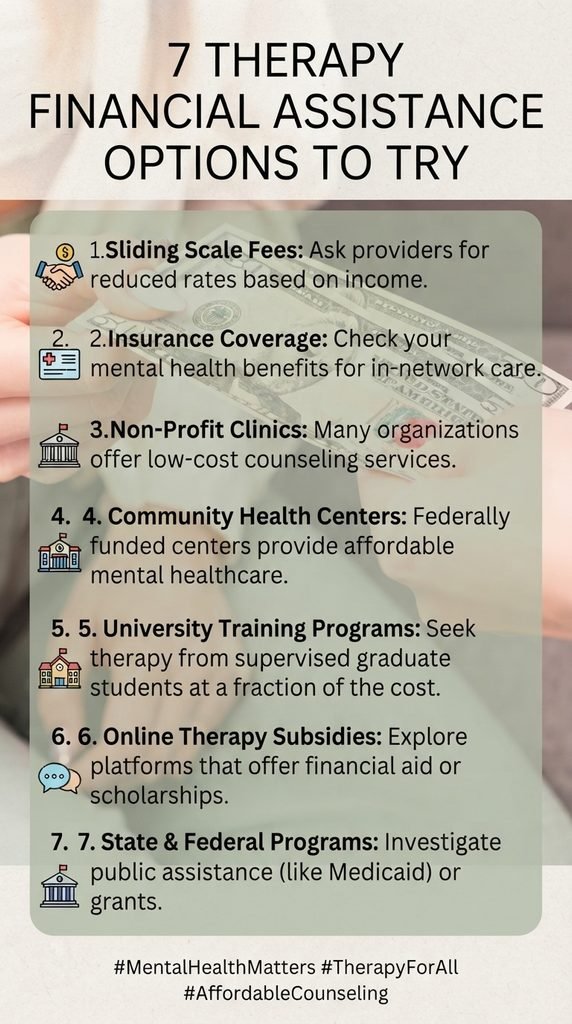
  • How Sliding Scale Therapy Platforms Work

    How Sliding Scale Therapy Platforms Work

    A therapy fee can look manageable at first glance, then feel impossible once you stack it next to rent, groceries, prescriptions, and everything else competing for your paycheck. That is exactly why so many people start searching for sliding scale online therapy platforms instead of a single fixed-price option.

    The appeal is simple. You still want qualified care, but you need pricing that reflects real life. A sliding scale can make therapy feel less like an all-or-nothing decision and more like something you can actually sustain.

    What sliding scale online therapy platforms actually do

    Sliding scale online therapy platforms connect clients with therapists or counseling providers who offer flexible pricing based on financial circumstances. Instead of charging every client the same rate, a provider may adjust fees using factors like income, household size, employment status, or financial hardship.

    That flexibility matters because affordability is not just about the first session. It is about whether you can keep going long enough for therapy to help. A lower fee that lets you attend regularly is often more useful than a standard rate you can only afford once or twice.

    Online platforms make this process easier because they centralize the search. Rather than contacting dozens of providers one by one, you can often filter by budget, specialty, session type, and availability in one place. For people already feeling stressed or overwhelmed, that time savings is not minor. It can be the difference between getting support now and putting it off again.

    Why pricing varies so much from one platform to another

    If you have looked around, you have probably noticed that “affordable” means different things on different sites. Some platforms offer a true sliding scale through individual therapists. Others use membership models, discounted plans, intern-led care, or limited low-fee spots.

    That difference is worth paying attention to. A therapist offering a personalized reduced rate is not the same as a platform advertising low prices across the board. Both can help, but they work differently.

    In many cases, the final cost depends on who sets the fee. On some platforms, the therapist controls pricing. On others, the platform sets package rates and assigns providers within that structure. Neither model is automatically better. It depends on what matters most to you – more pricing flexibility, more predictable billing, or a wider choice of therapists.

    Geography can also affect rates, even online. Therapists are licensed by state, and session fees may reflect local market conditions, credentials, demand, and specialization. A provider with advanced training in trauma, couples therapy, or severe anxiety may charge more than a generalist, even with a sliding scale.

    What to look for in sliding scale online therapy platforms

    The best platform for you is not always the cheapest one. Price matters, but so do trust, therapist quality, and whether the matching process actually helps you find someone who fits.

    Start with transparency. A good platform should make it reasonably clear how pricing works. If sliding scale rates are available, you should be able to tell whether they are broadly offered, limited to select therapists, or based on an application or conversation. Vague language can lead to frustrating surprises later.

    Next, look at provider vetting. Affordability should not come at the expense of qualifications. You want to know that therapists are licensed, verified, and practicing within their area of expertise. This is especially important online, where trust often starts with a profile and a short intake form.

    Matching also matters more than people expect. Lower-cost care is valuable, but if you end up with a therapist who is not a good fit, you may stop going. Platforms that use thoughtful matching based on your goals, preferences, budget, and needs can save you from that cycle.

    It also helps to check whether you can switch providers without starting over completely. Sometimes the first match is right. Sometimes it is not. A platform that makes adjustments easier can reduce the pressure to get it perfect on day one.

    Questions to ask before you book

    Even on strong platforms, it is smart to ask a few direct questions. You are not being difficult. You are making an informed decision about your care.

    Ask how the sliding scale is determined. Some therapists have a formal range tied to income, while others make case-by-case decisions. Ask whether the fee is temporary or ongoing, and whether it may change after a set number of sessions.

    You can also ask about session length, cancellation policies, and how often clients usually meet. A lower per-session rate can still become expensive if the expected frequency does not fit your budget. Weekly therapy is helpful for many people, but every-other-week scheduling may be more realistic in some cases.

    If you plan to use insurance reimbursement, ask whether the therapist can provide a superbill. Not every online platform supports out-of-network documentation the same way. This does not mean the platform is a bad choice, only that you should know the logistics upfront.

    The trade-offs to keep in mind

    Sliding scale therapy can open doors, but it is not magic pricing with no limits attached. Providers still have bills, caseload limits, and only so many lower-fee openings available.

    That means availability may be tighter for reduced-rate appointments. You might find fewer evening slots, longer wait times, or a smaller pool of therapists at your target price point. This can be frustrating, especially if you need support quickly.

    There is also the question of consistency. Some clients find a long-term reduced rate and stay with the same therapist for months or years. Others start with a lower fee that later increases as their financial situation changes or as the provider updates their schedule. If you need a very specific monthly budget, ask about stability before you commit.

    Another trade-off is platform experience. Some lower-cost services rely on minimal matching, limited messaging support, or fewer customization options. That may be perfectly fine if your main goal is getting affordable care fast. But if you want more personalized guidance, the cheapest route may not feel best.

    How to tell if a platform is trustworthy

    Trust is a big part of online mental health care. You are sharing personal information, relying on professional judgment, and often making decisions while already under stress.

    A trustworthy platform is usually clear about who its providers are, what credentials they hold, how privacy is handled, and what kind of support is available if something goes wrong. It should not feel hard to understand the basics.

    Look for therapist bios that go beyond generic language. Good profiles explain specialties, approaches, licensure, and who the provider works with. That level of detail helps you judge fit and signals that the platform takes quality seriously.

    The intake process should also feel thoughtful, not random. A few meaningful questions about your concerns, goals, preferences, and budget can go a long way. Platforms built around careful matching often create a smoother path to care because they are not just filling open calendar slots.

    For many people, that combination of vetted professionals, transparent pricing, and smarter matching is what makes a platform feel usable rather than overwhelming. That is part of the reason platforms like TheraConnect are designed to connect people with qualified providers in a way that supports both affordability and fit. If you are ready to take the next step, you can Get Started at https://theraconnect.net/.

    When sliding scale online therapy platforms make the most sense

    These platforms can be especially helpful if you do not have strong insurance coverage, if your deductible is too high to make therapy feel affordable, or if you want the privacy and convenience of online sessions from home. They can also be a strong option if you live in an area with limited local providers or long waitlists.

    They are not only for people in crisis or extreme financial hardship. Many clients use sliding-scale care because their budgets are tight right now, they are paying for school, they are supporting family members, or they are between jobs. Needing therapy to fit your finances is normal.


    At the same time, if you need specialized services such as intensive outpatient care, emergency support, or medication management, a standard outpatient therapy platform may not be enough on its own. It depends on your needs. Sliding scale online therapy can be a strong part of care, but not always the full picture.

    Finding care you can actually keep

    The right therapy platform is not just the one with the lowest advertised number. It is the one that helps you find a qualified therapist, understand the cost clearly, and continue care without constant financial strain.

    If you are comparing options, give yourself permission to be practical. Ask about fees. Ask about fit. Ask what happens if your budget changes. Therapy should feel supportive, not financially mysterious.

    Affordable care is not lesser care. Often, it is simply care designed around the reality that people need mental health support and a workable payment option at the same time. That is a reasonable thing to look for, and a good place to begin.

  • What makes somebody a narcissist? Mounting evidence suggests links to insecure attachment styles By

    What makes somebody a narcissist? Mounting evidence suggests links to insecure attachment styles By

    Megan Willis

    Narcissism has become the armchair diagnosis of the decade. Social media is awash with people flinging the label around. Everyone’s ex seems to be a narcissist, some of our parents are under suspicion, and that office villain? They definitely tick the box, too.

    The accuracy of these rampant diagnoses warrants scepticism. But the reality is narcissists do exist. At its extreme, narcissism is a rare mental health diagnosis, known as narcissistic personality disorder. But narcissism also describes a cluster of personality traits, which we all display to varying degrees.

    For those of us who have been in close quarters with someone high in narcissistic traits, we rarely walk away unscathed. And we may be left with lingering questions. For example, what made them this way?

    In a recent meta-analysis, my colleagues and I pulled together studies examining the link between narcissism and adult attachment styles. Our findings offer an important clue – especially when it comes to the potential roots of vulnerable narcissism.

    Types of narcissism

    There are two main types of narcissism.

    Grandiose narcissism is what typically comes to mind. It is characterised by an overtly grandiose, aggressive and dominant interpersonal style. In contrast, vulnerable narcissism is marked by introversion, hypersensitivity to criticism, and a defensive, insecure grandiosity that masks fragile self-esteem.

    One great story in your inbox every afternoon

    Try our Substack

    Antagonistic traits such as entitlement, manipulation, and a lack of empathy lie at the core of both narcissism types. This helps to explain the interpersonal difficulties linked to each.

    Vulnerable narcissism, in particular, has been linked to a range of harmful behaviours in romantic relationships. Individuals high in this trait are more likely to engage in love bombingghosting and breadcrumbing.

    They also tend to report lower relationship satisfaction, hold more permissive attitudes towards infidelity and perpetrate intimate partner violence at higher rates.

    https://www.instagram.com/reel/DIyj175t6iV/embed/captioned/?cr=1&v=14&wp=1196&rd=https%3A%2F%2Ftheconversation.com&rp=%2Fwhat-makes-somebody-a-narcissist-mounting-evidence-suggests-links-to-insecure-attachment-styles-257468#%7B%22ci%22%3A0%2C%22os%22%3A1105.5%7D

    Secure versus insecure attachment

    Researchers have turned to attachment styles to help explain how individuals high in narcissism behave in romantic relationships.

    Attachment theory proposes that early experiences with primary caregivers shape our beliefs about ourselves and others. These beliefs are thought to persist into adulthood and influence how we experience and navigate adult relationships.

    If we felt safe, loved and supported as children, we are more likely to have a positive view of our self and others. This is the hallmark of secure attachment, which lays the foundation for healthy, stable relationships in adulthood.

    But when early relationships are marked by neglect, inconsistency or abuse, they can give rise to insecure attachment styles. Adult attachment models generally identify three types of insecure attachment.

    Preoccupied attachment develops from a negative view of the self and a positive view of others. Individuals with this style often feel unworthy of love and seek constant reassurance in relationships, fearing rejection and abandonment.

    Dismissive attachment is rooted in a positive view of the self but a negative view of others. These individuals tend to prioritise independence over intimacy. As a result, they often struggle to form deep connections.

    Fearful attachment involves negative views of both the self and others. Those with this style typically crave connection while at the same time fearing it, leading to push-pull dynamics in relationships.

    An interesting pattern

    In our meta-analysis, we combined the results of 33 previous studies comprising more than 10,000 participants to examine how narcissism relates to each of the four adult attachment styles. Overall, narcissism was linked to each of the three insecure attachment styles.

    But when we looked at the two types of narcissism separately, an interesting pattern emerged. Vulnerable narcissism was consistently linked to insecure attachment styles – with associations of moderate strength for preoccupied and fearful attachment styles.

    In contrast, grandiose narcissism showed no such link.

    Does this mean insecure attachment causes vulnerable narcissism? Not necessarily. The studies we reviewed were “correlational”, which means they looked at connections, not causes. So we can’t say attachment styles cause vulnerable narcissism. To answer that, we’d need longitudinal research tracking people over time.

    Still, our findings suggest that insecure attachment – particularly preoccupied and fearful attachment styles – may be an important risk factor in the development of vulnerable narcissism.

    Of course, not everyone with an insecure attachment style has high levels of vulnerable narcissism. However, for some, vulnerable narcissism may emerge as a defensive coping strategy that arises when early attachments were marked by inconsistency, neglect or abuse.

    A young father lovingly holding his newborn.
    Supporting parents and caregivers to build secure attachments with the their children could help prevent the development of vulnerable narcissism Halfpoint/Shutterstock

    Healing childhood wounds

    Attachment styles tend to be fairly consistent throughout a person’s life, however change is possible. Attachment-focused therapies, such as schema therapy and emotionally focussed therapy, can help individuals heal attachment wounds and build more secure relationship patterns. These approaches may be especially helpful for those high in vulnerable narcissism.

    At the same time, it is important that families have access to free and timely mental health care, so that children are supported to process and heal from trauma before it shapes their adult relationships, and the way they parent the next generation.

    But prevention is better than cure.

    Supporting parents and caregivers to build secure attachments with the their children and equipping them with the tools to parent effectively is essential. This is especially urgent given disturbingly high rates of child maltreatment in Australia, including emotional abuse, physical abuse and neglect – all of which have been linked to the development of vulnerable narcissism.

    We don’t need to look too far to see the cost of turning a blind eye.

    Megan Willis

  • How to Pick the Right Online Therapist

    How to Pick the Right Online Therapist

    Finding a therapist online can feel strangely high-stakes. You are trying to make a smart, personal decision, often at a time when you already feel stressed, overwhelmed, or worn down. A polished profile and a friendly headshot can help, but they do not tell you everything you need to know.

    If you are wondering how to choose an online therapist, the goal is not to find the “perfect” person on the first try. It is to find someone qualified, affordable, and like a good fit for what you need right now. That takes a little clarity upfront, and it can save you time, money, and frustration later.

    How to choose an online therapist without overthinking it

    Start with your reason for seeking support. You do not need a perfect explanation or a formal diagnosis. But it helps to ask yourself a few simple questions: What has been hardest lately? Are you dealing with anxiety, depression, grief, relationship stress, burnout, trauma, or a major life transition? Do you want short-term support for a specific issue, or are you looking for ongoing therapy?

    Your answer shapes what kind of therapist may be the best match. For example, someone coping with panic attacks may want a clinician experienced in anxiety treatment and structured approaches like CBT. Someone working through childhood trauma may care more about a therapist who understands trauma-informed care and moves at a pace that feels safe.

    This is also where practical needs come in. If you need evening appointments, a therapist who only works weekdays may not be realistic, no matter how impressive their background looks. If budget is tight, affordability is not a secondary detail. It is part of choosing well.

    Know what qualifications actually matter

    One of the biggest concerns people have about online therapy is whether the therapist is truly qualified. That concern is fair. The good news is that legitimate online therapists should have the same professional credentials required for in-person care.

    Look for a licensed mental health professional in your state. That may include psychologists, licensed clinical social workers, licensed professional counselors, marriage and family therapists, or psychiatrists. The letters after their name matter less than whether they are properly licensed and trained to treat your concerns.

    A therapist can be warm and relatable and still not be the right clinical fit. On the other hand, someone can have strong credentials but use an approach that does not feel helpful to you. Both pieces matter. Strong therapy usually comes from a mix of training, experience, and human connection.

    If a platform explains how providers are vetted, that is a good sign. It shows some level of quality control instead of leaving you to sort through everything on your own. At TheraConnect, for example, provider vetting and matching are designed to make that process more trustworthy and less time-consuming.

    Match the therapist to your specific needs

    Not every therapist treats every issue, and that is not a red flag. Specialization is often a good thing.

    If you are searching for help with a specific concern, read profiles carefully for experience in that area. Common specialties include anxiety, depression, trauma, PTSD, couples counseling, family conflict, ADHD, substance use, eating disorders, and LGBTQ+ affirming care. Some therapists also focus on cultural identity, faith-based counseling, postpartum mental health, or support for teens and college students.

    This is where honesty helps. If you want direct tools and homework, a highly reflective, open-ended therapist may not feel satisfying. If you want space to process emotions slowly, someone who pushes techniques too quickly may feel like a mismatch. There is no universally best style. There is only what fits your goals, your personality, and your current capacity.

    Therapy style matters more than people expect

    Many people choose based on specialty alone, then feel disappointed when the actual sessions do not click. That is often a style issue.

    Some therapists are structured and goal-oriented. They may set agendas, teach coping skills, and track progress in a concrete way. Others are more exploratory and relational, helping you notice patterns, emotions, and deeper themes over time. Neither is better. But one may feel more useful to you.

    If the therapist profile mentions approaches like CBT, DBT, EMDR, psychodynamic therapy, or person-centered therapy, that can give you clues. You do not need to become an expert in therapy methods. You just want enough information to ask, “Does this sound like the kind of help I want?”

    Pay attention to cost, insurance, and scheduling

    The best therapist on paper is not the best choice if sessions are priced beyond what you can sustain. Therapy works best when it is consistent, so affordability matters from the start.

    Before booking, check the session fee, whether the provider accepts insurance, whether out-of-network reimbursement is possible, and whether sliding-scale rates are available. Some people assume cheaper means lower quality, but that is not always true. A great therapist with a reasonable rate may simply want to keep care accessible.

    It also helps to think beyond the first appointment. Ask yourself whether you could realistically continue for at least several sessions if it feels helpful. Weekly therapy may be ideal for one person, while biweekly sessions may be the only practical option for another. The right plan is the one you can actually maintain.

    Scheduling is just as important. If you work irregular hours, travel often, or need childcare coverage, flexibility is not a bonus. It is essential. Online therapy can remove commuting time, but it still has to fit your life.

    How to evaluate fit after the first session

    A lot of people expect instant certainty after one appointment. Sometimes that happens, but often it does not. A first session is usually more like a starting point than a final verdict.

    Still, there are useful signs to watch for. Did the therapist listen closely? Did they seem respectful, engaged, and clear about how they work? Did you feel pressured, dismissed, or talked over? Were they able to reflect back what you were saying in a way that felt accurate?

    You do not need to feel totally comfortable right away. Therapy can feel vulnerable, and nerves are normal. But you should feel emotionally safe enough to continue. There is a difference between healthy discomfort and a bad fit.

    Green flags and red flags

    A good online therapist will usually be clear about boundaries, confidentiality, fees, and scheduling. They should explain what therapy with them may look like and welcome your questions. If they are a strong fit, you will likely feel some combination of understood, respected, and gently challenged.

    Be cautious if a therapist makes sweeping promises, acts overly casual about serious concerns, avoids explaining their credentials, or pushes a one-size-fits-all solution. Online therapy should still feel professional, even when the tone is warm and relaxed.

    Technical reliability matters too. If sessions are constantly interrupted by poor communication, missed appointments, or disorganization, that can wear down trust quickly.

    Give yourself permission to switch

    This part matters more than people think. Choosing a therapist is not a lifetime contract.

    If you have attended a few sessions and the fit feels off, you are allowed to move on. That does not mean therapy “isn’t for you.” It may simply mean that this therapist is not the right match. People stay with the wrong therapist longer than they should because they do not want to be rude or start over. But staying in a mismatched relationship can delay the support you actually need.

    If you are unsure, it is okay to bring that up directly. A good therapist will not be offended by honest feedback. In fact, many will appreciate it and may even help you clarify what you are looking for next.

    A practical way to make the decision easier

    If you are comparing several options, keep your decision simple. Look at credentials, specialty, cost, availability, and whether their communication style feels right for you. You are not choosing the most impressive bio. You are choosing the person you are most likely to talk to honestly and keep seeing consistently.

    That is often why matching platforms can be helpful. Instead of spending hours filtering through endless profiles, you can focus on therapists who already align with your needs, budget, and preferences. If you are ready to take the next step, you can Get Started at https://theraconnect.net/ and check your options with more confidence.

    The right online therapist is not just qualified. They are someone you can meet where you are, at a price and pace that make support possible. Sometimes that is enough to turn a stressful search into real momentum.

  • Self‑Esteem Among Aarcissists is ‘Puffed Up, but Shaky’

    Self‑Esteem Among Aarcissists is ‘Puffed Up, but Shaky’

    Like a grotesque mask reflected in a pool, narcissism has two faces, neither of them attractive. Narcissists have an inflated sense of self-worth, seeing themselves as superior beings who are entitled to special treatment.

    However they also tend to be thin skinned, reacting angrily when their unique gifts are challenged or ignored.

    This combination of high but easily undermined self-worth might seem paradoxical. A positively viewed self would be expected to be a happy and secure self. To understand the paradox we need to parse the complexities of self-esteem.

    Self-esteem

    The main thrust of early research on self-esteem – the broad positive or negative evaluation of the self – explored the implications of its level.

    People with higher self-esteem were compared to those with lower, and were generally found to report better life outcomes. High self-esteem people tended to be happier, healthier, more successful in love and work, and more resilient in the face of adversity.

    On the strength of such findings, self-esteem came to be seen in some circles as a panacea of all manner of personal and social ills. If we could only improve people’s self-esteem, we might remedy their suffering and underachievement.

    One great story in your inbox every afternoon

    Try our Substack

    In the 1980s the state of California set up a self-esteem task force to promote that cause.

    Unfortunately, the self-esteem bandwagon was sideswiped by some troubling research evidence, presented in an influential review published in 2003. Studies commonly showed that high self-esteem was a consequence or side-effect of life success rather than a cause.

    Enhancing a person’s self-esteem would therefore no more increase their performance at school or work than applying heat to a light bulb would increase its luminance.

    In addition, high self-esteem appeared to have some negative implications. For example, people with some forms of high self-esteem are sometimes especially prone to forms of aggression and antisocial behaviour.

    Different forms of high self-esteem

    One way to reconcile this ambivalent picture of high self-esteem is to recognise that it is not only the level of self-esteem that matters. We also need to consider the consistency and stability of self-esteem.

    People whose overt self-esteem is high but accompanied by covert self-doubts may be worse off than those whose self-esteem is consistently high. And people whose views of self are dependably positive are likely to be better off than those whose self-views are equally positive on average but oscillate wildly.

    Neither of narcissism’s two faces is very attractive. pixabayCC BY

    These two alternative ways of thinking about high self-esteem have been recognised by psychologists as “defensive” and “fragile” self-esteem, respectively.

    People with defensive self-esteem evaluate themselves positively by questionnaire, but negatively when their automatic or non conscious self-views are examined. Their positive self-views are inferred to be defences against lurking insecurities.

    The self-views of people with fragile self-esteem are prone to fluctuate, dropping sharply when they encounter difficulties because their self-worth lacks a firm anchor.

    Narcissism and self-esteem

    These two forms of self-esteem help to make sense of narcissism. There is evidence narcissists tend to have higher than average levels of self-esteem, but that these levels are to some degree defensive and fragile.

    Below the shiny surface of their arrogance and grandiosity, narcissists often view themselves less positively. Their inflated self-image also tends to deflate rapidly when punctured by evidence that other people do not share it.

    The dynamics of self-esteem among narcissists are well illustrated in a recently published study by a team of German and Dutch psychologists. The researchers examined the facets of narcissism and linked them to the level and stability of self-esteem in a series of laboratory and field studies.

    The studies spring from a model that distinguishes two key components of narcissism. “Narcissistic admiration” refers to assertive self-promotion of a grandiose self-image. People high on this component may be charming, but it is a charm that gradually loses its lustre as the person’s unquenchable appetite for admiration becomes apparent to others.

    In contrast, “narcissistic rivalry” is the tendency to react antagonistically to perceived threats to the narcissist’s egotism. People high on this component are fiercely competitive and prone to denigrate those who challenge their sense of superiority.

    The two components are only moderately related, so narcissistic people may be substantially higher on one than the other.

    The researchers found that admiration and rivalry had quite different associations with self-esteem. People high on admiration tended to report high levels of self-esteem and average degrees of stability. Those high on rivalry, in contrast, reported average levels of self-esteem but high degrees of instability.

    By implication, narcissists scoring high on both admiration and rivalry would show the familiar toxic combination of high but fragile self-esteem.

    In one of the researchers’ three studies, for example, a large sample of students reported their levels of self-esteem on a daily basis over a two-week period. People who reported higher average levels of self-esteem scored high on admiration and low on rivalry. Those whose levels of self-esteem varied widely from day to day scored high on rivaly.

    In addition, when self-esteem dropped from one report to the next, these drops were greater among people high in rivalry. A follow up study showed that these people were especially likely to experience drops in their self-esteem on days when they felt less liked by their peers. A perceived lack of social inclusion is particularly bruising to the self-esteem of people who see others as threats to their sense of superiority.

    This research shows that narcissism is not a unitary phenomenon. In the words of the researchers, it involves a self that is “puffed-up but shaky”. Such a self may be unpleasant to others, but it is fundamentally a vulnerable self.

    Nick HaslamProfessor of Psychology,

    The University of Melbourne