
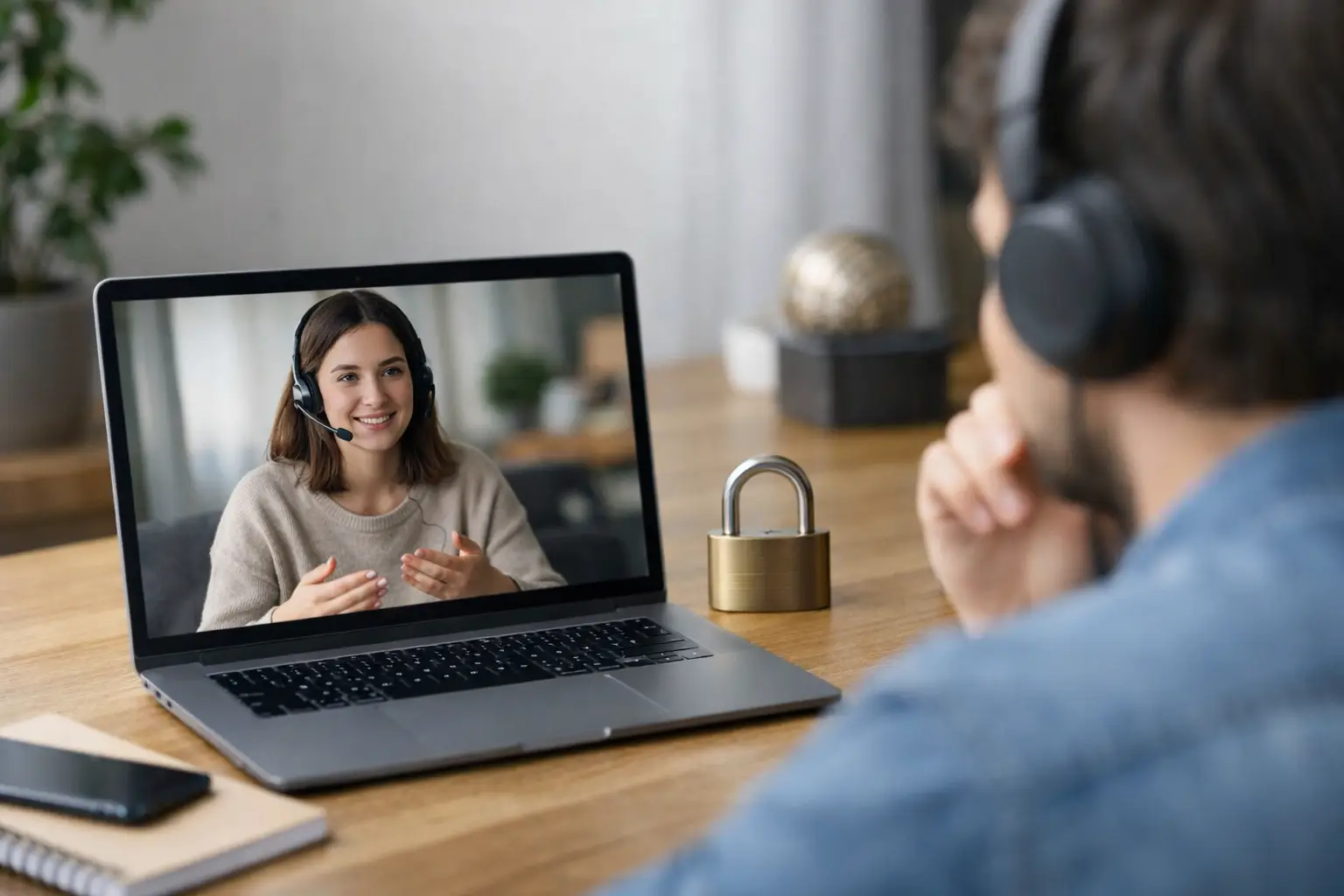
You might feel ready to talk to a therapist, then pause at one practical question: is online therapy confidential? That hesitation makes sense. Therapy only works when you feel safe enough to be honest, and when care happens through a screen, people naturally want to know who can see, hear, store, or access what gets shared.
The short answer is yes – online therapy is confidential in much the same way in-person therapy is confidential. But it is not secret under every circumstance, and it is not risk-free just because a platform says it takes privacy seriously. The real answer depends on three things: the therapist, the technology being used, and your own environment during sessions.
Is online therapy confidential in the same way as in-person therapy?
In most cases, yes. Licensed therapists who provide online care are still bound by professional ethics and privacy laws. If your therapist is practicing legally in the US, they are generally expected to protect your health information, keep session details private, and explain the limits of confidentiality before treatment begins.
That means your therapist should not casually share what you discuss with family members, employers, schools, or anyone else without your permission. The same basic expectations that apply in an office apply online too.
Where things differ is the setting. In person, privacy usually depends on the therapist’s office procedures. Online, privacy also depends on video software, data handling, account security, and whether you are taking your session from a private place. So the rules are similar, but the pressure points are a little different.
What actually protects confidentiality in online therapy?
Confidentiality is not just one promise. It is a combination of legal, ethical, and technical safeguards.
For many clients in the US, HIPAA is the first thing that comes to mind. HIPAA sets standards for how certain health information is protected. If a therapist or platform is covered by HIPAA, they are expected to use appropriate safeguards for storing and sharing protected health information.
Licensing boards and professional codes matter too. Therapists such as psychologists, counselors, clinical social workers, and marriage and family therapists typically follow ethical rules that require confidentiality except in specific situations.
Then there is the platform itself. A secure online therapy experience usually includes encrypted communication, protected client portals, secure records, and clear privacy policies. Good systems also limit access to sensitive information and explain how data is stored and used.
That is one reason matching through a vetted platform can feel more trustworthy than piecing together care on your own. A service like TheraConnect is built around connecting clients with qualified professionals, and that kind of vetting can make a real difference when you are trying to judge whether online care feels safe enough to begin.
The limits of confidentiality still apply online
This is the part many people do not hear clearly enough. Confidential does not mean absolute.
Therapists are usually required to break confidentiality in certain situations, whether sessions happen online or in person. The exact rules vary by state and license type, but common examples include serious risk of harm to yourself, serious risk of harm to someone else, suspected abuse or neglect of a child, elder, or dependent adult, and valid court orders in some cases.
A therapist may also consult with a supervisor or clinical colleague in ways allowed by law and ethics, especially if that helps improve care. They should still handle that information carefully and professionally.
None of this means therapy is unsafe. It means the privacy promise has boundaries, and a trustworthy therapist should explain those boundaries early, in plain language.
Where privacy risks can show up in virtual therapy
When people ask whether online therapy is confidential, they are often asking a broader question: what could go wrong?
One risk is the platform itself. Not every video app, messaging tool, or wellness service is designed for clinical mental health care. Some platforms collect more user data than clients realize. Others may not clearly explain whether sessions are recorded, where records are stored, or who on the company side can access support logs or messages.
Another risk is device security. If you use a shared laptop, weak passwords, public Wi-Fi, or a phone without a lock screen, your privacy can be compromised without the therapist doing anything wrong.
Your physical surroundings matter too. Many confidentiality issues in online therapy happen at home, not on the platform. A roommate in the next room, a partner walking in, thin apartment walls, Bluetooth speakers still connected, or a work call taken from the car in a crowded parking lot can all reduce privacy.
This is why online therapy can be highly confidential and still require a little planning from the client side.
How to tell if an online therapy service takes privacy seriously
The best providers do not dodge privacy questions. They answer them clearly.
Before booking, look for straightforward information about therapist credentials, informed consent, privacy practices, and secure communication. You should be able to find out whether the therapist is licensed, what state they can practice in, how records are handled, and what happens if technology fails during a session.
It also helps to ask direct questions. Is the video platform encrypted? Are sessions recorded? Who has access to messages sent through the portal? How are notes stored? What happens if I join from a different state? A legitimate provider should be comfortable answering all of that.
If the answers feel vague, overly sales-focused, or confusing, trust that reaction. Therapy is personal. You should not have to guess how your information is being protected.
What you can do to protect your own privacy
Even with a qualified therapist and secure platform, your setup matters.
Try to take sessions in a private room with the door closed. Use headphones if possible. Turn off smart speakers nearby, silence notifications, and make sure your device is updated and password-protected. If you live with other people, you can use a white noise machine outside the door or schedule sessions when others are out.
If home is not ideal, think creatively but carefully. Some people take sessions from a parked car, a private office, or another quiet location. That can work, but only if the space is stable, safe, and private enough for an honest conversation.
It is also okay to tell your therapist if privacy is limited. A good therapist can help you problem-solve. Sometimes that means adjusting session times, avoiding certain topics when others are nearby, or using chat features only when appropriate.
Does messaging therapy have the same level of confidentiality?
Not always. Messaging can be convenient, but it raises different privacy questions than live video or phone sessions.
Written communication creates a record by default. That is not automatically bad, but it does mean messages may be stored in a portal, on a device, or in notifications if settings are not carefully managed. Some clients like having a written history to revisit. Others find it less private, especially if someone else might access their phone.
There is also a clinical difference. A therapist can pick up tone, pauses, affect, and distress signals more easily in a live session than in text alone. So the issue is not just confidentiality. It is also whether that format fits your needs.
Why licensing and matching still matter
Confidentiality is not only about software. It is also about whether you are working with a qualified professional who understands legal and ethical responsibilities.
A licensed therapist should know how to handle consent, documentation, emergencies, and privacy standards in your state. That matters more than slick branding or a polished app.
Matching matters too. When clients feel well matched, they are more likely to open up, stay in care, and ask practical questions early. If you are already worried about privacy, affordability, or fit, using a platform that screens providers and helps narrow your options can make starting therapy feel less overwhelming. If you are ready to take that first step, you can Get Started at https://theraconnect.net/ and see what options fit your needs.
So, is online therapy confidential?
Yes, online therapy is confidential in most situations, and for many people it is a safe, effective way to get support. But confidentiality is not automatic. It depends on working with a licensed therapist, using a secure platform, understanding the legal limits, and making sure your own setting is private enough for real conversation.
If you are comparing providers, do not be afraid to ask detailed questions. The right therapist or platform will not make you feel difficult for asking. They will treat privacy as part of care, not a footnote. That kind of transparency is often the first sign you are in the right place.
Your Expertise Deserves to Be Found.
People are searching for support. Make it easier for them to discover you.
Leave a Reply