
individual therapy

  • How to Schedule Recurring Therapy Sessions

    How to Schedule Recurring Therapy Sessions

    The hardest part of therapy is not always opening up. Sometimes it is simply getting on the calendar often enough for the work to matter. If you are wondering how to schedule recurring therapy sessions, the goal is not to fill your week with another obligation. It is to create enough consistency that therapy feels steady, practical, and easy to keep.

    For most people, recurring sessions work best when they remove decision fatigue. You do not have to ask yourself every week whether now is a good time, whether your therapist has openings, or whether you can squeeze it in between work, school, parenting, or errands. A set rhythm turns therapy from something you mean to do into something you actually protect.

    Why recurring therapy sessions help

    Therapy tends to work better when there is continuity. That does not mean everyone needs weekly care forever. It means regular sessions give you a better chance to build trust, notice patterns, and follow through on what comes up between appointments.

    When sessions are spaced too far apart, it can start to feel like you are restarting every time. You spend part of each appointment catching up instead of moving forward. Recurring appointments reduce that stop-and-start feeling. They also make it easier for your therapist to hold space for your goals, especially if you are working through anxiety, depression, stress, relationship issues, grief, or life transitions.

    There is also a practical side. Popular therapists often book out in advance. If you wait to schedule one session at a time, you may end up taking whatever is left instead of what truly fits your life.

    How to schedule recurring therapy sessions in a way you can keep

    The best recurring schedule is not the one that looks ideal on paper. It is the one you can realistically maintain for the next two to three months.

    Start with frequency. Weekly therapy is common because it gives you enough momentum to build a strong connection and make progress without long gaps. Biweekly sessions can work well if your symptoms feel manageable, your budget is tighter, or you are in a maintenance phase after doing more intensive work. Monthly therapy can help some people stay supported, but for many, it is too spread out to create traction at the beginning.

    Next, choose a day and time with a little breathing room around it. If you book therapy at the exact moment your workday ends, right before a pickup deadline, or in the middle of a packed lunch break, you are more likely to feel rushed or cancel when life gets messy. A recurring appointment is easiest to keep when it lives in a stable part of your week.

    Morning sessions work well for people who want privacy before the day gets noisy. Midday can be a good fit for remote workers or students with flexible schedules. Evening appointments help people who cannot step away during business hours, though those slots may book quickly. There is no perfect answer. The right choice depends on your energy, privacy, and how often your routine changes.

    Talk through the schedule with your therapist

    If you are trying to figure out how to schedule recurring therapy sessions, make it a direct part of the conversation. A good therapist will not expect you to magically know the right cadence from the start.

    Ask what frequency they recommend based on your goals. If you are dealing with active symptoms, recent loss, burnout, panic attacks, or a major life change, they may suggest weekly sessions at first. If you are mainly looking for ongoing support and reflection, biweekly may make more sense.

    This is also the time to ask about availability, cancellation policies, rescheduling flexibility, and whether recurring appointments can be held for you long term. Some therapists reserve a standing slot each week. Others may need to revisit the schedule every month or quarter. Clarity now prevents frustration later.

    If you are using an online platform to find care, the process can be easier because you can often view availability in one place and match with professionals whose schedules already align with yours. That matters more than people think. The best therapist on paper may not be the best fit if their only opening is a time you constantly miss.

    Plan around your real life, not your best-case week

    A common mistake is choosing a slot based on who you want to be rather than how your life actually runs. Maybe Monday at 7 a.m. sounds disciplined, but if you already hit snooze three times and scramble to get out the door, that plan may not last. Maybe Thursday evenings sound calm, but they are the night your family always needs you.

    Pick a time that works during average weeks, not unusually productive ones. Think about commuting, childcare, work meetings, class schedules, energy dips, and privacy. If you are doing virtual therapy, also think about where you will physically take the session. A recurring appointment only helps if you have a reliable space where you can talk freely.

    It can help to ask yourself a simple question: when am I least likely to resent this appointment? That answer is often more useful than asking when you are technically free.

    Budget matters, so build with that in mind

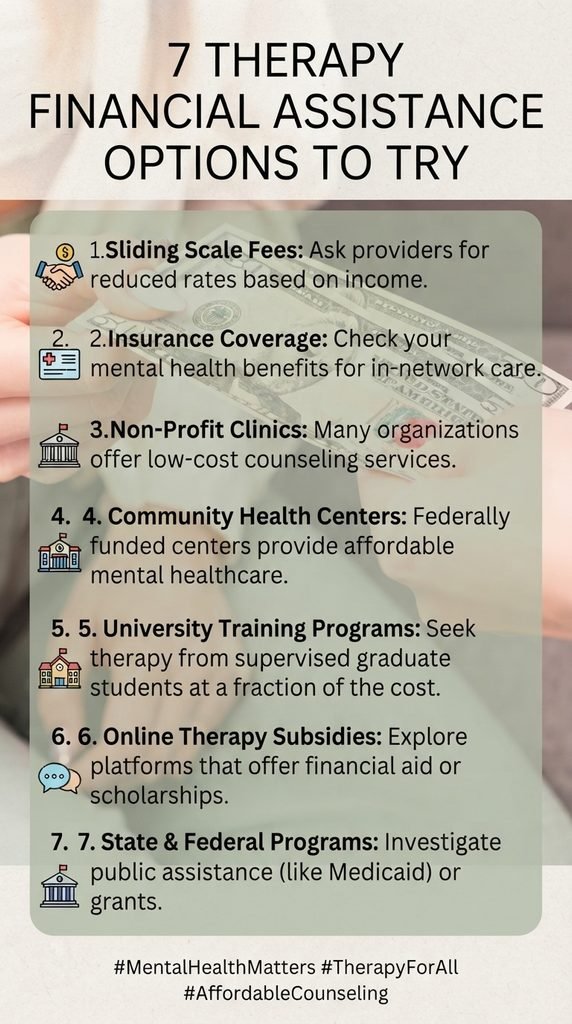
    Consistency is hard if every session makes you anxious about money. If affordability is a concern, be honest about that from the beginning. There is no benefit in setting up weekly sessions you cannot sustain.

    Instead, ask what options exist. Some therapists offer sliding scale rates. Some clients use insurance, while others pay out of pocket for more provider choice. Depending on the platform, you may also be able to filter for therapists within your budget before you book. TheraConnect was built around accessibility, so matching based on affordability as well as fit can make recurring care more realistic.

    If weekly sessions are not financially comfortable, biweekly is often a strong middle ground. You still maintain regular contact without overextending yourself. In some cases, clients alternate therapy with journaling, support groups, or skills practice between appointments to keep momentum going.

    The key is honesty. A schedule you can afford for six months is more helpful than an ideal plan that falls apart after three weeks.

    Reduce cancellations before they start

    Most missed appointments are predictable. They happen when the session is in a fragile part of your week, when reminders are weak, or when you rely on memory instead of systems.

    Once you choose a recurring slot, put it everywhere. Add it to your calendar, turn on reminders, block travel time if needed, and let anyone who shares your schedule know that this time is taken. Treat it the way you would a medical appointment or an important class.

    For virtual therapy, create a small routine before each session. Charge your device, test your internet, grab water, and sign in a few minutes early. Those tiny habits lower the odds of missing or delaying care.

    You should also expect that some weeks will still be complicated. Recurring appointments are not about perfection. They are about making therapy the default so rescheduling becomes the exception, not the pattern.

    When to change your recurring therapy schedule

    A standing appointment is helpful, but it should not become rigid for the sake of being rigid. Your needs may change. Your therapist’s availability may change. Life definitely changes.

    If you notice you are frequently canceling, arriving emotionally drained, or feeling rushed every single time, that is a sign to adjust the schedule rather than blame yourself. Maybe you need a different day. Maybe the time is wrong. Maybe the frequency should shift from weekly to biweekly, or vice versa.

    The same goes for clinical progress. Early therapy often benefits from more frequent contact. Later, many people step down to less frequent sessions as they feel more grounded. That is not a setback. It can be a sign that the work is holding.

    A simple way to get started

    If all of this still feels like a lot, keep the first step small. Choose the frequency you believe you can sustain for eight weeks. Pick one day and one time that usually works. Ask about recurring booking and policy details before your first or second session. Then protect that slot like it matters, because it does.

    You do not need the perfect therapy schedule. You need one that supports real life and gives you space to show up consistently. That steady return, week after week or every other week, is often where change begins.

  • Case Study: Affordable Online Therapy Outcomes

    Case Study: Affordable Online Therapy Outcomes

    A lower monthly therapy budget does not automatically mean lower-quality care. That question sits underneath almost every search for mental health support, and it is exactly why a case study affordable online therapy outcomes discussion matters. People want more than promises. They want to know whether affordable virtual care can actually help with anxiety, depression, stress, and day-to-day functioning.

    The short answer is yes, it can. But the more honest answer is that outcomes depend on fit, consistency, severity of symptoms, and the kind of support a person needs. Affordable online therapy is not a magic fix, and it is not the right solution for every clinical situation. What it can do, when matched well and used consistently, is remove enough friction that real progress becomes possible.

    What this case study on affordable online therapy outcomes looks at

    To make this useful, let’s look at a realistic composite case rather than a vague success story. Composite means the details reflect common client patterns seen across virtual care settings, without describing any one real person. The goal is to show how affordable online therapy can work in practice, where it helps, and where limits show up.

    The client is a 29-year-old working adult in the US. She has moderate anxiety, periods of low mood, trouble sleeping, and a constant sense of being behind in life. She has considered therapy before but delayed it for two reasons: cost and logistics. In-person therapy in her area felt out of reach, and weekday commuting made scheduling harder. She wanted weekly support but needed a price point she could sustain for more than a month.

    She began online therapy with a licensed clinician offering evening sessions and a lower session fee than many local private practices. The treatment plan focused on anxiety management, thought patterns, emotional regulation, and practical routines that could support sleep and reduce overwhelm. Sessions were held by secure video once a week for 12 weeks.

    Starting point: symptoms, barriers, and expectations

    At intake, the client reported racing thoughts, irritability, procrastination, and frequent Sunday-night dread before the workweek. She was still functioning at work, but with rising effort and more emotional exhaustion. Her relationships were affected too. She withdrew from friends, overthought text messages, and felt guilty for canceling plans.

    What mattered most in the early phase was not only the diagnosis or symptom label. It was the pattern of avoidance that had started to shape her life. She was sleeping poorly, scrolling late at night, missing meals on busy days, and assuming she had to “get worse” before therapy was worth paying for.

    That assumption is common. Many people think affordable care must be limited, rushed, or generic. In reality, cost and quality are not the same thing. Lower-cost online therapy can still involve licensed professionals, evidence-based methods, and thoughtful treatment planning. The difference is often in delivery model, overhead, and how efficiently clients are matched.

    Case study affordable online therapy outcomes after 12 weeks

    By week four, the most visible change was attendance. That may sound small, but it matters. Because sessions were easier to fit into her schedule and did not require travel, she missed fewer appointments than she likely would have with in-person care. Lower friction supported continuity, and continuity supported trust.

    By week six, she described fewer spirals at night and a better ability to catch catastrophic thinking before it fully took over. She was not “cured,” and her stress at work had not vanished. What changed was her response. She could identify triggers earlier, use grounding tools more consistently, and recover faster after difficult days.

    By week twelve, the outcomes were meaningful in three areas. First, her anxiety symptoms had eased from daily high intensity to more manageable episodes. Second, her sleep had improved from five to six disrupted hours to a more stable seven hours on most weeknights. Third, her functioning improved. She was completing tasks with less paralysis, reconnecting socially, and reporting fewer days where everything felt unmanageable.

    Just as important, she said the therapy felt financially sustainable. That piece often gets overlooked in mental health conversations. A treatment plan only works in the real world if a person can keep showing up. Affordability is not separate from outcomes. For many clients, it is one of the conditions that makes outcomes possible.

    Why the results were positive

    The best explanation was not simply that the therapy was online or affordable. It was that the format reduced barriers while the clinician-client match supported engagement. She felt understood, the session times fit her life, and the cost did not create fresh stress every week.

    This is where platform design matters. A strong matching process helps clients avoid the exhausting cycle of contacting multiple providers, repeating their story, and hitting price or availability dead ends. When people can find a qualified therapist who fits their goals and budget, they are more likely to begin care earlier and stay with it long enough to benefit.

    The therapist also used practical, structured interventions rather than only offering general support. That included reframing unhelpful thoughts, setting short behavioral goals, tracking sleep habits, and practicing emotional regulation between sessions. Affordable therapy does not need to mean passive therapy. In many cases, clear structure improves results.

    Where affordable online therapy has limits

    A balanced case study should say this plainly: online therapy is not ideal for every person or every condition. If someone is in immediate crisis, needs intensive stabilization, or has symptoms that require a higher level of care, affordable weekly teletherapy may not be enough on its own.

    Even in less acute cases, there are trade-offs. Some clients struggle to open up on video. Others do not have enough privacy at home. Internet issues, screen fatigue, and household interruptions can all affect the experience. And while lower fees improve access, extremely low-cost options may come with narrower appointment windows or fewer therapist choices.

    There is also the question of pace. Lower-cost care can be effective, but progress may still take time. If a client expects a complete transformation in three or four sessions, disappointment can set in quickly. Mental health improvement is often uneven. One week can feel calm, and the next can feel like a setback. That does not mean therapy is failing.

    What this means for people comparing therapy options

    If you are weighing online therapy because of cost, the strongest takeaway from this case is that affordability should be evaluated alongside fit and consistency, not against quality as if they are opposites. A more affordable therapist you can see regularly may help more than a higher-cost option you cancel after two sessions.

    Look for a few signs that the care is likely to be effective. The provider should be licensed, clear about their scope, and able to explain how they approach your concerns. You should also know what sessions cost, how often you might meet, and whether the plan feels realistic for your budget over time.

    For many people, the right starting question is not “What is the cheapest therapy I can find?” It is “What kind of support can I actually maintain?” That shift matters. Mental health care works best when it is sustainable enough to become part of real life instead of another short-lived attempt.

    This is one reason thoughtful matching matters so much. Platforms like TheraConnect are built around the idea that accessibility is not just about putting therapy online. It is about helping people connect with vetted professionals who make sense for their needs, preferences, and financial reality.

    The bigger lesson from affordable online therapy outcomes

    This case points to a broader truth. When therapy becomes easier to access, more people start before their symptoms become overwhelming. When it becomes more affordable, more people stick with it long enough to notice change. And when the match is right, even modest weekly sessions can create real momentum.

    That does not mean every affordable online therapy experience will look the same. Some clients improve quickly. Others need a different modality, medication support, or a therapist with a more specialized background. It depends on the person, the problem, and the care plan.

    Still, the old assumption that lower-cost online care is automatically second best does not hold up well in practice. For many people, it is the format that finally makes therapy possible.

    If you have been putting off support because you assumed affordable care would not really help, it may be worth checking that belief against what actually leads to better outcomes: qualified care, a good match, manageable costs, and the ability to keep showing up. Get Started when you are ready. The right therapy is not always the most expensive option. Sometimes it is the one you can begin now and continue with enough consistency to feel your life getting lighter.

  • Online Therapy Confidentiality for Minors

    Online Therapy Confidentiality for Minors

    A lot of teens will only open up if they know who can hear what they say. Parents want to help, but they also want to know what is happening. That tension is exactly why online therapy confidentiality for minors matters so much, especially before the first appointment is even booked.

    The short version is this: therapy for minors is private, but not always fully private. What a therapist can keep confidential, what must be shared with a parent, and what has to be reported by law depends on the teen’s age, the state they live in, the type of care involved, and the level of risk. In online therapy, those same rules apply, plus a few digital privacy questions that families should ask upfront.

    How online therapy confidentiality for minors usually works

    Confidentiality means a therapist does not freely share what a client says in session. For minors, that protection exists, but it is often balanced against a parent or guardian’s legal rights and responsibilities. Therapists are expected to explain that balance clearly before treatment starts.

    In practice, many therapists use a middle-ground approach. They keep the details of sessions private so the teen can speak honestly, while still sharing broader updates with parents when appropriate. That might include whether the teen is attending, general treatment goals, or concerns about safety. It usually does not mean giving parents a word-for-word report of every session.

    That balance is not just about policy. It helps therapy work. Teens are more likely to be open when they trust that every argument, crush, mistake, or fear will not automatically be repeated at home. Parents are more likely to support treatment when they understand how safety issues, medication concerns, or serious functional problems will be communicated.

    What therapists must explain before sessions begin

    Before online therapy starts, the therapist should review informed consent and privacy expectations with both the parent or guardian and the minor, in language each can understand. This is one of the most important parts of ethical care, and it should never feel rushed.

    The therapist should explain what will stay private, what might be shared with a parent, and what cannot remain confidential under the law. They should also go over how online sessions are protected, where records are stored, and what happens if the teen joins a session from a place that is not private.

    For families, this is the moment to ask direct questions. If a parent assumes full access and the teen assumes complete secrecy, the therapy relationship can get shaky fast. Clear expectations at the beginning prevent a lot of conflict later.

    When confidentiality has limits

    No therapy, whether online or in person, is completely without limits. Therapists are mandated reporters, which means they may have to act when there is a serious safety issue or legal obligation.

    The most common exceptions involve risk of harm. If a minor is in immediate danger of harming themselves, harming someone else, or is being abused or neglected, a therapist may need to break confidentiality to protect them. Depending on the situation, that can mean contacting a parent, emergency services, child protective services, or another appropriate authority.

    There are also situations involving court orders, custody disputes, or medical emergencies where records or information may have to be disclosed. This is where things can get complicated. Confidentiality rules are not one-size-fits-all, and family law can affect what happens.

    That does not mean parents should expect a therapist to report every difficult topic. A teen talking about stress, identity, family conflict, substance experimentation, or sexual health does not automatically trigger disclosure. Context matters. Severity matters. State law matters.

    Why state law changes the answer

    This is the part many families do not expect. In the US, minor consent and confidentiality rules vary by state. Some states allow minors of a certain age to consent to outpatient mental health treatment on their own in specific circumstances. Some give parents broad access to records. Others give therapists more discretion to protect a teen’s privacy if disclosure would be clinically harmful.

    That means two families in different states may get different answers to the same question. It can also mean a 13-year-old and a 17-year-old are treated differently under the law, even with the same therapist.

    For online therapy, state law usually follows where the client is physically located during the session, not where the therapist lives or where the platform is based. So if a teen is traveling or splitting time between homes in different states, the therapist needs to know. That is not a minor technical detail. It can affect licensure, emergency planning, and privacy rules.

    Online therapy adds digital privacy questions

    The legal and ethical rules around confidentiality are familiar to licensed therapists. The online setting adds another layer: technology.

    A secure platform matters, but confidentiality is not only about encryption. It is also about whether the teen is taking sessions in a bedroom with thin walls, whether another parent is listening off camera, or whether the session is happening in a parked car outside school. A therapist can protect records on their side, but privacy can still break down on the client’s side.

    That is why therapists often ask where the minor is joining from, who is nearby, and whether headphones are being used. Some teens feel safer online because they are in a familiar space. Others feel less safe because home is exactly where they do not have privacy. It depends on the family setup.

    Parents can help by treating sessions like medical appointments, not open-house conversations. A quiet room, a closed door, and no surprise interruptions make a real difference. If private space is hard to find, say that early. Good therapists can often problem-solve with the family.

    What parents should expect to know

    Parents are often trying to walk a hard line. They want to respect privacy, but they also do not want to be shut out of something important. A good therapist will help define that boundary.

    In many cases, parents can expect to know practical information such as attendance, scheduling, treatment participation, and general progress themes. They may also be included in occasional parent sessions to discuss communication, support strategies, or concerns at home.

    What they may not get is a full transcript of the teen’s private thoughts. That is not the therapist excluding the parent. It is often the therapist protecting the trust that makes treatment effective in the first place.

    If a parent feels unsure, the best question is not, “What did my child say?” It is, “What should I know to support my child well?” That usually leads to more useful conversations.

    What minors should know before they start

    Teens deserve straight answers too. A therapist should tell them, clearly, that most of what they say is private, but not everything. If there is a safety issue, the therapist may need to involve others. That should not be presented as a threat. It should be explained as part of keeping them safe.

    It also helps when teens know they can ask questions at any time. Can a parent read the notes? Will the therapist tell a parent about drinking, sex, or vaping? What if they mention self-harm thoughts from last year but are not in danger now? Those are fair questions, and the answers can vary.

    If the therapist gets vague or avoids the topic, that is not reassuring. Transparency builds trust. Families should feel comfortable asking for examples of how confidentiality is handled in real situations.

    How to choose a provider with confidence

    When families are looking for online care, confidentiality should be part of the screening process, not an afterthought. It is reasonable to ask how the therapist handles parent communication, what platform protections are used, and how they explain privacy to teens.

    It also helps to work with a service that vets providers carefully and makes the matching process feel clear rather than rushed. At TheraConnect, that focus on trust and fit matters because privacy conversations go better when families already feel they are dealing with qualified professionals who communicate well.

    A lower-cost option is not automatically weaker on privacy, and a polished platform is not automatically stronger. What matters is licensed care, honest explanations, secure systems, and a therapist who can hold both the teen’s trust and the parent’s concerns with care.

    Questions worth asking before the first session

    Before treatment begins, ask the therapist how they handle confidentiality with minors in your state, what they share with parents, what happens in a safety concern, and how online sessions are kept private. Ask what the minor should do if someone walks into the room or if they do not have a confidential place to talk.

    Those questions are not awkward. They are smart. They show everyone is taking the process seriously.

    The best online therapy setup for a minor is not one with absolute secrecy or total parental access. It is one with clear expectations, lawful boundaries, and enough privacy for honest conversation to happen. When families start there, therapy has a much better chance of becoming what it should be: a safe place to get help and be heard.

  • How to Choose an Online Mental Health Platform

    How to Choose an Online Mental Health Platform

    When you finally decide to get support, the last thing you need is a confusing search process. An online mental health platform should make care feel easier to reach, not harder to sort through. If you are comparing options, the real question is not just who offers therapy online. It is who helps you find care that feels qualified, affordable, and right for you.

    What an online mental health platform actually does

    A good online mental health platform is more than a video call tool with a directory attached. At its best, it helps people find licensed mental health professionals, narrow choices based on real needs, and start care without weeks of back-and-forth. That may sound simple, but it matters.

    Many people delay therapy because the process feels overwhelming. You might not know what kind of therapist you need. You may be worried about cost, unsure whether online therapy is a fit, or tired of calling offices that never call back. A platform can reduce that friction by organizing the search and guiding you toward providers who match your preferences.

    That said, not every platform works the same way. Some act more like large marketplaces. Others focus on matching, vetting, and helping clients connect with providers who are genuinely suited to their goals, budget, and schedule. That difference can shape your experience from the first click.

    Why the right match matters more than the biggest directory

    It is easy to assume that more therapist profiles means better odds. Sometimes that is true. But volume alone does not create a good therapy experience.

    What usually matters more is fit. You may want someone experienced with anxiety, trauma, grief, relationship issues, burnout, or life transitions. You may care about communication style, cultural background, faith perspective, session availability, or whether they work with teens, adults, or couples. If a platform gives you hundreds of names but very little help narrowing them down, the search can still feel exhausting.

    A thoughtful matching process can save time and emotional energy. It can also increase the chances that your first session feels productive instead of awkward or misaligned. Therapy is personal. The best online experience respects that.

    How to evaluate an online mental health platform

    The strongest platforms tend to get a few basics right, and they do it transparently.

    Provider qualifications should be clear

    Start with licensing and credentials. A trustworthy platform should make it easy to understand who is providing care and whether those professionals are properly qualified. You should not have to guess what someone’s training means or whether they are licensed to practice in your state.

    Look for clarity around professional background, specialties, and treatment approaches. This does not mean every therapist needs the same style or credentials. It means the platform should be upfront about who is on it and how providers are reviewed.

    Matching should feel intentional

    A short intake questionnaire can be helpful if it leads somewhere useful. The goal is not to collect endless information. The goal is to connect you with someone who fits your needs without making you do all the sorting alone.

    If a platform talks about matching, pay attention to what that actually means. Is it based on specialty, scheduling, budget, and preferences, or is it mostly automated and broad? Some people want lots of control over browsing. Others want a more guided experience. Neither is wrong, but the platform should be honest about which approach it uses.

    Cost should not be vague

    Affordability matters. For many people, it is one of the biggest factors in whether therapy feels possible at all.

    A reliable platform should explain pricing clearly. That includes session costs, whether fees vary by provider, whether insurance is accepted, and whether there are lower-cost options. If pricing is hard to find or filled with fine print, that is worth noticing. Transparent cost information helps people make decisions without added stress.

    Privacy should be treated seriously

    Therapy requires trust. Any online care experience should reflect that.

    Look for straightforward explanations of how sessions are conducted, how personal information is handled, and what privacy protections are in place. You do not need a law degree to understand whether a platform takes confidentiality seriously. Plain language is a good sign.

    Online therapy is convenient, but convenience is not the whole story

    It helps to be honest about why online therapy appeals to so many people. For some, it is about comfort. For others, it is logistics. You may live in an area with limited local options, have a demanding work schedule, manage childcare, or simply feel more at ease starting from home.

    That convenience can make a real difference. When therapy is easier to attend, people are often more likely to stay consistent. And consistency matters.

    Still, online therapy is not identical to in-person care. Some clients love the flexibility and feel more open in a familiar environment. Others miss the structure of going into an office. Some concerns can be addressed very well online, while certain situations may call for in-person support or a higher level of care. A trustworthy platform should not pretend virtual care is the perfect answer for every person in every circumstance.

    Signs a platform is built around people, not just profiles

    This is where details start to matter.

    A platform built around people usually makes the next step feel clear. It explains what happens after you sign up. It does not bury basic information behind too many screens. It offers support if you are unsure where to start. And it recognizes that searching for therapy can feel vulnerable, especially if this is your first time.

    You can often feel the difference between a platform that simply lists providers and one that is designed to help people move toward care with confidence. TheraConnect, for example, is built around accessible matching and vetted professionals, with a focus on helping clients find support that fits both their needs and their budget.

    That human-centered approach matters because therapy is not a casual purchase. You are not shopping for headphones. You are looking for someone to trust with your mental health.

    Questions worth asking before you get started

    Before choosing a platform, pause and think about what would make therapy realistic for you right now. Do you need evening or weekend appointments? Are you looking for support with a specific issue? Is budget your main concern? Would you feel better with a therapist who shares a cultural background or language preference that matters to you?

    You do not need every answer before you begin. But a little clarity can help you use a platform more effectively.

    It is also okay if your first choice is not the perfect fit. Sometimes finding the right therapist takes adjustment. A good platform should make that process feel manageable, not like a dead end. Flexibility is part of good care.

    For providers, the platform matters too

    Clients are not the only ones affected by platform quality. Therapists and other mental health professionals also need systems that support good matching, respectful engagement, and clear expectations.

    When providers join a platform that values quality over volume, clients benefit. Better matching can lead to stronger therapeutic relationships, fewer missed connections, and a more thoughtful care experience overall. That is especially important in online settings, where trust needs to be established quickly.

    This is one reason platform design is not just a tech issue. It is a care issue.

    Choosing with confidence

    If you are feeling hesitant, that makes sense. Looking for support can bring up uncertainty even before the first session is booked. But the search does not have to be overwhelming.

    The best online mental health platform for you is the one that makes care feel clear, credible, and possible. That usually means qualified professionals, transparent pricing, thoughtful matching, and an experience that respects your time and your concerns. Fancy language is not enough. Huge directories are not enough. What matters is whether the platform helps you take a real next step toward support.

    If you are ready, Get Started with a platform that treats mental health care like the personal decision it is. The right match may not solve everything overnight, but it can make asking for help feel a lot less hard.

  • We analysed 14 million Reddit posts to reveal a striking shift in how we talk about mental health

    We analysed 14 million Reddit posts to reveal a striking shift in how we talk about mental health

    By Jemima Kang, Mike Conway and Nick Haslam

    More people are relying on social media – such as TikTok, Instagram, YouTube and Reddit – to learn about mental health conditions and to interact with people who have shared experiences.

    These aren’t only long-familiar disorders such as depression, anxiety and schizophrenia. They also include conditions often placed under the “neurodivergent” umbrella such as autism, ADHD (attention-deficit hyperactivity disorder), Tourette syndrome and dyslexia.

    For instance, on TikTok the hashtag #adhd has had more than 50 billion views.

    We wanted to explore how social media platforms shape how we understand mental health. So we analysed more than 14 million posts and comments about mental health on Reddit.

    We show a shift in conversations toward ADHD and autism, and away from anxiety and depression.

    Our findings have important implications for how people make sense of, and seek help for, mental health problems.

    Get our texts

    A complex relationship

    Social media coverage of mental health has made it more visible, with some positive effects. It has probably reduced the stigma of mental illness and increased the use of mental health services.

    However, it also has downsides. It can induce or exacerbate eating disorders, can contribute to the spread of symptoms (such as tic-like behaviours), and has been attributed to the rise of questionable self-diagnoses.

    Misinformation is common in social media discussions of mental health. One study found a majority of the most popular TikTok videos on ADHD were misleading. Inaccurate information about many other mental health conditions on social media is common.

    Discussions change and evolve

    Mental health content has not merely risen in volume. Some conditions have increasingly attracted the spotlight, others have receded from view, and the relationships among them have shifted.

    In our Reddit study published last year, we found that as the largest ADHD- and autism- related communities (subreddits) became increasingly more prominent from 2012 to 2022, their content gradually became more similar, and their users increasingly overlapped.

    Discussions in both communities increasingly emphasised the experiences of adults, challenges in accessing diagnostic assessments, and struggles with personal relationships.

    This growing convergence of these two conditions on Reddit illustrates how social media can reshape representations of mental health.

    https://embed.bsky.app/embed/did:plc:746sksvmlwppi6zda5c7rtzb/app.bsky.feed.post/3lpih4rplnl2n?id=9544135120129099&ref_url=https%253A%252F%252Ftheconversation.com%252Fwe-analysed-14-million-reddit-posts-to-reveal-a-striking-shift-in-how-we-talk-about-mental-health-283059

    Our latest study takes this further

    In our new study, we analysed more than 14 million posts and comments from several of the largest mental health communities on Reddit.

    The 14 communities we studied included those related to mood, anxiety, trauma, personality, dissociation and psychosis, as well as those focused on conditions often placed under the “neurodivergent” umbrella, such as autism, ADHD, Tourette syndrome and dyslexia.

    We investigated how the people belonging to these communities and the language they used changed from 2015 to 2022.

    We explored which communities became more or less closely associated over time – sharing more or fewer members and containing posts and comments with similar or different linguistic content. We also looked at whether these changes reflected shifts in the amount of attention the 14 conditions received.

    Although our analysis only covered a seven-year period, it revealed a striking pattern of changes. The two diagrams show how the 14 communities were interrelated at the beginning and end of the period.

    The size of the circles represents the relative size of the communities. The width of the links between them indicates how closely they were associated.

    In 2015, depression and anxiety were prominent mental health communities on Reddit. They were among the most active and their members and content overlapped with those of many other communities. In this sense, they were “central” to the network.

    Depression and anxiety communities on Reddit were prominent in 2015 (author provided).

    However, in 2022, ADHD and autism communities had become most popular and prominent, displacing depression and anxiety. ADHD, autism and other neurodivergent conditions became more closely associated with other communities, and consequently more central to the network.

    In 2022, ADHD and autism communities had become most popular and prominent (author provided).

    These analyses suggest that on Reddit the mental health landscape has been re-configured. Mood and anxiety disorders once dominated discussions. But discussions of mental health have increasingly pivoted to discussing conditions related to being neurodivergent.

    Reddit users do not represent the general population; they tend to be younger, male, more educated, and have a higher income. Nevertheless, our study offers important insights into changes in mental health discussions on one social media platform over time.

    Why does it matter?

    The rising prominence and centrality of ADHD and autism makes them increasingly popular explanations for mental health problems. This might promote accurate self-diagnosis by people who once would not have recognised the nature of their difficulties.

    However, it could also lead people to misinterpret and mislabel their experiences as ADHD and autism when there’s another explanation.

    The rising prominence of these conditions on social media may also lead people to interpret mood or anxiety symptoms as signs of ADHD or autism.

    Misinterpretations can lead people to pursue inappropriate diagnoses or unhelpful treatment, delaying access to the help they need. This in turn places increasing pressure on mental health services, and can lead to other conditions being overlooked.

  • The Future of Online Therapy Platforms

    The Future of Online Therapy Platforms

    A few years ago, most people asked whether online therapy could really work. Now the better question is what comes next. The future of online therapy platforms is no longer about proving that virtual care has a place. It is about making that care easier to trust, easier to afford, and much more personal.

    That shift matters for both sides of the screen. Clients want help without spending weeks searching through directories, making calls, and hoping a therapist is taking new patients. Providers want to spend less time marketing themselves and more time supporting people who are actually a good fit for their approach. The best platforms are starting to solve both problems at once.

    What the future of online therapy platforms will actually look like

    The biggest change is not flashy technology for its own sake. It is better decision-making at each step of the care journey. Instead of acting like giant listings pages, stronger platforms will help narrow choices based on what really affects therapeutic fit, including specialty, communication style, scheduling needs, budget, cultural understanding, and insurance or self-pay preferences.

    For clients, that means less guesswork. The old model often expected people to compare dozens of profiles while already feeling anxious, overwhelmed, or emotionally drained. A more thoughtful online platform reduces that burden. It gives people a clearer path to care without making them do all the sorting alone.

    For providers, this same shift means fewer cold leads and more relevant inquiries. A therapist who specializes in trauma, couples work, or anxiety should not have to compete for attention with every clinician in a broad search result. Matching technology can improve the process, but only when it is built around clinical realities rather than pure volume.

    Better matching will matter more than bigger directories

    A large network sounds impressive, but size alone does not create good outcomes. If a platform offers thousands of therapists but does a poor job guiding people toward the right one, clients still end up frustrated. The future of online therapy platforms depends less on how many providers they list and more on how well they connect the right client with the right therapist.

    This is where trust becomes practical, not just emotional. Good matching is not about reducing therapy to an algorithm. It is about using smart filters and thoughtful intake questions to make the first step less random. A platform can ask about concerns, preferred session times, language, identity preferences, treatment goals, and price range, then use that information to present realistic options.

    There is a trade-off here. Overly automated matching can feel impersonal if it hides too much of the human side of therapy. But a completely manual process can be slow and inconsistent. The best path is somewhere in the middle: technology that supports human judgment instead of replacing it.

    Trust and vetting will become a bigger differentiator

    As online mental health options expand, clients will pay closer attention to who is actually on a platform. That means provider vetting will become more visible and more important. People want to know whether a therapist is licensed, whether qualifications have been reviewed, and whether the platform takes quality seriously.

    This may sound basic, but it is one of the most important parts of trust. In mental health care, convenience only works when safety and credibility come first. A polished interface cannot make up for unclear standards.

    Expect stronger platforms to be much more transparent about what they verify and how they handle provider quality. That includes licensure checks, specialty information, and clear expectations around ethics and professionalism. Clients do not need every technical detail, but they do need confidence that someone has done the work behind the scenes.

    For providers, better vetting can also be a benefit. It helps serious professionals stand out in a crowded market and reassures prospective clients that they are entering a credible care environment.

    Affordability will shape the next phase of growth

    One reason online therapy grew so quickly is simple: many people need support, and traditional access points are often slow, expensive, or limited by geography. That is not changing. If anything, affordability will become even more central as people compare therapy options more carefully.

    The future of online therapy platforms is tied to how clearly they present cost. Hidden fees, vague pricing, and confusing billing processes create friction at exactly the wrong moment. Someone looking for help should not have to decode a payment system before they can decide whether support is realistic.

    That does not mean every platform will be low-cost in the same way. Some will focus on insurance integration. Others will emphasize self-pay flexibility, lower overhead, or a wider range of providers at different price points. What matters is transparency. Clients should be able to understand what they are likely to pay before they commit.

    This is also where affordability and personalization intersect. A strong match is not helpful if the client cannot sustain the cost. Better platforms will increasingly treat budget as part of clinical fit, not as an afterthought.

    Online therapy platforms will feel more human, not less

    There is a common fear that digital mental health tools will make care feel colder. In practice, the opposite may happen. The platforms that last will be the ones that reduce admin stress and create a smoother path to real human connection.

    That starts with design. Intake should be simple. Scheduling should be straightforward. Communication about next steps should be clear. If a client feels confused at every stage, the platform is creating more emotional labor, not less.

    It also includes choice. Some people want video sessions. Others prefer phone or messaging support for certain situations. Some want frequent appointments, while others need flexibility around work, parenting, or transportation. A platform that respects those differences can make therapy feel more accessible without lowering the quality of care.

    The same applies to providers. Burnout is a real concern in mental health. When platforms reduce unnecessary admin work and connect clinicians with better-fit clients, they support healthier therapeutic relationships from the start.

    AI will play a role, but not the role some expect

    AI will likely become more visible in online therapy platforms, but its best use will be around support functions rather than therapy itself. It can help with intake organization, matching suggestions, scheduling, reminders, and identifying when a client may need a different level of care.

    What it should not do is pretend to replace a licensed mental health professional. People seeking therapy are not looking for a chatbot with perfect grammar. They are looking for care, understanding, and clinical judgment.

    That is why the future will depend on restraint as much as innovation. Useful technology can remove friction. Overused technology can erode trust. Platforms that get this right will use AI to improve access while keeping licensed human providers at the center of treatment.

    Providers will choose platforms more carefully

    Clients are not the only ones evaluating these services. Therapists are becoming more selective about where they show up online. They want platforms that respect their credentials, attract serious clients, and make the matching process more efficient.

    That means provider experience will shape the market more than many people realize. If a platform sends poor-fit referrals, has unclear policies, or treats therapists like interchangeable profiles, quality providers will leave. And when that happens, clients notice the difference.

    The strongest platforms will build for both audiences at once. They will support clients with clarity and accessibility while also giving providers a professional environment that values good fit over churn. That balance is hard to create, but it is where long-term trust comes from.

    A platform like TheraConnect reflects why that direction matters. When matching is thoughtful, provider standards are clear, and affordability stays part of the conversation, online therapy feels less like a digital shortcut and more like a reliable path to care.

    What this means if you are looking for support now

    You do not need to wait for the future to benefit from these changes. Even now, it helps to look for platforms that are transparent about qualifications, realistic about cost, and intentional about matching. If a service pushes speed over fit, it may save time upfront but create frustration later.

    The right platform should help you feel informed, not rushed. It should make it easier to find someone who understands your needs and works within your practical limits. That is especially important when you are already carrying stress, uncertainty, or emotional fatigue.

    Online therapy is not the perfect solution for every person or every situation. Some people need in-person care, crisis support, or a higher level of treatment. But for many, virtual therapy offers a genuine way to start, continue, or return to mental health care with fewer barriers.

    The next chapter is not about replacing traditional therapy. It is about building better paths into it. If online platforms keep moving toward stronger matching, clearer trust signals, and more affordable access, getting help will feel less like a search and more like a first real step. If you are ready to take that step, get started with a platform that treats fit, trust, and affordability as essentials, not extras.

  • Online Couples Therapy Session Format Explained

    Online Couples Therapy Session Format Explained

    You can tell a lot about whether couples therapy feels doable by one simple question: what actually happens in the session? For many people, the phrase online couples therapy session format sounds a little clinical, but the real experience is usually much more human. It is two people showing up from home, with real tension, real care, and a therapist helping them slow the conversation down enough to understand what is going on.

    If you are considering virtual therapy with a partner, knowing the structure ahead of time can lower the pressure. It also helps you spot the difference between a thoughtful, well-run session and one that feels scattered. Good couples therapy is not about forcing agreement. It is about creating a clear process so both people can speak honestly, feel heard, and work on patterns that keep causing pain.

    What the online couples therapy session format usually looks like

    Most online couples therapy follows a format that is consistent from session to session, even though the content changes. Sessions are often 45 to 60 minutes, held over a secure video platform. Some therapists offer longer sessions for intake or for couples in crisis, but shorter, regular meetings are common because they are easier to sustain.

    At the start, the therapist typically checks in on what has happened since the last session. That might include a recent argument, a difficult family interaction, or a small win like handling a disagreement with less defensiveness. This opening matters because it grounds the session in real life rather than abstract relationship advice.

    From there, the therapist helps the couple focus on one or two themes instead of trying to solve everything at once. That could be communication, trust, intimacy, parenting stress, money, or recovering after a rupture. In a strong session, the therapist is not just refereeing. They are noticing patterns – who withdraws, who pursues, where assumptions kick in, and how each person reacts when they feel hurt or misunderstood.

    The final part of the session often includes reflection and a next step. Sometimes that means practicing a communication tool before the next appointment. Other times it means paying attention to a recurring trigger or trying a different response during conflict. The goal is not homework for homework’s sake. It is to carry the work into everyday life.

    The first session feels a little different

    The first online couples therapy session format is usually more structured than later visits. The therapist needs context before they can help effectively, so the early conversation often covers relationship history, current concerns, goals, and any major stressors affecting the relationship.

    You may be asked how long you have been together, what brought you to therapy now, and whether there have been previous attempts to address the problem. Therapists also tend to ask about mental health history, major life events, and safety concerns, including whether there has been emotional abuse, coercion, or physical violence. That can feel personal quickly, but it is part of ethical care.

    Some therapists meet with both partners together from the start. Others include a brief one-on-one meeting with each person early in the process. Whether that is helpful depends on the therapist’s model and the couple’s situation. Individual check-ins can make room for honesty, but they can also create questions about privacy and what gets shared back in joint sessions. A good therapist explains their policy clearly so neither partner feels blindsided.

    What happens during the middle of a session

    Once therapy is underway, most sessions settle into a rhythm. The therapist may begin with a check-in, then move into a specific incident. Instead of discussing the whole relationship in broad terms, they may ask you to walk through a recent argument step by step.

    That level of detail is intentional. It helps reveal the pattern under the fight. Maybe one partner raises a concern, the other hears criticism, then shuts down, which leads the first partner to push harder. On the surface, the conflict was about dishes or texting back. Underneath, it may be about feeling unimportant, controlled, rejected, or alone.

    In online sessions, therapists often work a bit harder to manage pacing because video can make interruptions and emotional escalation worse. You may notice more direct guidance than you would in a casual conversation. The therapist might stop one person gently, ask the other to reflect back what they heard, or slow the discussion down when things get heated. That structure is not stiffness. It is what makes difficult conversations productive.

    Why format matters more online than people expect

    Virtual therapy can be deeply effective, but it does change the experience. When a couple is meeting from home, there are more variables: kids in the next room, unstable internet, one person joining from a car, or both partners feeling self-conscious on camera. A clear format helps reduce that friction.

    It also gives both people a fair shot at participating. In some couples, one partner speaks quickly and confidently while the other needs more time. Online, that imbalance can get stronger if the therapist does not intentionally create space. Good session structure protects against one person dominating simply because the medium makes it easier.

    There are trade-offs. Virtual therapy is more accessible and often easier to fit into busy schedules. It can also feel safer for people who are intimidated by office settings. At the same time, some couples find it harder to stay emotionally present through a screen, especially when the relationship is under serious strain. The best format is not about online versus in-person in the abstract. It is about what helps your specific relationship stay engaged and honest.

    How to prepare for an online couples therapy session format

    A little preparation makes a noticeable difference. You do not need a script, but you do need privacy, a stable device, and a shared understanding that the session deserves your full attention. If one partner is answering emails or half-listening, the session can start to feel performative rather than useful.

    Before the appointment, it helps to think about one concrete example you want to discuss and one outcome you hope for. Not a grand outcome like fix our marriage, but something closer to understand why we keep getting stuck when we talk about money. That gives the therapist somewhere real to begin.

    Logistics matter too. Try to sit where both partners can be seen and heard clearly if you are joining from the same space. Use headphones if privacy is limited. If you are in separate locations, join a few minutes early and test the audio. These small steps support the emotional work by removing avoidable distractions.

    What a good therapist will make clear

    A trustworthy couples therapist will explain how sessions are run, what confidentiality looks like, how they handle cancellations, and what kind of communication is available between appointments. That transparency matters. It builds trust before difficult topics come up.

    They should also be clear that couples therapy is not a place to determine who is the better partner. If one person expects the therapist to declare a winner, the process usually stalls. Effective therapy focuses on interaction patterns, unmet needs, emotional injuries, and new ways of responding.

    For some couples, progress looks like less fighting. For others, it looks like finally being able to have the hard conversation without shutting down. And sometimes therapy reveals that the real decision is whether the relationship can continue in a healthy way. A good therapist does not force a particular outcome. They help you see the relationship more clearly.

    How to know if the format is working for you

    You do not need to leave every session feeling relieved. Sometimes the useful sessions are the ones that leave you thinking. But over time, the format should help you understand each other more accurately, not just rehash the same argument in front of a witness.

    Signs that the process is working include better insight into recurring conflict, more fairness in how each person gets heard, and a growing ability to pause before the usual blowup. Progress may be uneven. One week can feel hopeful and the next can feel raw. That is normal.

    If sessions keep feeling chaotic, if one partner routinely leaves feeling ganged up on, or if the therapist’s structure is unclear, it is reasonable to ask questions. Fit matters in couples therapy. The right support should feel grounded, respectful, and organized enough to hold real emotion without letting it take over.

    Finding that kind of care is often easier when the process of matching is thoughtful. Platforms like TheraConnect are built to make that first step less overwhelming by helping people connect with qualified providers who fit their needs and budget.

    The best online couples therapy session format is the one that helps both of you show up honestly, stay present long enough to hear what is underneath the conflict, and leave with something more useful than the argument you came in with. If you are ready to take that step, get started and check now for a provider who feels like the right fit.

  • Trusting People: How to Build Healthy Relationships and Healthy Boundaries | TheraConnect

    Trusting People: How to Build Healthy Relationships and Healthy Boundaries | TheraConnect

    Written by the TheraConnect Editorial Team
    Dedicated to connecting individuals with trusted therapists, counselors, coaches, and wellness professionals.

    Trust is one of the most important building blocks of human relationships. Every friendship, romantic partnership, family bond, and professional connection depends on some degree of trust. Without it, meaningful relationships become difficult to build and maintain.

    Yet many people struggle with the question: Is trusting people a strength or a weakness?

    The answer is neither. Trust is a skill that requires balance.

    What Is Trust?

    The American Psychological Association defines trust as confidence in another person’s reliability and dependability. In healthy relationships, trust allows people to feel safe, supported, and connected. Trust is not simply believing that someone is honest; it is believing that they will consistently act in ways that align with their words and commitments.

    Researchers have found that trust influences nearly every aspect of social life, affecting whether people choose to cooperate, form relationships, or seek support from others.

    The Benefits of Trusting Others

    Trusting people can enrich your life in many ways.

    When we trust others, we are more likely to:

    • Build deeper friendships
    • Form stronger romantic relationships
    • Experience emotional intimacy
    • Seek support during difficult times
    • Collaborate effectively at work
    • Develop a greater sense of belonging

    Studies consistently show that positive relationships contribute to better emotional and physical health. Strong social connections are associated with improved well-being and even longer life expectancy.

    Trust allows us to be vulnerable, and vulnerability is often the foundation of genuine human connection.

    When Trust Becomes Risky

    While trust is essential, blind trust can create problems.

    Not everyone has good intentions. Some individuals may take advantage of a trusting nature through manipulation, dishonesty, emotional abuse, or exploitation.

    People who trust too quickly may ignore warning signs, excuse harmful behavior, or remain in unhealthy relationships longer than they should.

    This does not mean you should stop trusting people.

    Instead, it means trust should be earned gradually.

    Healthy trust develops through consistent actions over time rather than promises alone.

    Why Some People Trust Too Easily

    Several factors can influence a person’s tendency to trust others:

    Personality

    Some individuals naturally see the best in people and approach relationships with optimism.

    Upbringing

    Children who grow up in stable, supportive environments often develop a stronger expectation that others are trustworthy.

    Need for Connection

    Loneliness or a strong desire for acceptance can sometimes lead people to overlook red flags.

    Past Experiences

    Interestingly, some people continue to trust despite previous betrayals because they value connection more than the possibility of disappointment.

    The Importance of Boundaries

    Trust and boundaries work together.

    Many people mistakenly believe that setting boundaries means becoming distrustful. In reality, healthy boundaries help protect trust.

    Boundaries might include:

    • Saying no when necessary
    • Protecting personal information
    • Taking time before sharing vulnerabilities
    • Recognizing manipulative behavior
    • Respecting your own needs and values

    Healthy boundaries allow trust to grow safely rather than recklessly.

    Signs Someone Has Earned Your Trust

    Trustworthy people tend to demonstrate consistent behaviors over time. While nobody is perfect, these qualities often indicate reliability:

    • Their actions match their words.
    • They respect your boundaries.
    • They take responsibility for mistakes.
    • They communicate honestly.
    • They support your growth and well-being.
    • They keep confidences and respect privacy.
    • They show empathy during difficult times.

    Trust is not built in a single conversation. It develops through repeated experiences that demonstrate character and dependability.

    How to Build Healthy Trust

    If you struggle with trusting others—or trust too easily—consider these strategies:

    Observe Consistency

    Pay attention to whether a person’s actions match their words over time.

    Start Small

    Trust does not have to be all or nothing. Allow people to earn greater trust gradually.

    Listen to Your Intuition

    While intuition is not always perfect, persistent feelings of discomfort deserve attention.

    Communicate Openly

    Honest communication strengthens trust and helps resolve misunderstandings before they become larger issues.

    Accept Imperfection

    Trustworthy people will still make mistakes. Healthy trust recognizes the difference between occasional mistakes and repeated harmful behavior.

    What Happens When Trust Is Broken?

    Trust can be damaged through dishonesty, betrayal, broken promises, or emotional harm.

    While rebuilding trust is possible, it requires:

    • Accountability
    • Transparency
    • Consistent behavior
    • Time
    • Genuine effort from both parties

    Not every relationship can or should be repaired. Sometimes rebuilding trust means learning from the experience and making healthier choices moving forward.

    Finding the Balance

    Trust is neither about believing everyone nor doubting everyone.

    People who never trust often miss opportunities for meaningful relationships. People who trust everyone may expose themselves to unnecessary harm.

    The healthiest approach lies somewhere in the middle: remain open to connection while allowing trust to develop through experience.

    Trust wisely, not fearfully.

    The goal is not to avoid being hurt. The goal is to build relationships that are worthy of your trust.

    Trusting others is one of the most courageous things we do as human beings. While there is always some risk involved, healthy trust combined with strong boundaries creates the foundation for deeper relationships, emotional resilience, and personal growth.

    References

    American Psychological Association. APA Dictionary of Psychology: Trust.

    Hancock, P.A., et al. How and Why Humans Trust: A Meta-Analysis and Elaborated Model.

    Mayo Clinic Health System. Maintaining Healthy Relationships and Strong Social Connections.

    Mayo Clinic Health System. The Importance of Healthy Boundaries.

    Mayo Clinic. Communication: Building Stronger Relationships.


    About TheraConnect

    TheraConnect is dedicated to helping individuals find trusted therapists, counselors, coaches, and wellness professionals. Through educational resources and provider connections, TheraConnect empowers people to take meaningful steps toward improved mental health, stronger relationships, and personal growth.

    Connect. Heal. Transform.

    Visit TheraConnect.net to learn more and connect with support that fits your needs.

  • 7 Best Ways Therapists Get Online Referrals

    7 Best Ways Therapists Get Online Referrals

    A therapist can be excellent in session and still struggle to stay visible online. That is usually the disconnect behind the best ways therapists get online referrals – clinical skill matters, but so does being easy to find, easy to trust, and easy to contact when someone is ready for help.

    For most clients, the referral journey no longer starts with a doctor’s office or a friend’s phone number. It starts with a search, a profile, a review, or a platform that helps narrow the options. That shift can feel frustrating for providers who want to focus on care, not marketing. But online referrals do not have to mean self-promotion in the worst sense. At their best, they are simply the digital version of a strong reputation.

    Why online referrals work differently now

    Traditional referrals often relied on a small circle of physicians, schools, employee assistance programs, or word of mouth. Those still matter. But online behavior has changed what clients expect. People want to compare specialties, insurance options, availability, fees, and communication style before they ever reach out.

    That means a therapist’s digital presence is not separate from trust building. It is trust building. If a potential client finds inconsistent information, an outdated photo, or no clear path to book, they often move on quickly. Not because they are rejecting the therapist’s qualifications, but because online decisions are made fast and often under stress.

    The therapists who generate steady referrals online usually do a few things well, over and over. They reduce friction. They speak clearly about who they help. And they show enough credibility that a client feels safe taking the next step.

    The best ways therapists get online referrals start with clarity

    One of the most reliable mistakes to fix is trying to appeal to everyone. A broad profile may seem safer, but it often performs worse. Clients are not just looking for any therapist. They are looking for someone who understands their concern, their identity, their budget, or their preferred approach.

    A strong online presence makes those signals obvious. Instead of saying you treat anxiety, depression, trauma, relationships, stress, life transitions, grief, and self-esteem in the same generic paragraph, it helps to explain how you work with a few specific groups or concerns. A client should be able to think, this person might actually be a fit for me.

    That does not mean becoming overly narrow if your practice is general. It means being concrete. Say what kinds of clients you commonly support, what therapy may feel like with you, and what practical details matter most, such as session format, scheduling, or insurance acceptance.

    A complete profile does more than describe credentials

    Licensure and education matter, but they are rarely what makes someone reach out. Most clients assume a therapist listed on a reputable platform is qualified. What they want next is reassurance.

    A good profile balances professional credibility with approachability. Your headshot should look current and warm. Your bio should sound like a person, not a treatment manual. Your specialties, pricing, and availability should be accurate. If you offer telehealth only, say that clearly. If you work with teens, couples, or adults only, make that easy to see.

    This is one reason many therapists benefit from referral platforms that are built around matching rather than simple listings. When the platform helps connect clients with providers based on fit, the referral is not just more frequent. It is often better aligned from the start.

    Reviews and reputation still matter, but context matters too

    When people talk about the best ways therapists get online referrals, reviews come up quickly. For good reason. Positive feedback can reduce uncertainty and make a first contact feel less risky.

    Still, therapy is not the same as a restaurant or retail business. Not every clinician will prioritize public reviews, and there are ethical and privacy considerations to weigh. Depending on your setting, population, and comfort level, reviews may play a smaller role than they do in other industries.

    What matters more broadly is online reputation. That includes consistent information across platforms, professional responses when appropriate, and a digital presence that reflects care and trustworthiness. Even without a large number of reviews, therapists can build confidence through a polished profile, clear messaging, and a straightforward intake process.

    Speed matters more than many therapists expect

    A referral is fragile in the first few hours. A potential client may fill out three inquiries in one evening and schedule with the first therapist who responds clearly. That does not mean you need to be available at all times. It means your process should respect urgency.

    An online referral system works best when inquiries receive a timely reply, next steps are simple, and availability is visible. If your voicemail says one thing, your profile says another, and your contact form disappears into silence, referrals drop.

    Even an automated acknowledgment can help if it feels human and sets expectations. Let people know when they will hear back and what information you need. Fast follow-up does not replace clinical fit, but it often determines whether a conversation happens at all.

    Referral platforms can outperform scattered marketing

    Many therapists spend too much energy trying to manage five different channels at once – social media, search listings, a website, directory profiles, and community outreach – without a clear system behind any of them.

    In practice, one well-managed referral source often beats a scattered online presence. Platforms that focus on therapist-client matching can be especially effective because they solve several problems at once. They help clients search by need, budget, or format. They help therapists appear in front of motivated people who are already looking for care. And they reduce some of the friction that happens when a client has to compare dozens of disconnected sites.

    For providers, this can mean more relevant inquiries and fewer dead-end leads. For clients, it can mean less overwhelm and a faster path to support. Platforms such as TheraConnect are built around that middle ground – helping people find affordable, qualified care while helping providers connect with clients who are actively seeking services.

    Content can help, but only if it answers real questions

    Therapists often hear that they should post more online. Sometimes that is true. Sometimes it is just noise.

    Content works best when it helps clients make sense of what they are experiencing. A short article, profile Q and A, or educational post can build familiarity before the first consultation. But it should be grounded in the questions real people ask: How do I know if therapy is working? What is the difference between stress and anxiety? Can I afford weekly sessions? What should I expect from virtual therapy?

    The goal is not to become a full-time content creator. It is to remove uncertainty. Useful, plainspoken content can support referrals because it gives potential clients one more reason to trust that you understand their situation and can explain care clearly.

    Niche expertise is easier to refer online

    Generalists can absolutely thrive online, but niche expertise is often easier to match and refer. If you specialize in postpartum mental health, LGBTQ+ affirming care, trauma recovery, college student stress, or culturally responsive therapy for a specific community, those strengths can make referrals more consistent.

    That is because online search behavior is specific. People do not just type therapist near me anymore. They search for someone who understands what they are carrying. Referral partners do the same. Case managers, physicians, and school staff are more likely to send people to a therapist whose expertise is clearly described and easy to verify.

    This does not mean every therapist needs a narrow niche. It means your strengths should be visible enough that someone else can confidently recommend you.

    Small operational details have a big impact

    Some of the strongest online referral strategies are not really marketing strategies at all. They are operational decisions.

    If your scheduling process is confusing, referrals slow down. If your fees are hard to find, clients hesitate. If you say you offer virtual therapy but your intake paperwork feels outdated or hard to complete on a phone, people drop off.

    The therapists who convert online referrals well usually create a smoother first experience. Their information is current. Their contact forms are short. Their availability is realistic. Their expectations are clear. They make it easier for clients to say yes.

    That can also support better clinical outcomes. When the first steps feel organized and respectful, clients often begin the relationship with less stress and more confidence.

    The best ways therapists get online referrals are the ones they can sustain

    There is no single tactic that works for every provider. A therapist with a full private-pay trauma practice may not need the same strategy as a clinician building a new telehealth caseload with insurance clients. Location, specialty, licensure, and target population all shape what will work.

    But sustainable referral growth usually comes from the same foundation: clear positioning, trustworthy profiles, fast follow-up, thoughtful matching, and a low-friction intake experience. Not flashy marketing. Not constant posting. Just consistent signals that tell clients, you can find me, you can understand me, and you can reach me.

    If you are a therapist trying to grow online, focus less on being everywhere and more on being easy to choose. If you are a client searching for support, the right referral path should not feel like guesswork. Getting started should feel possible, and that is often where better care begins.

  • Can I Use HSA for Therapy? What to Know

    Can I Use HSA for Therapy? What to Know

    You finally find a therapist who feels like a good fit, then a practical question shows up fast: can I use HSA for therapy? For many people, the answer is yes – but the details matter. Whether your sessions are virtual or in person, HSA eligibility usually depends on why you are receiving care, who is providing it, and how the expense is documented.

    Can I use HSA for therapy in most cases?

    Usually, yes. The IRS generally allows HSA funds to be used for medical expenses that diagnose, treat, mitigate, or prevent a disease or condition. That can include mental health care, which means therapy is often an eligible expense when it is related to a diagnosed mental or behavioral health condition.

    This is the part that trips people up: therapy is not automatically eligible in every situation just because it feels helpful. If sessions are primarily for general personal growth, relationship maintenance, or everyday stress without a medical need, the expense may not qualify. If therapy is being used to treat anxiety, depression, trauma, OCD, PTSD, or another mental health condition, it is much more likely to be HSA-eligible.

    That distinction can feel frustrating because emotional support matters even when a diagnosis is not formally discussed. But HSA rules are based on tax law, not on whether something is worthwhile.

    What kinds of therapy are usually HSA-eligible?

    A broad range of mental health services may qualify when they are part of treatment for a medical condition. Individual psychotherapy is commonly eligible. Family therapy and couples counseling may also qualify in some situations, especially when the treatment is aimed at addressing a diagnosed mental health condition in one or more participants.

    Psychiatric care is typically eligible as well, including diagnostic evaluations and medication management. Telehealth therapy can also count, provided the provider is qualified and the service itself meets HSA rules. For people using online care because it is more affordable or easier to access, that is good news.

    Group therapy may qualify too. So can substance use treatment, behavioral health counseling, and other clinically necessary services. The format matters less than the medical purpose.

    When therapy may not qualify for HSA reimbursement

    The biggest gray area is therapy that leans more toward life coaching or general wellness. If the service is not intended to treat a medical condition, it may not count as a qualified medical expense.

    Marriage counseling is a common example. If a couple sees a therapist to improve communication or work through a rough patch, that may not be HSA-eligible. If counseling is recommended as treatment for depression, anxiety, trauma, or another diagnosable condition affecting one or both partners, the case for HSA eligibility is stronger.

    The same idea applies to stress management, mindfulness coaching, and support focused on personal development. These services can be valuable, but value alone does not make them tax-qualified. When there is any doubt, it helps to ask the provider for documentation showing that care is being used to diagnose or treat a medical condition.

    Who has to provide the therapy?

    In general, the provider should be a licensed or otherwise legally recognized mental health professional. That often includes psychologists, psychiatrists, licensed clinical social workers, licensed professional counselors, marriage and family therapists, and other credentialed providers depending on state law.

    If the service is offered by a coach, mentor, or unlicensed wellness practitioner, HSA eligibility becomes much less certain. Even if the sessions feel therapeutic, the IRS standard is tied to medical care. That means provider credentials matter.

    If you are using an online platform to find care, check the provider’s credentials before booking. A well-vetted platform can make this easier by clearly showing licensure, specialties, and session details upfront.

    What documents should you keep?

    If you use your HSA debit card and the charge goes through, that does not guarantee the expense will hold up if you are ever audited. The burden is on you to show that the purchase was qualified.

    Keep your itemized receipts, invoices, and any explanation of services. It is also smart to save appointment confirmations and provider details, including credentials. In some situations, a letter of medical necessity can help, especially if the therapy type sits in a gray area.

    Good documentation matters even more for telehealth. A charge on your statement may only show the platform name, not the provider or type of care. If you ever need to prove the expense was eligible, you will want more than a bank record.

    Does online therapy count if I use an HSA?

    Yes, online therapy can be HSA-eligible if the service itself qualifies. The fact that care happens by video, phone, or another digital format does not usually change whether it is considered a medical expense.

    For many people, virtual therapy is the option that actually makes treatment possible. It can reduce travel time, expand access to specialists, and make ongoing care more manageable on a tight budget. If you are looking for affordable support, using HSA funds for eligible online therapy can lower the real out-of-pocket burden.

    Still, online convenience does not override the same core rules. The provider should be qualified, the sessions should be related to medical care, and your records should be clear.

    Can I use HSA for therapy before I meet my deductible?

    Yes. An HSA is separate from your deductible. You can generally use HSA money for qualified medical expenses at any time, as long as the expense is eligible and the HSA was already established before the service took place.

    This is one reason HSAs are so useful for mental health care. Even if your insurance does not cover therapy well, or you have not met a high deductible, HSA funds can still be used for qualified sessions. That does not make therapy free, of course. It means you are paying with pre-tax dollars, which can make care more affordable.

    If your therapist is out of network, your HSA may still be usable. Insurance coverage and HSA eligibility are related to different rules. A session can be out of network for insurance purposes and still qualify as an HSA expense.

    What about medication, evaluations, and related mental health costs?

    Therapy is only one part of treatment. Psychiatric evaluations, diagnostic assessments, and prescribed mental health medications are often HSA-eligible as well. If your treatment plan includes both therapy and medication management, both may qualify.

    Some related expenses can count too, but this is where details really matter. Transportation for medical care may be eligible in limited cases. Wellness apps, journals, supplements, and self-care items usually are not unless they meet very specific standards. It is easy to assume that anything supporting mental health should count, but HSA rules are narrower than that.

    If you are trying to budget carefully, it helps to separate clearly medical expenses from general wellness spending before you swipe your HSA card.

    How to check if your therapy expense is safe to reimburse

    If you want the most practical answer to can I use HSA for therapy, think in three questions. First, is the service intended to diagnose, treat, or manage a mental health condition? Second, is the provider licensed or otherwise qualified under applicable law? Third, do you have records that show what the expense was for?

    If you can answer yes to all three, you are usually on solid ground. If one answer is unclear, pause and verify before using your HSA funds. Your HSA administrator may offer general guidance, but they do not make the final IRS determination for you.

    This is also a good moment to ask the provider’s office how they label receipts and superbills. Clear billing language can save a lot of stress later.

    A few situations where it depends

    Not every therapy-related expense fits neatly into a yes or no box. Couples therapy, family therapy, coaching-style services, and workshops often depend on medical purpose and documentation. The more a service looks like treatment, the stronger the case for HSA eligibility. The more it looks like education, self-improvement, or relationship enrichment, the weaker the case.

    That does not mean you should avoid care that helps you. It just means the payment source may differ. Sometimes the real question is not whether support is valuable, but whether it meets the tax definition of medical care.

    If you are searching for therapy with both cost and fit in mind, finding a qualified provider first is the smartest move. From there, you can confirm whether your sessions are likely HSA-eligible and keep the paperwork organized. A trusted matching platform such as TheraConnect can make that first step feel a lot less overwhelming.

    Mental health care should not feel hidden behind financial guesswork. If therapy is helping treat a real mental health condition, your HSA can often be part of making that care easier to afford – and easier to keep going.