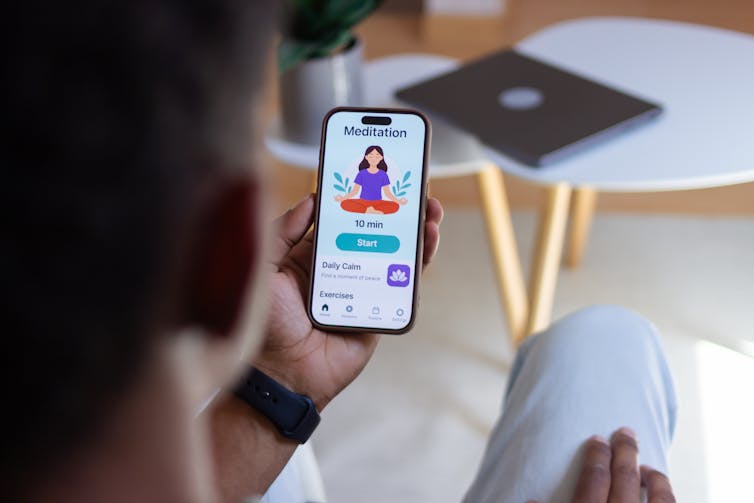
In today’s fast-paced world, feelings of chronic anxiety and stress are widespread. Fortunately, advancements in telehealth have made support more accessible than ever before. Choosing online counseling for anxiety offers powerful advantages that traditional, in-person therapy often can’t match.
Online counseling removes two of the most significant barriers to starting therapy: time and travel. You eliminate the commute, the time spent in a waiting room, and the need to arrange childcare. This accessibility means you can schedule sessions during a lunch break, before work, or even late in the evening, making consistent therapy a reality.
2. Comfort in Your Own Environment
For many people dealing with anxiety, leaving the house, especially during a peak panic or highly stressful day, can be difficult. Virtual therapy for stress allows you to attend sessions from the place where you feel safest and most comfortable: your home, your office, or a quiet space. This sense of security can lead to deeper, more honest conversations sooner than in an unfamiliar clinic.
3. A Wider Pool of Specialists
If you live in a rural area or have a niche mental health need, finding a local specialist can be nearly impossible. Online platforms like TheraConnect.net connect you with licensed therapists across your state (or even country, depending on licensing laws). This significantly increases your odds of finding a provider specializing in your exact condition, whether it’s generalized anxiety disorder, social phobia, or health anxiety.
4. Easier Integration into Daily Life
A key part of anxiety management is practicing coping skills in real-world scenarios. With online counseling, your therapist can work with you in the environment where your stress occurs. For instance, you can take a session right before or after a stressful meeting, making it easier to process the feelings and integrate new relaxation techniques immediately.
5. Consistency and Reliability
Consistency is crucial for therapeutic progress. When travel is challenging, the weather is bad, or schedules unexpectedly shift, an in-person appointment is often cancelled. With online therapy, the barrier to attendance is low. This high level of reliability ensures your therapeutic momentum isn’t broken, leading to more predictable and positive outcomes in managing your anxiety and stress.
If you’re ready to find accessible, high-quality care, explore how online counseling for anxiety can fit into your life today.
Overwhelmed by Choices? 5 Steps to Finding Your Perfect Online Therapist
Starting therapy is a huge, positive step, but finding the right online therapist can be overwhelming. Many give up, not knowing where to start or how to vet a provider.
Finding the right online therapist is the most crucial factor for success. It’s about fit, specialization, and logistics. Use this structured, 5-step guide to simplify your search and connect with the professional who can best help you achieve your mental health goals.
Step 1: Define Your Needs and Non-Negotiables
Before you even open a directory, you need a clear picture of what you’re looking for. This saves you hours of scrolling and filtering.
A. Identify the Specialty
Therapists are not one-size-fits-all. What is the primary issue you want to address?
Clinical Social Worker (LCSW), Psychiatrist (for medication)
Career stress
Licensed Professional Counselor (LPC)
Action: Write down 2-3 specific topics you want to discuss (e.g., “grief related to job loss” or “managing social anxiety”).
B. Set Logistical Boundaries
Online therapy offers flexibility, but you need to align with a therapist’s schedule and payment model.
Cost: What is your budget per session? Will they accept your insurance, or are they out-of-network?
Availability: Do you need evening or weekend appointments? Only search for those who offer times that genuinely work for you.
Cultural Fit: Do you prefer a therapist who shares a specific cultural, religious, or racial background? Filter accordingly.
Step 2: Use Filters, Directories, and Referral Networks
Now that you know what you need, use the powerful filtering tools available on platforms like TheraConnectand other reputable directories.
Platform Filters: Use keywords like “CBT,” “Trauma,” or “LGBTQIA+” to narrow the list. Filter by insurance provider first.
Check Credentials: Look for the letters after their name (e.g., Psy.D., Ph.D., LMFT, LCSW). This confirms they are licensed.
Read Their Profile: A good profile will clearly state the therapist’s therapeutic modalities (e.g., Dialectical Behavioral Therapy (DBT), Psychodynamic, Eye Movement Desensitization and Reprocessing (EMDR)). If you defined your needs in Step 1, you can quickly assess if their approach matches your issues.
Step 3: Vet the Credentials and Licensing
This is the non-negotiable step for safety and quality. Unlike life coaching or mentorship, licensed therapy is regulated.
Verify Licensure: Every licensed mental health professional is registered with a state board. Search the therapist’s name on their State Licensing Board website to confirm they are in good standing. This is public information and gives you peace of mind.
Ensure Telehealth Authorization: Confirm that the right online therapist is licensed to practice in your current state. Virtual therapists cannot legally provide care across state lines unless they hold multiple state licenses or the states have reciprocity agreements.
Step 4: Prepare and Ask Interview Questions
Think of the initial consultation or first few minutes of the first session as a brief job interview—you are the employer. You need to ensure the therapeutic alliance (the bond between client and therapist) is strong.
Here are essential questions to ask during a brief introductory call or the start of the first session:
Category
Key Questions to Ask
Experience
“Have you worked with [my specific issue, e.g., panic attacks] before? What was your approach?”
Approach
“How do you measure success in therapy?” “What does a typical session with you look like?”
Logistics
“What is your policy if I need to reach you between sessions?”
Cultural Fit
“What is your experience working with clients from diverse backgrounds?”
Crucial Indicator: Pay attention to how they answer. Are they non-judgmental, warm, and clear? Do you feel listened to and understood?
Step 5: Trust Your Gut (The “Fit” Check)
You can have the most qualified therapist in the world, but if the personal chemistry isn’t right, the sessions won’t be effective. The therapeutic alliance is the biggest predictor of success.
After the first session, ask yourself these three critical questions:
Do I feel heard? Did they actively listen, or did they interrupt or talk about themselves?
Do I feel safe? Did they clearly establish boundaries and respect my vulnerability?
Do I feel challenged (in a good way)? Do I feel like I learned something new, or that they offered a perspective I hadn’t considered?
If the answer to the first two questions is “Yes,” you’ve likely found a great fit. It can take 2-4 sessions to fully settle in, but if you feel strongly disconnected after the first meeting, it’s okay to move on. Your mental health is worth finding the perfect mat
Finding the right mental-care provider can feel overwhelming. Whether you’re dealing with anxiety, depression, trauma, grief, relationship concerns, burnout, or a major life transition, knowing where to begin can make the process easier.
TheraConnect helps people discover mental-care providers in Florida by making it easier to explore provider profiles, specialties, services, and locations.
Mental Health Care in Florida
Access to mental-health care can vary from one community to another. Federal Health Professional Shortage Areas (HPSAs) identify geographic areas, populations, and facilities where there is a shortage of mental-health professionals. Bureau of Health Workforce
As of December 31, 2025, Florida had 239 designated mental-health HPSAs, representing approximately 9.9 million people in designated areas. The same data show that the designated areas were estimated to have about 24.9% of their mental-health provider need met. KFF
That makes finding accessible mental-care options an important part of navigating care in Florida.
How to Find the Right Therapist in Florida
Start by identifying what you’re looking for help with.
You may want a provider who works with:
Anxiety and stress
Depression
Trauma
Grief and loss
Relationship concerns
Family concerns
Burnout
Self-esteem
Life transitions
Narcissistic abuse recovery
Other emotional or mental-health concerns
Searching by specialty can help you narrow your options rather than choosing a provider based solely on location.
What Type of Mental-Care Provider Are You Looking For?
Mental-care professionals can have different education, credentials, licensing requirements, and areas of practice.
Depending on your needs, you may encounter:
Therapists
Licensed clinical social workers
Licensed mental-health counselors
Marriage and family therapists
Psychologists
Mental-health coaches
Other mental-care professionals
When reviewing a provider, look at their credentials, specialties, experience, services, and the type of support they offer.
For licensed professionals, you can also use Florida’s official health-professional license verification resources to check licensing information.
Online or In-Person Mental Health Support?
Your search doesn’t necessarily have to be limited to providers located close to your home.
Many mental-care providers offer online services, while others provide in-person appointments. Some offer both.
When reviewing a provider profile, look for:
Online availability
In-person availability
Location
Areas of specialty
Services offered
Whether they’re accepting new clients
The populations they work with
If you’re considering online care, confirm that the provider is able to serve clients in your location and that the service is appropriate for your needs.
How to Choose a Florida Mental-Health Provider
Once you’ve found several providers who appear to match your needs, take some time to compare them.
Consider:
Does this provider work with the issue I’m experiencing?
Do their credentials and experience fit what I’m looking for?
Do they offer online or in-person sessions?
Are they accepting new clients?
Do their services fit my needs and circumstances?
Do I feel comfortable reaching out to them?
You don’t have to choose the first provider you find.
The goal is to find someone whose experience, services, and approach align with what you’re looking for.
Find Mental-Care Providers Across Florida
Florida is home to communities with very different needs and circumstances.
TheraConnect helps people explore mental-care providers based on factors such as specialty, services, and location.
You can review provider profiles and learn more about professionals before deciding who you’d like to contact.
Whether you’re looking for help with anxiety, trauma, relationships, grief, burnout, depression, or another concern, starting with your specific needs can make your search more focused.
Find a Mental-Care Provider on TheraConnect
Searching for mental-care shouldn’t require visiting dozens of different websites.
TheraConnect gives people a place to discover mental-care providers and explore their professional profiles.
Are You a Mental-Care Provider in Florida? Get Found.
TheraConnect is also designed for the professionals providing mental-care services.
If you’re a therapist, counselor, psychologist, coach, or other mental-care professional in Florida, a professional directory profile can give potential clients another way to discover your services.
Your profile can showcase:
Your professional credentials
Your specialties
Your experience
Your services
Your location
Online or in-person options
Information potential clients can use when deciding whether to contact you
Your online presence shouldn’t depend entirely on social media or someone happening to find your individual website.
Make it easier for people looking for mental care to discover you.
Your Expertise Matters. Get Found.
Create your professional TheraConnect profile and put your services where people are looking for mental-care providers.
Finding Mental Care Doesn’t Have to Feel So Complicated
Start with what you need.
Look for providers who specialize in those concerns. Review their profiles and credentials. Consider whether online or in-person care works best for you. Then reach out to providers who appear to fit your needs.
TheraConnect helps make the discovery process easier.
Finding the right mental-care provider can feel overwhelming. Texas is a large and diverse state, and the right provider for one person may not be the right fit for someone else.
You may be searching for help with anxiety, depression, trauma, grief, relationship concerns, burnout, stress, self-esteem, or another life challenge. You may also be wondering whether you should look for someone nearby or work with a provider online.
TheraConnect makes it easier to discover mental-care providers and explore your options in Texas.
Mental Health Care in Texas
Access to mental-health care can vary significantly depending on where someone lives and what type of support they need.
The Health Resources and Services Administration (HRSA) designates certain geographic areas, populations, and facilities as Mental Health Professional Shortage Areas when there are not enough mental-health professionals to meet the needs of the population.
For someone looking for care, that can make knowing where to search and what to look for especially important.
TheraConnect provides a place where people can explore mental-care providers and learn more about their specialties, services, and professional backgrounds.
How to Find the Right Therapist in Texas
The closest provider isn’t necessarily the right provider for you.
When searching, start by thinking about what you want help with.
For example, you may want a provider who works with:
Anxiety and stress
Depression
Trauma
Grief and loss
Relationship concerns
Family concerns
Burnout
Self-esteem
Life transitions
Narcissistic abuse recovery
Other emotional or mental-health concerns
Looking for providers who specifically list your area of concern can make it easier to narrow your options.
What Type of Mental-Care Provider Are You Looking For?
“Mental-care provider” can describe different types of professionals.
Depending on your needs, you may encounter:
Therapists
Licensed professional counselors
Licensed clinical social workers
Marriage and family therapists
Psychologists
Mental-health coaches
Other mental-care professionals
Their education, licensing, scope of practice, and services can differ.
When reviewing a provider, take time to look at their credentials, specialties, experience, services, and approach.
If you’re seeking therapy, you can also verify licensing through the appropriate Texas licensing authority.
The Texas Behavioral Health Executive Council provides license verification resources for several behavioral-health professions, including professional counselors, psychologists, social workers, and marriage and family therapists.
Online or In-Person Therapy in Texas?
You may not need to limit your search to providers located a few miles from your home.
Some providers offer online sessions, while others offer in-person appointments. Some offer both.
Online care may give you additional options when you’re searching for a provider with a particular specialty.
When looking at a provider profile, check:
Whether they offer online sessions
Whether they offer in-person sessions
Where they are located
Their specialties
Their availability
The types of clients they work with
Their listed services
Always confirm availability and whether the provider can serve you in your location before beginning care.
How to Choose a Texas Mental-Health Provider
Once you’ve found several providers who appear to fit your needs, compare their profiles.
Consider asking:
Does this provider work with the issue I’m dealing with?
Do their credentials and experience fit what I’m looking for?
Do they offer the type of sessions I want?
Do they work with people in my location?
Are they accepting new clients?
Do I feel comfortable contacting them?
You don’t have to choose the first provider you find.
Finding the right fit can take some time.
Find Mental-Care Providers Across Texas
Texas communities are diverse, and people seek mental-care support for many different reasons.
TheraConnect can help people discover providers throughout Texas based on factors such as specialty, services, and location.
You can explore provider profiles to learn more about professionals before deciding who you’d like to contact.
Looking for support with a specific concern?
You may want to start by searching for providers who work with:
Anxiety
Depression
Trauma
Grief
Relationships
Family concerns
Burnout
Stress
Self-esteem
Life transitions
The goal isn’t simply to find a provider.
It’s to find a provider whose experience and services align with what you’re looking for.
Find a Mental-Care Provider on TheraConnect
TheraConnect was created to make discovering mental-care providers easier.
Clients can explore provider profiles and learn more about professionals who may be able to help.
Are You a Mental-Care Provider in Texas? Get Found.
TheraConnect isn’t only for people searching for care.
It’s also a place for therapists, counselors, psychologists, coaches, and other mental-care professionals who want to create an online presence where people looking for support can discover them.
Your professional profile can help potential clients learn about:
Who you are
Your credentials
Your specialties
The services you provide
Where you practice
Whether you offer online care
How potential clients can contact you
Instead of relying entirely on social media or hoping someone finds your individual website, a directory profile gives prospective clients another way to discover your services.
Your Expertise Matters. Make It Easier to Find You.
If you’re a Texas mental-care provider, you can create a professional profile on TheraConnect.
Join TheraConnect and get your professional profile in front of people looking for mental-care support.
Finding Mental Care Doesn’t Have to Feel So Complicated
Searching for mental-care support can be a big step.
Start with what you need. Look for providers who specialize in those concerns. Review their credentials and profiles. Consider whether online or in-person care works best for you. Then reach out to providers who appear to be a good fit.
TheraConnect helps make that discovery process easier.
Whether you’re searching for a therapist in Houston, Dallas, Austin, San Antonio, Fort Worth, or elsewhere in Texas, you can start your search online and explore available mental-care providers.
Finding the right mental-care provider can feel overwhelming. California is a large and diverse state, and people looking for support may have many questions:
Should I look for a therapist near me? Can I work with someone online? What type of provider do I need? How do I know whether someone is properly licensed?
TheraConnect makes the process simpler by helping people search for mental-care providers by location, specialty, and type of support.
Whether you’re looking for help with anxiety, trauma, grief, relationships, burnout, depression, or another concern, the right provider can be easier to find when you know what to look for.
Mental Health Care in California
California has a substantial need for behavioral-health services, and access isn’t the same everywhere in the state.
Federal Health Professional Shortage Areas can identify geographic areas, populations, or facilities experiencing shortages of mental-health providers. Bureau of Health Workforce
California has also historically experienced significant differences in provider availability between regions. A California Future Health Workforce Commission report found particularly low behavioral-health provider-to-population ratios in regions including the Inland Empire and San Joaquin Valley, while noting that every region faced behavioral-health capacity challenges. KFF
That makes finding a provider who fits your needs—and can actually accept new clients—an important part of the search.
What Kind of Mental-Care Provider Are You Looking For?
The word “therapist” can refer to several different types of professionals.
Depending on your needs, you may encounter:
Licensed Clinical Social Workers (LCSWs)
Licensed Marriage and Family Therapists (LMFTs)
Licensed Professional Clinical Counselors (LPCCs)
Psychologists
Other licensed mental-health professionals
Mental-care coaches and other wellness professionals, where appropriate
California’s Board of Behavioral Sciences regulates several categories of behavioral-health professionals, including LMFTs, LCSWs, LPCCs, and Licensed Educational Psychologists. Board of Behavioral Sciences
When searching for a provider, look at their credentials, specialties, services, location, availability, and the type of support they provide.
How to Find a Therapist in California
1. Start With What You Need Help With
Instead of searching only for “therapist California,” start with the issue you want help addressing.
For example:
Anxiety or stress Look for providers who specifically work with anxiety, stress management, or related concerns.
Trauma Search for professionals who list trauma or trauma-informed care among their specialties.
Grief and loss Look for providers who specifically work with grief and bereavement.
Relationships You may want someone experienced with relationship concerns, couples counseling, or family issues.
Burnout Consider providers who work with stress, burnout, work-life concerns, or life transitions.
The more specific your search, the easier it can be to compare providers who may fit your needs.
2. Decide Whether You Want Online or In-Person Care
You don’t necessarily have to find someone in your immediate neighborhood.
Some California providers offer virtual sessions, which can give clients additional choices when searching for mental-care support.
Others provide in-person services.
When reviewing a profile, check whether the provider offers:
In-person sessions
Virtual sessions
Both
Services in your location
The type of support you’re seeking
3. Check Provider Credentials
Credentials matter.
California maintains official licensing systems that allow consumers to verify licensing information for professionals regulated by the state.
The California Board of Behavioral Sciences says its license-verification information comes from the Board’s primary licensing system and can be used to check an individual’s current status. Board of Behavioral Sciences
For psychologists, the California Board of Psychology also maintains licensing and registration information. California Board of Psychology
A directory profile should make it easier to understand who the provider is and what they offer, while consumers should still verify credentials when appropriate.
4. Look Beyond Location
Two providers in the same city can offer very different approaches.
When comparing profiles, consider:
Specialty
Professional credentials
Experience
Session format
Availability
Location
Approach to care
Whether they’re accepting new clients
Whether their services fit what you’re looking for
Finding someone who fits your specific needs may be more useful than simply choosing the closest provider.
Find Mental-Care Providers Across California
TheraConnect is designed to make provider discovery easier.
You can search for providers based on factors such as location and specialty, then review individual profiles to learn more about the professionals offering mental-care services.
California searches can include communities throughout the state, including areas such as:
Los Angeles
San Diego
San Francisco
Sacramento
San Jose
Oakland
Fresno
Bakersfield
Riverside
Anaheim
Stockton
Irvine
Santa Barbara
Long Beach
And surrounding communities
As more providers join TheraConnect, the directory can continue expanding its California coverage.
For California Mental-Care Providers: Get Found
TheraConnect isn’t only for people searching for support.
It’s also for providers who want to be easier to discover online.
If you’re a California therapist, counselor, psychologist, coach, or other mental-care professional, having a professional directory profile gives prospective clients another way to learn about your services.
Your profile can showcase:
Your professional credentials
Your specialties
Your location
Your services
Your experience
Your session options
Information potential clients can use when deciding whether to contact you
Instead of relying entirely on people finding your individual website or social-media account, a directory profile gives you another online presence where people are actively looking for mental-care providers.
Your expertise matters. Make it easier to find you.
Join TheraConnect and create your professional provider profile.
You don’t have to figure out the entire process at once.
Start with what you’re looking for, identify the type of provider who may be appropriate, narrow your search by specialty and location, and take time to review individual profiles.
The goal isn’t simply to find a provider. It’s to find a provider who fits what you’re looking for.
Published: December 15, 2015, 5:53 am EST Author: Kelly Rohan, Professor of Psychology, University of Vermont Disclosure statement: Kelly Rohan receives funding from the National Institutes of Mental Health and book royalties from Oxford University Press for the CBT treatment manual for SAD.
As the days get shorter and the nights grow longer, sometimes it can seem like we barely get a chance to see the sun. For most people, this can be frustrating, and for others, the slide into winter can actually lead to a subset of depression called seasonal affective disorder, or SAD.
SAD is a form of clinical depression that follows a seasonal pattern. The symptoms are present during the fall and winter months and resolve in the spring and summer. Common SAD symptoms include: depressed mood, loss of interest, fatigue, sleep changes (usually sleeping more), significant appetite changes (usually craving more starches and sweets), difficulty concentrating, and sometimes thoughts of death or suicide.
SAD can be tough, but it is treatable. Some people might use daily therapy with a light box, but antidepressants are also used. My lab at the University of Vermont wanted to test another kind of treatment – cognitive-behavioral therapy. We wanted to see if using this talking-based therapy could deliver more lasting results than light therapy does.
Who Gets SAD and How Is It Different from Depression?
One popular misconception about SAD is that it affects everyone in northern locations, though it’s true that most people at high latitudes experience SAD symptoms to a certain extent. In the United States, the farther north you go, the more cases of SAD you find. SAD prevalence has been estimated to range from 1% in Florida to 10% in Alaska. While it is more common the farther north you go, only a minority of people living in these places actually have the number and severity of symptoms it takes to count as winter depression.
Everyone can experience some changes in behavior or outlook with the shift of the seasons, and many of these are normal. When it is cold, you might not want to go out as often. When the nights are longer and the days are shorter, your sleep patterns may change.
But SAD is different from these typical changes because the symptoms can make it difficult to function at work or school or in relationships and cause great distress. We can think of seasonal changes as on a continuum, ranging from no symptoms at all to seasonal affective disorder on the extreme end. In northern locations, most people fall in the middle, with mild changes in energy, sleep, and food preferences in winter versus summer.
We don’t know why short days can lead to SAD, but several hypotheses have been proposed. For instance, a person’s biological clock may run slow, delaying circadian rhythms. Perhaps longer nights mean a longer period of release for melatonin, the “hormone of darkness” that signals sleep, which leads to a longer “biological night.” Both of these scenarios would lead to a mismatch between the sleep and wake cycle and the light-dark cycle.
A visitor relaxes in the new Light Lounge, an ambient white space containing four specially designed light boxes in the Science Museum’s Dana Centre in London. Alessia Pierdomenico/Reuters
Treating SAD
One popular treatment for SAD is light therapy, which involves daily exposure to a device that produces 10,000 lux of full-spectrum light, minus the harmful ultraviolet rays. The idea is that it mimics sunlight. Light therapy usually takes place first thing in the morning to simulate a summer dawn and jump-start the circadian clock. It is an established, effective SAD treatment. Across studies, 53% of SAD patients experience complete relief from their symptoms with light therapy.
My laboratory has been conducting clinical trials to test an alternative treatment: cognitive-behavioral talk therapy (CBT). CBT is not a new treatment – it has been used and researched for nonseasonal depression for over 40 years. But, until now, it hasn’t been tested for SAD in clinical trials.
CBT involves recognizing and changing negative thoughts that feed sad moods and engaging in pleasurable activities that counteract depressed moods. In SAD specifically, a lot of these negative thoughts are gloomy thoughts about the winter season, short days, and winter weather.
Dwelling on these negative thoughts and going into “hibernation mode” by withdrawing to the couch or bed breeds depression. In CBT for SAD, we try to get people to be proactive by questioning and reframing these negative thoughts and engaging in behaviors that make them approach winter rather than avoiding it, especially through increased social activities and keeping up hobbies and interests in the winter.
The basic idea is to tweak negative, helpless attitudes about winter (“Winter is a dreaded season to endure”) to be more positive and empowering (“I prefer summer to winter, but winter also offers opportunities for enjoyment if I take control of my mood rather than letting the season dictate how I feel”).
Comparing Talk Therapy and Light Therapy
We just finished a clinical trial at the University of Vermont, where 177 adults with SAD were treated with either light therapy or CBT across six weeks in the winter and then followed for two years.
Initially, we found that light therapy and CBT were both effective SAD treatments. Both were associated with large improvements in SAD symptoms during treatment in the winter. However, by two winters later, there was a clear advantage of initial treatment with CBT over light therapy.
People who were treated with CBT had fewer relapses of their SAD: slightly less than one-half of the people in the light therapy group relapsed, as compared to slightly more than one-quarter in the CBT group. The people treated with CBT also had less severe winter symptoms overall than those treated with light therapy.
Why Does the CBT Seem to Have a Longer-Lasting Effect?
These results suggest that the effect of CBT is more durable in the long run.
It might be that long-term compliance with light therapy – sitting in front of a light box for at least 30 minutes a day, every day during winter – is part of the problem. We found that slightly less than one-third of the people we treated with light therapy reported any light therapy use one or two winters later. This is an issue because light therapy is intended as a daily treatment during the fall and winter months that is continued until spring, with its increased sunshine arrives.
Although CBT involves effort to attend sessions, work with a therapist to change winter habits and “homework” to practice skills, it seems to pay off in the long run with better outcomes. It might be that teaching people to reframe their thoughts about winter can help them overcome SAD year after year.
It’s 2:47 am, and your phone buzzes on the nightstand. The notification suddenly glows in the darkness: “You’re on a 7-day streak!”; “Don’t break your streak!”. You feel the need to open the app right away for an emergency breathing exercise. Half-awake, you fumble for the device, chest tightening. Another buzz: “What’s your positive intention for the day?”
The app that promised to ease your anxiety has just jolted you into a state of micro-panic. Have you fallen prey to some kind of toxic, digital positivity?
Research shows that smartphone notifications from various types of apps can contribute to stress, anxiety and depression, with users receiving dozens of push notifications daily.
A recent meta-analysis found that while mental health apps can help improve clinical outcomes, there are some concerns around too much engagement leading to frustration and stress.
These apps, sometimes marketed as “therapist in your pocket” and “a sort of 24-7 mobile therapist,” are employing strategies closely resembling what social media platforms use to maximise psychological engagement. But when the product is mental wellbeing, what happens when the cure becomes part of the disease?
To understand why app design choices matter, we need to consider how our minds process threats, whether positively or negatively framed. In my new book Framing – The Social Art of Influence, I examine topics ranging from caviar ads to public‑health campaigns, asking which kinds of signalling strike a chord with different audiences in particular situations. While mental‑health apps are not directly investigated in my book, there are plenty of parallels to them backed up by research.
One key idea is the distinction between “rough” and “smooth” textures of framing in communication. Rough framing uses threat cues, surveillance language, and urgency to capture attention. It’s the difference between a gentle reminder and a fire alarm. These apps systematically deploy rough framing through their notification systems.
Consider how these notifications exploit what evolutionary psychologists call our “hypervigilance bias” — the ancient tendency to overreact to potential threats that once kept our ancestors alive. Research shows that throughout human evolution, diverse environmental threats shaped our brain’s fear response, resulting in cognitive mechanisms that prioritised survival.
When an app warns that your stress is spiking, it’s using the same neural pathways that once alerted us to predators. But unlike a rustling bush that might hide a tiger, these digital warnings can create threats where none existed.
By sending alerts about “detected stress” or “mood dips,” mental health apps create micro-crises that only the app can resolve. User reviews consistently praise the “instant reassurance” these apps provide, yet studies tell a different story about long-term engagement patterns.
Research on mental health app notification timing and frequency reveals concerning patterns. One study found that people using a certain app receiving daily notifications showed higher engagement initially. Still, some users described experiencing frustration with repetitive notification content, with one participant noting: “n the end it got me a bit annoyed, ‘cause I was like, ‘Oh, I’ve done this already.’”
Analysis of push notifications showed that frequent users become less responsive to suggestion-based prompts over time.
Hot and Cold Framing
In my book’s framework of social influence, I also distinguish between “hot” and “cold” framing temperatures. Hot framing creates urgency and emotional intensity — think breaking news alerts or emergency warnings. Cold framing allows space for reflection and considered response.
Mental health apps have become masters of hot framing. Haptic buzzes accompany streak warnings. Red badges accumulate on home screens. Animation effects show wilting flowers when you miss a meditation session. One popular app even sends notifications styled like text messages: “Hey! Your anxiety score is climbing. Let’s chat?”
The informal tone masks the manipulative design — you’re not chatting with a friend but with an algorithm optimised for engagement.
This matters because mental health recovery often requires the opposite approach. Decades of research in cognitive behavioural therapy emphasise the importance of creating distance from anxious thoughts, not constant monitoring of them. When we’re repeatedly prompted to check our stress levels, we’re training ourselves to become more, not less, aware of every physiological fluctuation.
How to Improve Design
The solution isn’t to demonise technology or abandon digital mental health tools altogether. Instead, we need to reframe how these apps operate radically. Research suggests several promising approaches that shift from hot to cool, rough to smooth framing.
Mental health apps can be helpful – when used in the right way. Ground Picture/Shutterstock
First, notification caps work. A study on smartphone notification batching found that limiting alerts to three times daily reduced stress and increased well-being. Moreover, research on mental health app notifications warns that “a lot of annoying reminders can lead to disengagement” and recommends allowing users to customise reminder frequency and timing.
Second, opt-in rather than default biometric monitoring reduces the surveillance feel while maintaining functionality for those who genuinely benefit. Third, what designers call “intentional friction” — small barriers to obsessive checking — can break compulsion cycles. Such barriers may include limiting how often data is refreshed or using batching notifications.
Colour psychology matters too. Research on healthcare design shows that blue environments can lower blood pressure, reduce heart rate, and decrease cortisol levels. A study on mental health app design found that young people “favoured a subtle use of colour” for wellbeing apps, warning against “overly intense colours”.
Language shifts make a difference. “When you’re ready, you might enjoy a breathing exercise” lands differently than “URGENT: Manage your stress NOW!”
What You Can Do
The next time your mental health app sends an urgent notification, pause before responding. Ask yourself: Is this alert serving my wellbeing or the app’s engagement metrics? Are these “insights” about my stress creating more worry than wisdom? The power to reframe these digital interactions lies first in recognising how they frame us.
Perhaps the most radical act of digital self-care is the simplest: turning off notifications altogether. True mental wellness might begin not with another app alert, but with the confidence to trust our own minds, in their own time, at their own pace. Now that would be revolutionary — an app that knows when to stay quiet.
I’m a professor of sociology and Lund University, Sweden, and a former Visiting Academic of St Antony’s College, Oxford University, and the London School of Economics in the UK, and a Wallenberg Alumni of Environment and Sustainability at Massachusetts Institute of Technology in the US
The journey to mental well-being begins with a single, courageous step: acknowledging the need for help. At Thera Connect, we refer to this as Mental Care Awareness—the recognition that professional support is a viable, necessary, and accessible path to healing and growth.
This awareness is about moving past the idea of mental health and transitioning to active care. If you are ready to take that next step, here is why professional support matters and how Thera Connect simplifies finding the right match.
Why Connect with a Mental Health Practitioner?
You wouldn’t try to fix a complex plumbing issue without calling a professional. Your mind and emotions deserve the same level of expert care. Mental health practitioners—including licensed therapists, psychologists, and psychiatrists—offer specialized, evidence-based tools that self-help or talking to friends can’t provide.
Professional Care Offers:
Objective Perspective: A trained practitioner offers an unbiased view of your challenges, helping you identify patterns and root causes you might overlook.
Specialized Techniques: They use clinically proven methods (like Cognitive Behavioral Therapy or Dialectical Behavior Therapy) to teach you coping skills that create lasting change.
Privacy and Confidentiality: Sessions offer a safe and confidential space where you can explore sensitive issues without fear of judgment.
Medication Management: Only a licensed psychiatrist can prescribe and manage medication when necessary, integrating pharmaceutical intervention with therapy for holistic care.
The Thera Connect Difference: Finding Your Match
We know the process of finding the right mental health practitioner can feel overwhelming. That’s why Thera Connect was built: to demystify the search and provide reliable access to verified, qualified professionals.
Step 1: Define Your Needs
Before you start searching, a little introspection helps. Ask yourself:
What type of issue am I facing? (Anxiety, grief, relationship issues, trauma, burnout, etc.)
What type of practitioner do I need? Do you require a psychiatrist for medication, or a therapist/psychologist for talk therapy?
What matters most? (Location, virtual availability, specific therapy type, or cultural background match.)
Step 2: Utilize Thera Connect’s Filter Tools
Instead of sifting through countless unverified listings, our platform allows you to filter practitioners based on crucial criteria quickly:
Specialization: Narrow your search to providers who focus on your specific concern (e.g., trauma-informed care or couples counseling).
Licensure: We verify that every provider listed is a fully licensed and recognized mental health practitioner in their respective state.
Location & Format: Easily find providers near you or those offering convenient teletherapy options.
Step 3: Initiate Contact and Assess the Fit
The first consultation is key to establishing a therapeutic alliance. Once you find a potential match on Thera Connect, reach out. During this initial conversation, ask about their approach, experience with your specific issue, and what you can expect from their sessions. The right fit often comes down to comfort and trust.
Making Mental Care Accessible for Everyone
At Thera Connect, we believe that Mental Care Awareness means ensuring care is within reach. We are proud to work closely with the Mental Health Care Fund (supported by our partners at fitnesshacksforlife.org).
If cost is a barrier, explore the resources available on this page: https://fitnesshacksforlife.org/resources/ to help you, turning awareness of need into the reality of receiving help.
Taking care of your mental health is not a luxury—it’s a prerequisite for a fulfilling life. Use Thera Connect today to find the professional support you deserve.
Recently, I found myself pouring my heart out, not to a human, but to a chatbot named Wysa on my phone. It nodded – virtually – asked me how I was feeling, and gently suggested trying breathing exercises.
Artificial intelligence-powered mental health tools are becoming increasingly popular – and increasingly persuasive. But beneath their soothing prompts lie important questions: How effective are these tools? What do we really know about how they work? And what are we giving up in exchange for convenience?
Of course, it’s an exciting moment for digital mental health. But understanding the trade-offs and limitations of AI-based care is crucial.
Stand-in Meditation and Therapy Apps and Bots
AI-based therapy is a relatively new player in the digital therapy field. But the U.S. mental health app market has been booming for the past few years, from apps with free tools that text you back to premium versions with an added feature that gives prompts for breathing exercises.
Headspace and Calm are two of the most well-known meditation and mindfulness apps, offering guided meditations, bedtime stories, and calming soundscapes to help users relax and sleep better. Talkspace and BetterHelp go a step further, offering actual licensed therapists via chat, video, or voice. The apps Happify and Moodfit aim to boost mood and challenge negative thinking with game-based exercises.
Give Now and Get a Free e-Book with Insightful Articles on Solving the Housing Crisis
Support our work
Somewhere in the middle are chatbot therapists like Wysa and Woebot, using AI to mimic real therapeutic conversations, often rooted in cognitive behavioral therapy. These apps typically offer free basic versions, with paid plans ranging from US$10 to $100 per month for more comprehensive features or access to licensed professionals.
While not designed specifically for therapy, conversational tools like ChatGPT have sparked curiosity about AI’s emotional intelligence.
Some users have turned to ChatGPT for mental health advice, with mixed outcomes, including a widely reported case in Belgium where a man died by suicide after months of conversations with a chatbot. Elsewhere, a father is seeking answers after his son was fatally shot by police, alleging that distressing conversations with an AI chatbot may have influenced his son’s mental state. These cases raise ethical questions about the role of AI in sensitive situations.
Whether your brain is spiraling, sulking, or just needs a nap, there’s a chatbot for that. But can AI really help your brain process complex emotions? Or are people just outsourcing stress to silicon-based support systems that sound empathetic?
And how exactly does AI therapy work inside our brains?
Most AI mental health apps promise some flavor of cognitive behavioral therapy, which is basically structured self-talk for your inner chaos. Think of it as Marie Kondo-ing, the Japanese tidying expert known for helping people keep only what “sparks joy.” You identify unhelpful thought patterns like “I’m a failure,” examine them, and decide whether they serve you or just create anxiety.
But can a chatbot help you rewire your thoughts? Surprisingly, there’s science suggesting it’s possible. Studies have shown that digital forms of talk therapy can reduce symptoms of anxiety and depression, especially for mild to moderate cases. In fact, Woebot has published peer-reviewed research showing reduced depressive symptoms in young adults after just two weeks of chatting.
These apps are designed to simulate therapeutic interaction, offering empathy, asking guided questions, and walking you through evidence-based tools. The goal is to help with decision-making and self-control, and to help calm the nervous system.
The neuroscience behind cognitive behavioral therapy is solid: It’s about activating the brain’s executive control centers, helping us shift our attention, challenge automatic thoughts, and regulate our emotions.
The question is whether a chatbot can reliably replicate that, and whether our brains actually believe it.
A User’s Experience, and What It Might Mean for the Brain
“I had a rough week,” a friend told me recently. I asked her to try out a mental health chatbot for a few days. She told me the bot replied with an encouraging emoji and a prompt generated by its algorithm to try a calming strategy tailored to her mood. Then, to her surprise, it helped her sleep better by week’s end.
As a neuroscientist, I couldn’t help but ask: Which neurons in her brain were kicking in to help her feel calm?
This isn’t a one-off story. A growing number of user surveys and clinical trials suggest that cognitive behavioral therapy-based chatbot interactions can lead to short-term improvements in mood, focus, and even sleep. In randomized studies, users of mental health apps have reported reduced symptoms of depression and anxiety – outcomes that closely align with how in-person cognitive behavioral therapy influences the brain.
Several studies show that therapy chatbots can actually help people feel better. In one clinical trial, a chatbot called “Therabot” helped reduce depression and anxiety symptoms by nearly half, similar to what people experience with human therapists. Other research, including a review of over 80 studies, found that AI chatbots are especially helpful for improving mood, reducing stress, and even helping people sleep better. In one study, a chatbot outperformed a self-help book in boosting mental health after just two weeks.
While people often report feeling better after using these chatbots, scientists haven’t yet confirmed exactly what’s happening in the brain during those interactions. In other words, we know they work for many people, but we’re still learning how and why.AI chatbots don’t cost what a human therapist costs – and they’re available 24/7.
Red Flags and Risks
Apps like Wysa have earned FDA Breakthrough Device designation, a status that fast-tracks promising technologies for serious conditions, suggesting they may offer real clinical benefit. Woebot, similarly, runs randomized clinical trials showing improved depression and anxiety symptoms in new moms and college students.
While many mental health apps boast labels like “clinically validated” or “FDA approved,” those claims are often unverified. A review of top apps found that most made bold claims, but fewer than 22% cited actual scientific studies to back them up.
In addition, chatbots collect sensitive information about your mood metrics, triggers, and personal stories. What if that data winds up in third-party hands, such as advertisers, employers, or hackers, a scenario that has occurred with genetic data? In a 2023 breach, nearly 7 million users of the DNA testing company 23andMe had their DNA and personal details exposed after hackers used previously leaked passwords to break into their accounts. Regulators later fined the company more than $2 million for failing to protect user data.
Unlike clinicians, bots aren’t bound by counseling ethics or privacy laws regarding medical information. You might be getting a form of cognitive behavioral therapy, but you’re also feeding a database.
And sure, bots can guide you through breathing exercises or prompt cognitive reappraisal, but when faced with emotional complexity or crisis, they’re often out of their depth. Human therapists tap into nuance, past trauma, empathy, and live feedback loops. Can an algorithm say “I hear you” with genuine understanding? Neuroscience suggests that supportive human connection activates social brain networks that AI can’t reach.
So while in mild to moderate cases, bot-delivered cognitive behavioral therapy may offer short-term symptom relief, it’s important to be aware of its limitations. For the time being, pairing bots with human care – rather than replacing it – is the safest move.
Life in the digital world can be rewarding. It’s convenient to order groceries for pickup, share photographs or music, and keep in touch with family and friends, no matter the distance. However, it can also be draining. The feeling of being constantly “on” and productive has driven people to reconsider their balance in the saturated digital world.
What to do? There is a fuzzy line between healthy and unhealthy digital consumption. Some folks feel the need to fully disconnect from the digital world to understand this boundary. The idea of digital detoxing is gaining popularity. This practice involves intentionally unplugging from digital technologies in the pursuit of balance and digital well-being. Nearly half of Americans report that they are making a conscious effort to regularly step away from their screens.
But is this attempt enough? It’s no surprise that 62% of Americans confess to feeling addicted to their devices and the internet. Despite people’s best efforts to unplug and strike a balance, research indicates that digital detoxes often fall short.
Getting outside, being with someone else and having fun are all good approaches to disconnecting from the digital world. kali9/E+ via Getty Images
Digital well-being is subjective. We research technology andconsumer behavior. Our recent research studied the digital detox journey, where people take a much-needed break from digital consumption, aiming to uncover what supports or sabotages those seeking digital well-being. Our findings highlighted four key strategies to improve the outcome of this journey toward achieving a healthier digital balance: replacement practices, social bonds, mindfulness, and digital well-being as a journey.
1. Finding Replacement Practices
We found that feelings of withdrawal during a digital detox are quite common. For many, reaching for their phones and scrolling has become such a ritual that they often don’t realize they are doing it. Many turn to their devices when bored or stressed, much like an adult pacifier. As a result, finding an alternative to distract your mind and occupy your hands can be crucial during a digital detox.
These replacement practices often involve hobbies or activities that result in play. As adults, people sometimes forget what it feels like to have fun. By separating fun from your task list and engaging in play for its own sake, you can significantly reduce stress levels and boost your digital well-being.
2. Shoring up Social Bonds
Humans are inherently social creatures. Indeed, tools such as email, text messages, and social media offer ways to enhance social connections. This innate desire for connection, however, combined with people’s reliance on technology, can lead to feelings of FOMO – fear of missing out – and anxiety during a digital detox.
The average adult now spends 70% less time with friends than they did two decades ago. Digital devices offer connection, but pieces of the experience are missing, such as the joy of in-person contact and trust in others that can be difficult to get online. So while we’re a more connected society, relationships suffer, and people are more lonely than ever.
Therefore, during a digital detox, it is vital to fill your cup with community, whether through existing friendships or by creating new ones. We recommend engaging in a digital detox alongside others, because FOMO may rear its ugly head if your friend pulls out their phone during a night out. Taking a short digital detox with the Offline Club.
3. Emphasizing Mindfulness
In today’s fast-paced environment, finding a moment to pause can feel nearly impossible. Many experience solitude deprivation, meaning people often don’t have moments to be alone with their own thoughts. Yet, the ability to just be can allow time for reflection, helping you consider what makes you happy and healthy. Finding moments where you can step away – to be still and silent – can provide a much-needed recharge.
With adults spending about 90% of their time indoors, breaking the routine and heading outside can offer a more holistic perspective on both personal and global well-being. In our study, yoga and meditation were common ways that detoxers found moments to become more aware of their own thoughts, which helped foster more intentional behaviors.
4. Viewing Digital Well-being as an Ongoing Journey
Ultimately, digital well-being is a journey. It is not a checklist that, once completed, means you are fulfilled.
Unfortunately, a single detox isn’t enough to cure digital imbalance. Instead, a successful detox often leaves people feeling introspective and curious. Our research participants shared that relapses are common, especially if they don’t set and monitor ongoing goals. Importantly, your needs change and evolve over time. In other words, what works now might not be what you need in the future.
Willpower just isn’t enough. We recommend identifying specific goals for yourself related to your own digital well-being. These aren’t productivity goals but goals to be unproductive. The aim is to unplug in more fulfilling ways. Whether planning a weekly game night with friends or taking a 10-minute walk without your phone, making time to unplug is worth it in the long run.
Researchers still have more to learn to help support digital wellness. We should remember, though, that individual differences play a crucial role in this equation, meaning that the journey to achieving digital harmony is uniquely personal. Thus, as people navigate their tech-saturated lives, it’s clear that finding the right balance is a complex, highly individualized process.
The digital detox journey can be challenging, but many people discover it to be rewarding in the end. People are not machines, however, so recognizing your limits and finding ways to reconnect with yourself and others during a detox can significantly enhance your sense of humanity and digital well-being.