
Have you ever felt like you are drowning in a shallow pool? It is that uncomfortable space where your struggles don’t feel “serious enough” for a hospital visit, yet they are far too heavy to carry on your own. You might worry about taking resources away from those in a crisis or feel overwhelmed by the sheer number of options available. It’s completely valid to feel stuck between needing help and fearing you are a burden on emergency systems.
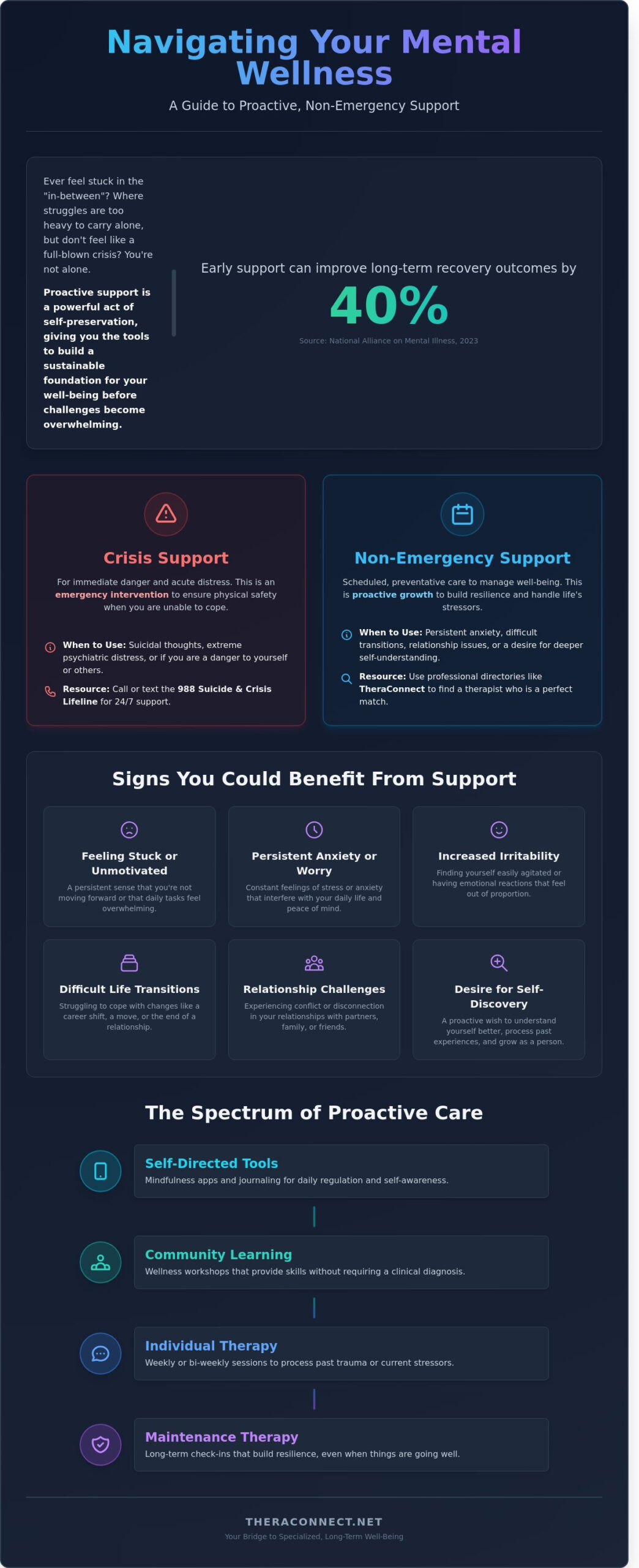
Seeking non emergency mental health support is not a last resort; it’s a powerful act of self-preservation. Research from the National Alliance on Mental Illness in 2023 shows that engaging with support services before a crisis occurs can improve long-term recovery outcomes by 40%. You deserve to feel empowered in your care before things become unmanageable. We are here to help you bridge the gap between where you are and where you want to be.
This guide will show you exactly how to identify the right resources for your needs and provide a clear roadmap for finding a therapist who offers a perfect match. You’ll learn to distinguish between different types of care and gain the tools to build a sustainable foundation for your well-being.
Key Takeaways
- Learn to differentiate between daily emotional distress and an acute crisis so you can proactively choose the best path for your long-term well-being.
- Explore a diverse range of care options, from individual therapy to specialized workshops, designed to support your unique mental health journey.
- Identify the “middle ground” indicators-such as feeling stuck or irritable-that signal you deserve non emergency mental health support even without a formal diagnosis.
- Gain practical tools for identifying your specific therapy goals and filtering professional directories to find your perfect therapeutic match.
- Understand how a seamless connection with a licensed professional can transform the search for care into a manageable and empowering experience.
What Is Non-Emergency Mental Health Support?
You deserve a space where your mental health isn’t a reaction to a crisis, but a steady commitment to yourself. Non-emergency mental health support refers to the preventative, scheduled care you seek to manage your emotional well-being before challenges become overwhelming. It’s the difference between calling a fire department during a blaze and installing a high-quality sprinkler system to keep your home safe. By engaging with resources early, you gain the clarity needed to choose a therapist who aligns with your specific goals and values.
Understanding these distinctions starts with a comprehensive overview of mental health, which highlights how psychological well-being influences every aspect of your daily life. When you’re in a state of “distress,” you might feel heavy, anxious, or unmotivated, but you still have the agency to research options and book an appointment for next Tuesday. A “crisis” is different; it demands immediate intervention to ensure physical safety. Recognizing this gap is empowering because it gives you the time to find a perfect match rather than settling for the first available responder.
Professional directories like TheraConnect bridge the gap between basic self-help and intensive clinical treatment. We act as a reliable guide, helping you move from feeling stuck to finding a specialized partner who understands your journey. This connection ensures you aren’t just surviving, but actively thriving through a personalized care plan that fits your schedule.
Non-Emergency vs. Crisis Support
If you or someone you know is in immediate danger, the 988 Suicide & Crisis Lifeline, launched in July 2022, is the national standard for urgent intervention. This line provides 24/7 support for people experiencing suicidal thoughts or extreme psychiatric distress. You should seek non-emergency support when you’re dealing with persistent anxiety, a difficult career transition, or a desire for deeper self-understanding. Non-emergency support is a scheduled resource for ongoing emotional growth.
The Spectrum of Proactive Care
Proactive care isn’t a one-size-fits-all solution. It exists on a broad spectrum that includes:
- Self-Directed Tools: Mindfulness apps and journaling for daily regulation.
- Community Learning: Wellness workshops that provide skills without requiring a clinical diagnosis.
- Individual Therapy: Weekly or bi-weekly sessions to process past trauma or current stressors.
- Maintenance Therapy: Long-term check-ins that build resilience, even when things are going well.
The 2022 World Health Organization report indicates that nearly 970 million people globally live with a mental disorder, yet many only seek help when they reach a breaking point. Maintenance therapy acts as a safeguard; it ensures you have the tools to handle life’s stressors before they escalate into emergencies.
Exploring Your Support Options: From Therapy to Workshops
Finding the right path for your mental well-being doesn’t have to be a confusing process. We provide a bridge to various forms of non emergency mental health support designed to meet you exactly where you are. Whether you’re looking for deep, long-term healing or specific tools to manage daily stress, understanding the available formats helps you make an informed choice for your future.
- Individual therapy: This remains the gold standard for personalized, one-on-one emotional work. It’s a private space where you can explore your history and current challenges with a dedicated professional.
- Couples and family counseling: These sessions focus on the health of your closest relationships. You’ll learn to improve communication and resolve conflicts in a constructive, mediated environment.
- Group therapy: Healing often happens best through shared experiences. Professional moderators lead these groups to ensure a safe, supportive atmosphere where you can connect with others facing similar journeys.
- Wellness workshops: These educational sessions focus on specific skills. You might attend a workshop to learn mindfulness techniques or specific stress management strategies that you can apply immediately to your life.
The 2022 National Survey on Drug Use and Health indicated that 21.6% of U.S. adults received mental health treatment during that year. This statistic reflects a growing recognition that seeking help is a proactive step toward a healthier life. You can explore these mental health treatment options to determine which approach feels most comfortable for your current situation.
The Benefits of Teletherapy
Online sessions remove the physical barriers that often prevent people from starting therapy. You don’t have to worry about transportation, traffic, or complex scheduling conflicts. Receiving support from your own safe environment helps lower the initial anxiety often associated with starting therapy. For many beginners, teletherapy serves as a discreet and accessible entry point. A 2021 study by the American Psychological Association found that 96% of psychologists believe teletherapy is an effective way to provide clinical care, proving that the digital connection is just as meaningful as in-person visits.
Holistic Wellness and Skill-Building
Learning coping mechanisms for anxiety and trauma is a vital part of the recovery process. Workshops and educational seminars complement traditional talk therapy by giving you a concrete toolkit for difficult moments. Mental health assessments play a crucial role here too. They help identify your specific needs so you don’t waste time on methods that aren’t a fit for you. These assessments provide a baseline for your growth, making your progress measurable and clear. If you’re ready to take that first step toward a healthier mind, we can help you find a seamless connection with a specialist who understands your unique goals. This holistic approach ensures you aren’t just talking about your problems, but actively building a more resilient version of yourself.
Recognising When to Reach Out: Signs You Could Benefit from Support
You don’t need a formal diagnosis to deserve professional care. Many people fall into a middle ground where they feel functional but aren’t thriving. This is exactly where non emergency mental health support creates the most impact. Waiting until a situation becomes a crisis is a common mistake; data from Mental Health America shows that individuals often wait an average of 11 years between the onset of symptoms and receiving treatment. This delay often stems from the myth that you’re “not sick enough” to seek help. We believe that if a struggle impacts your quality of life, it’s worth addressing now.
Feeling “stuck” in repetitive life patterns or experiencing increased irritability are clear signals that your system is taxed. You might notice your relationships are bearing the brunt of your internal stress. Frequent arguments with a partner or a growing sense of isolation from friends often serve as the primary motivator for starting therapy. These aren’t just “phases” to be ignored; they’re invitations to explore your well-being with a professional.
Emotional and Physical Red Flags
Stress doesn’t just stay in your mind; it manifests in your body. You might experience persistent headaches or digestive issues that have no clear medical cause. If you find that a full night’s sleep doesn’t resolve your feelings of overwhelm, your nervous system might be stuck in a high-alert state. A 2022 study in the Journal of Occupational Health Psychology found that a decline in work performance often precedes a total burnout phase. Recognizing these patterns early helps you understand how to find a mental health provider who can help you regain your balance before symptoms escalate.
- Withdrawal from social activities you once enjoyed.
- Changes in appetite or sleep cycles that last more than 14 days.
- A persistent sense of “brain fog” or difficulty making simple decisions.
Life Transitions and “Healthy” Therapy
Therapy isn’t only for processing pain; it’s a powerful tool for navigating positive change. Welcoming a new child, starting a dream career, or getting married brings unique pressures. Utilizing non emergency mental health support during these times provides an objective sounding board for decision-making. We view this as a proactive investment in your future. Having a dedicated space for self-reflection ensures you’re making choices aligned with your values rather than reacting out of habit or fear. It’s about building a foundation of resilience that supports your growth through every season of life.
How to Find the Right Mental Health Professional for Your Needs
Finding the right therapist is a personal journey that begins with clarity. You aren’t just looking for a provider; you’re looking for a partner in your well-being. Start by identifying your primary goals. If you’re seeking trauma healing, you’ll need someone trained in EMDR or somatic experiencing. If you’re looking for relationship tools, a specialist in the Gottman Method might be the best fit. Defining these needs early helps you filter through the noise and focus on specialists who truly understand your experience.
A professional directory is your most reliable tool for this process. Unlike a broad search engine, these platforms allow you to filter by license type, session format, and specific clinical expertise. This precision is vital when seeking non emergency mental health support because it ensures you’re connecting with a provider whose schedule and skills align with your daily life. It’s about creating a seamless connection that feels sustainable from the very first session.
Using Professional Directories Effectively
Specialized directories provide a level of clinical authority that general searches lack. You can filter for specific credentials like an LCSW (Licensed Clinical Social Worker), who often focuses on social systems, or a Psychologist (PhD or PsyD), who may specialize in diagnostic testing. Look for “trauma-informed” or “culturally competent” tags to ensure your provider understands your unique background. Research by the American Psychological Association shows that the therapeutic alliance, the bond between you and your therapist, is the strongest predictor of positive outcomes.
Questions to Ask During Your First Call
Most providers offer a brief consultation. Use this time to empower yourself by asking targeted questions. We recommend focusing on their practical experience and their vision for your growth. You might ask:
- “What is your experience working with clients who share my specific concerns?”
- “How do you measure progress in our sessions so we know the work is effective?”
- “What should I expect from our first three meetings as we build our rapport?”
Logistics are the final piece of the puzzle. According to a 2023 industry report, 53% of therapists now offer teletherapy as a primary option, which can make consistent attendance much easier. Always verify their insurance status or ask about sliding scale fees if you’re paying out-of-pocket. These practical steps remove the stress of the unknown, letting you focus entirely on your healing. If you’re ready to start your journey, you can find a therapist through TheraConnect today.
TheraConnect: Your Bridge to Specialized, Long-Term Well-Being
Finding the right therapist often feels like a full-time job. You might spend hours calling clinics only to find they aren’t taking new patients or don’t accept your insurance. TheraConnect changes this experience by providing a centralized hub for non emergency mental health support. Our platform simplifies the search process by vetting every provider. We ensure they hold active licenses and meet high professional standards. This reliability gives you the confidence to start your healing process without the usual administrative headaches.
We believe that the relationship between a client and a therapist is the most significant predictor of success. Research from the American Psychological Association indicates that the therapeutic alliance accounts for roughly 30% of the variance in treatment outcomes. That’s why we prioritize the “perfect match.” Our system isn’t just a list of names; it’s a tool designed to create a seamless connection based on your unique history, preferences, and goals. Our platform combines modern technology with deep empathy to make sure you feel seen and understood from the very first click.
A Modern Approach to Mental Health
TheraConnect focuses on professional reliability and licensed expertise to ensure you receive high-quality care. We lower the barrier to entry for first-time therapy seekers by removing the guesswork from the selection process. TheraConnect functions as a professional intermediary designed to streamline your search for care, but we are not a crisis hotline or emergency service. By providing access to wellness workshops and clinical assessments through a single platform, we help you build a foundation for sustained well-being. Our tools are built to empower your journey, giving you the resources to manage your non emergency mental health support needs proactively.
Next Steps: Starting Your Journey Today
Your path to better mental health starts with a single, manageable step. Browse our directory right now and use filters to find a provider who fits your specific needs. Whether you’re looking for cognitive behavioral therapy or specialized trauma support, our platform helps you narrow down the options in minutes. Consider registering for an upcoming wellness workshop to start building your emotional toolkit today. These sessions provide practical skills you can use immediately to improve your daily life.
Empower Your Journey Toward Lasting Well-Being
Prioritizing your mental health shouldn’t wait for a crisis. By recognizing early signs like persistent fatigue or changes in sleep patterns, you’re choosing a path of proactive growth. Seeking non emergency mental health support allows you to build a toolkit of resilience before challenges become overwhelming. It’s about more than just managing symptoms; it’s about thriving through specialized wellness workshops and consistent, long-term care tailored to your unique life.
You don’t have to navigate this journey alone. TheraConnect provides access to a national network of 100% licensed therapists, ensuring you receive clinical expertise balanced with human warmth. Our empathetic, user-centric matching tools are designed to simplify your search, helping you find a professional who truly understands your needs. Data from the National Alliance on Mental Illness shows that 1 in 5 U.S. adults experience mental illness each year, which highlights why finding a reliable partner for your well-being is such a vital step.
We’re here to help you bridge the gap between where you are and where you want to be. Browse our directory of licensed professionals to find your perfect match and begin your journey toward a more balanced, empowered future today.
Frequently Asked Questions
What is the difference between a crisis line and non-emergency mental health support?
Crisis lines provide immediate intervention for life-threatening situations, while non-emergency mental health support focuses on long-term growth and preventative care. According to the Substance Abuse and Mental Health Services Administration 2023 guidelines, crisis services manage acute distress. In contrast, non-emergency care involves scheduled sessions that help you build sustainable coping skills and emotional resilience over time.
Can I use non-emergency support if I don’t have a diagnosed mental health condition?
You can absolutely access non-emergency mental health support without a formal diagnosis to focus on personal development or life transitions. Data from the National Alliance on Mental Illness in 2022 suggests that 1 in 5 adults experience mental health challenges, but many seek therapy simply for proactive wellness. We believe everyone deserves a safe space to explore their journey and find empowerment.
How do I know if I should see a therapist or just wait for things to get better?
You should consider seeing a therapist if your symptoms persist for more than 14 days or interfere with your daily functioning. The American Psychological Association notes that early intervention reduces the risk of chronic conditions by 40 percent. Waiting for things to improve on their own often leads to increased stress, while a therapist helps you navigate your path with professional clarity.
Is teletherapy as effective as in-person therapy for non-emergency issues?
Teletherapy is just as effective as in-person sessions for most non-emergency concerns, including anxiety and stress management. A 2021 study published in the Journal of Psychological Disorders found that clinical outcomes for video-based therapy matched those of face-to-face treatment. This format provides a seamless connection that fits into your schedule, ensuring your well-being remains a consistent priority without the stress of a commute.
What should I do if I cannot afford traditional weekly therapy?
You can explore sliding scale fees, community clinics, or specialized insurance coverage to make your sessions more manageable. Statistics from the 2023 Mental Health America report show that 42 percent of adults cite cost as a primary barrier to care. Many providers in our network offer flexible options to ensure you find a perfect match that respects your financial boundaries and supports your growth.
How long does it typically take to find a therapist through a directory?
Finding a therapist through a digital directory typically takes between 24 and 72 hours depending on your specific needs. Traditional referrals through primary care doctors can take up to 6 weeks to process. Our platform simplifies this journey by providing a direct bridge to available providers, ensuring you don’t spend months waiting to begin your specialized care.
What happens if I don’t feel a connection with the first therapist I meet?
You’re encouraged to seek a different provider if the initial connection doesn’t feel right, as the therapeutic alliance is the strongest predictor of success. Research from the 2022 Journal of Counseling Psychology indicates that the bond between you and your therapist accounts for 30 percent of the improvement in outcomes. We support your search until you find that perfect match for your unique personality.
Are wellness workshops a substitute for individual therapy?
Wellness workshops are a valuable supplement to your journey but don’t replace the personalized care of individual therapy. While workshops provide community and general skills, 1-on-1 therapy offers 50 minutes of focused attention on your unique history. Using both can enhance your non emergency mental health support plan by combining group learning with the deep, organic bond of a private therapeutic relationship.
Your Expertise Deserves to Be Found.
People are searching for support. Make it easier for them to discover you.
Leave a Reply