
Narcissim

  • An Honest TheraConnect Platform Review for Clients

    An Honest TheraConnect Platform Review for Clients

    Finding a therapist can feel strangely difficult when you already have a lot on your mind. You may know that you want support, but still wonder where to start, how much therapy will cost, and whether an online connection can feel personal. This TheraConnect platform review for clients looks at what matters most: how the matching process can help, what to ask before scheduling, and how to make a confident choice about care.

    TheraConnect is built around a simple goal: make it easier for people to find qualified mental health professionals who fit their needs, preferences, and budget. Clients can sign up at no cost, while providers invest in the platform to connect with people seeking care. That model matters because it keeps the focus on helping clients find appropriate support rather than charging a fee just to begin the search.

    What Clients Can Expect From TheraConnect

    TheraConnect is a provider matching platform, not a replacement for the therapeutic relationship itself. The platform helps bridge the space between deciding you need support and meeting with a professional who may be a good fit. For many people, that first step is the hardest one.

    Instead of asking you to sort through a long, impersonal directory alone, the platform is designed to support more meaningful matching. Your needs may include concerns such as anxiety, depression, relationship stress, grief, trauma, life transitions, or burnout. They may also include practical factors, such as cost, virtual availability, scheduling preferences, or a desire for a therapist with experience serving a particular community.

    A strong match is not only about a therapist’s credentials. It is also about whether you feel understood, respected, and able to speak honestly. Matching technology can make the search more efficient, but it cannot decide your comfort level for you. Think of it as a better starting point, not a guarantee that every first conversation will be the right fit.

    TheraConnect Platform Review for Clients: Key Strengths

    The most meaningful strength of a platform like TheraConnect is accessibility. Traditional therapy searches often require multiple phone calls, waitlists, confusing insurance questions, and the emotional energy of repeating your story over and over. Virtual therapy can reduce some of those barriers by letting you connect from home, work, school, or another private place that feels manageable.

    The platform’s nonprofit roots also reflect an access-first approach. Quality mental health care should not feel reserved for people with unlimited time, money, or confidence navigating the health care system. By making client sign-up free and focusing on provider vetting and thoughtful matching, TheraConnect aims to create a more trustworthy path to care.

    There is value in knowing that the professional you are considering has been reviewed before appearing on a platform. Credentials, licensing, scope of practice, and areas of expertise matter. At the same time, clients should still ask questions directly. A provider can be qualified and caring while simply not being the best person for your particular goals.

    Virtual care is another practical advantage. If transportation, mobility, childcare, distance, or a busy schedule has kept therapy out of reach, online appointments may make regular care more realistic. Consistency often matters more than finding a theoretically perfect appointment time that you cannot maintain.

    Where Clients Should Look Closely

    A helpful review should be honest about trade-offs. Online therapy is convenient, but it is not identical to meeting in person. Some clients feel more at ease talking from a familiar room. Others find it harder to open up through a screen, especially if they do not have a private place for sessions or have an unreliable internet connection.

    Availability also depends on the provider you are matched with. A platform can make the search easier, but it cannot eliminate provider schedules, licensing requirements, or local demand for specialized care. If you need evening appointments, a specific type of therapy, a certain language, or a provider with experience in a focused area, be clear about that early in the process.

    Affordability deserves a direct conversation too. Budget-friendly care does not mean the same thing for every client. Before committing to ongoing appointments, ask about each provider’s session rate, insurance options if applicable, sliding-scale availability, cancellation policy, and expected frequency of care. Clear answers help prevent financial stress from becoming another obstacle to treatment.

    It is also worth understanding that therapy can take time. One session may bring relief, but meaningful change often involves building trust, practicing new skills, and returning to difficult subjects over several weeks or months. If you are looking for immediate crisis support, a therapist matching platform may not be the right first resource. Call or text 988 in the United States for the Suicide & Crisis Lifeline, call 911, or go to the nearest emergency room if there is immediate danger.

    How to Tell Whether a Match Feels Right

    You do not need a perfect script for your first appointment. Still, a few straightforward questions can help you decide whether to continue. Ask the therapist how they typically work with your main concern, what a first month of care may look like, and how they measure progress. You can also ask about their approach, whether it is more structured, exploratory, skills-based, trauma-informed, or a blend of methods.

    Pay attention to how you feel during and after the conversation. Feeling nervous is normal, particularly when discussing personal experiences. The more useful question is whether you felt listened to without being rushed, judged, or pushed to share more than you were ready to share.

    A good therapist should be able to explain confidentiality and its limits in plain language. They should also be open about logistics, including session length, communication between appointments, fees, and what happens if you need to reschedule. Transparency is part of feeling safe in care.

    If the first match does not feel right, that does not mean therapy is not for you. Sometimes the issue is style, availability, communication, or a mismatch in specialty. Requesting another match can be a healthy and practical next step. You are allowed to look for care that feels more aligned with your needs.

    Making Online Therapy Work in Real Life

    The setting you choose can shape your experience. Try to join sessions from a private, quiet place where you can speak freely and use headphones if that helps. If privacy at home is limited, consider whether a parked car, a private office, or another secure location could work, as long as you can safely focus on the conversation.

    It can also help to arrive with one or two topics in mind. You do not need to prepare a full agenda, but noting a recent challenge, recurring feeling, or question can make it easier to begin. Afterward, give yourself a few minutes before jumping back into work or family responsibilities. Therapy can bring up emotions, even when the session feels productive.

    For clients who want a more accessible path to care, TheraConnect offers a practical place to begin. Get Started when you are ready to share what you are looking for, and be as specific as you can about the support that would make a difference.

    The right therapist is not someone who has all the answers for your life. It is someone who can help you make room for your own answers, with skill, care, and a plan that fits the life you are actually living.

  • Is a Verbal Abuser Likely to Change? by Peg Streep

    Is a Verbal Abuser Likely to Change? by Peg Streep

    • Verbal abuse is highly motivated and consistent unlike the expression of an occasional flash of anger.
    • The need to control underlies most verbal abuse and the foundation is an imbalance of power.
    • Paradoxically, it may be difficult for the target of verbal abuse to recognize the behavior as abusive.
    • Whether or not the verbal abuser can change is dependent on him or her, not you.
    Photograph by Moises Alex. Copyright free. Unpslash.

    Source: Photograph by Moises Alex. Copyright free. Unpslash.

    The foundation for verbal abuse in an adult-on-adult relationship is an imbalance of power; one person has it and is highly motivated to keep it and continue to control the relationship.

    It’s important to remember that verbal abuse—whether it’s of the overt or covert variety—is highly motivated and goal-oriented as well as consistent, despite the fact there will likely be so-called “honeymoon” periods where the amount of abuse decreases or stops entirely.

    While the person who is the target of the verbal abuse will likely believe that the respite reflects a change of heart on the abuser’s part, the sad truth is that it’s usually a tactic to keep the target emotionally confused and hopeful and, most important, fully committed to staying in the relationship.

    Understanding the Imbalance of Power in an Abusive Relationship

    While a healthy and satisfying adult relationship would be based on a partnership model, in verbally abusive relationships, one person seeks to maintain control. That’s made possible by certain factors such as these:

    • One person has a greater emotional investment in the relationship than the other.
    • The abuser exploits what he or she knows about the target’s insecurities and self-doubts to control the him or her.
    • One person has greater financial resources than the other or the target is financially dependent on the abuser; each affects both the decision to stay or to leave.
    • The abuser and the target have children and the target is concerned that any action of her/his part will involve the abuser’s retaliation and that the children will be hurt emotionally or psychologically.

    Verbal Abuse Can Be Subtle or Covert to Maintain Control

    The culture tends to picture verbal abuse as loud, involving yelling, put-downs, name-calling, and shaming; while verbal abuse certainly can and does take these forms, it’s the more subtle forms of verbal abuse that are more likely to entrap you and render you feeling powerless. That was certainly true for Casey, now 42:

    article continues after advertisement

    “My ex-husband never raised his voice or called me a name; instead, he undermined me at every turn in subtle ways. Plans I’d made or initiated were always changed because he had a ‘better’ idea or solution that included everything from dinner reservations to renovating our kitchen and family vacations. He dismissed any complaints I had by telling me that I was ‘sensitive to rejection’ and that I was ‘emotionally over-reactive;’ it took me years to recognize that he was effectively shutting me up and shutting me down without ever saying so. There wasn’t a single domain in our lives where he didn’t insist on having the final say and, for a long time, I honestly believed that I had little or nothing of value to contribute to him or anyone. I went into therapy and when my counselor suggested I was being abused, I pushed back and denied it but it was the truth. When I tried to talk to him about it, he laughed at me and then refused to discuss it further. I was lucky, though. I ‘only’ wasted six years of my life with him.”

    Among the more difficult-to-recognize forms of verbal abuse are:

    • Blame-shifting: The abuser exploits your own self-doubts or insecurities by making whatever has happened your fault; that leaves the abuser with zero responsibility and more control and often makes you feel that you should apologize. A true sleight-of-hand.
    • Brinksmanship: Threatening you with leaving or asking why you just don’t leave if you’re so unhappy. This is enabled by the abuser’s knowledge that you aren’t ready to give up on relationship and that you’re still hopeful a corner can be turned.
    • Stonewalling or ignoring that you’ve said anything. This will put you into a defensive crouch and perhaps feeling panicked; this often ends up with your being a peacemaker and apologizing for something you didn’t do.
    • Gaslighting: Telling you that your perceptions are dead wrong or that you’re projecting or making things up. Again, this preys on your insecurities as well as your hopefulness that things will get better somehow.

    Will Your Abuser Ever Change?

    Again, this comes down to motivation. We’ve seen how control is established through verbal abuse so the question becomes this: What’s in it for the abuser to stop?

    If you find yourself in this situation, do speak to a counselor about strategies and what he or she thinks can happen given the nature of the relationship. Be cognizant of the possibility that confronting your verbal abuser may lead to escalation and remember that verbal abuse is always the foundation for physical abuse even if your relationship has never included it.

    Do examine your expectations and ask yourself the following questions, answering as honestly as you can:

    • Is he/she willing to acknowledge the verbal abuse without resorting to defensiveness or blame-shifting?
    • Is he/she willing to hear you out thoughtfully without pushing back, dismissing your remarks, objecting, or starting a fight?
    • Will he/she accept your pointing out verbal abuse and instituting respectful boundaries?
    • Is he/she willing to go into counseling and commit to working on change?
    • Is he/she willing to work on new ways of communicating and resolving conflict?
    • Is he/she willing to commit to a partnership model of relationship?
    • Is he/she willing to commit to a series of steps you mutually decide on if he/she backslides into old behaviors?
    • If there are children involved and they have been targets, is he/she willing to apologize for past behaviors and willing to work on acquiring new parenting skills?

    article continues after advertisement

    The truth is that if the answers to any of these questions is “no,” it will not be possible to repair or recover the relationship.

    This post has been adapted from material in my book, Verbal Abuse: Recognizing, Dealing, Reacting, and Recovering.

    Copyright© 2022, 2023 by Peg Streep.

    Facebook image: KieferPix/Shutterstock

  • Insurance Versus Self Pay Therapy Explained

    Insurance Versus Self Pay Therapy Explained

    A therapy appointment can look affordable on paper, then become confusing once deductibles, copays, out-of-network benefits, and session limits enter the picture. When considering insurance versus self pay therapy, the better choice is not always the one with the lowest advertised price. It is the option that helps you get consistent care from a therapist who is a good fit for your needs.

    For many people, cost is the first concern, and it should be. But privacy, scheduling, therapist choice, diagnosis requirements, and the likelihood that you will stay in therapy also matter. Understanding the trade-offs can help you make a decision with fewer surprises.

    Insurance Versus Self Pay Therapy: The Core Difference

    Insurance-based therapy means your health plan helps cover some or all of the session cost after you meet the plan’s rules. Your therapist may be in network, meaning they have an agreement with your insurer, or out of network, meaning you pay the therapist directly and may seek partial reimbursement from your plan.

    Self pay therapy means you pay the therapist’s stated fee directly, without using insurance. Some therapists offer sliding-scale rates based on income, reduced-fee spots, packages, or shorter sessions. The fee is often clear up front, although you should still ask about cancellation policies and any charges for paperwork, letters, or consultations.

    Neither path is automatically better. Insurance can make ongoing care more affordable, especially after a deductible is met. Self pay can offer more choice and flexibility, particularly if the therapist you connect with does not accept your plan.

    When Using Insurance May Make Sense

    Using insurance can be a practical choice when you have strong behavioral health benefits and can find an in-network therapist who meets your needs. If your plan has a manageable copay, therapy may cost far less per session than paying a full private rate.

    Insurance can be especially helpful if you expect to attend therapy regularly for an extended period. Someone managing persistent anxiety, depression, trauma symptoms, or a major life transition may benefit from knowing that their sessions are partly covered. Once a deductible is met, the out-of-pocket cost can drop significantly, depending on the plan.

    There are a few details worth checking before you begin. Ask your insurer whether telehealth therapy is covered, whether you need a referral, what your copay or coinsurance will be, and whether there is a deductible that applies before coverage starts. Also ask whether your plan limits the number of covered sessions or requires periodic authorization.

    An in-network directory is a starting point, not a guarantee. Provider listings can be outdated, and a therapist who appears in network may not be accepting new clients. Confirm coverage with both the therapist’s office and your insurance company before your first appointment. Write down the name of the insurance representative and any reference number you receive.

    The deductible surprise

    A common misunderstanding is that having insurance means therapy will immediately be inexpensive. If you have a high deductible, you may pay the therapist’s contracted rate until that deductible is met. That rate can still be lower than a therapist’s standard self-pay fee, but not always.

    For example, a plan might list mental health care as covered after the deductible. Until you reach that amount, you could be responsible for most of each session. Knowing this before you start can prevent a stressful bill later.

    Why Some Clients Choose Self Pay Therapy

    Self pay often gives you a wider pool of therapists to consider. Many experienced clinicians do not participate in insurance networks because reimbursement rates, billing requirements, and administrative demands can limit how they run their practices. Paying directly may make it possible to work with a specialist who has deeper experience with your goals, identity, relationship concerns, or preferred therapy approach.

    It can also offer more control over the pace and structure of care. You and your therapist may have greater flexibility to decide how often to meet, whether longer sessions are useful, or when it makes sense to pause. That does not mean insurance-based therapy is rigid in every case, but self pay can reduce third-party involvement.

    Privacy is another factor. To bill insurance, a therapist generally needs to submit information that supports medical necessity. This commonly includes a diagnosis and service details. Health information is protected, but some clients prefer not to involve their insurer when discussing sensitive concerns such as relationship stress, workplace issues, grief, or personal exploration.

    Self pay does not mean therapy is only for people with a large budget. A therapist’s full fee may be out of reach, but sliding-scale options can make care more realistic. It is okay to ask directly: “Do you have reduced-fee openings, a sliding scale, or referrals for lower-cost care?” A good fit includes practical fit, not only emotional connection.

    Compare the Real Cost, Not Just the Session Fee

    The most useful comparison is your expected cost over the next few months, not simply the price of one appointment. Consider how often you want to meet and what you can comfortably sustain.

    With insurance, calculate your copay or coinsurance, your remaining deductible, and any out-of-network reimbursement. With self pay, ask for the full session fee, whether the rate changes for couples or longer appointments, and whether a sliding scale is available. If you have out-of-network benefits, self pay may not be entirely separate from insurance. You may pay upfront and receive reimbursement for part of the cost after submitting a superbill.

    Consistency matters. A $30 copay is not a bargain if the available therapist is not a fit and you stop after two sessions. Likewise, a self-pay therapist may be an excellent match, but a weekly fee that strains your finances can make treatment harder to continue. Sometimes a lower-cost therapist you can see consistently is the more supportive choice.

    Questions to Ask Before You Commit

    You do not need to know every insurance term before reaching out. A few direct questions can provide the clarity you need. Ask a therapist whether they are in network with your specific plan, what you will owe at the time of the visit, and whether they can provide a superbill if they are out of network.

    Ask your insurer what “covered” means for your plan. Does coverage begin before or after the deductible? Is virtual therapy covered at the same rate as in-person care? Do you need prior authorization? These questions are not overly cautious. They are part of making mental health care accessible and predictable.

    It is also reasonable to ask a prospective therapist about their availability, specialty areas, approach, and typical recommendation for session frequency. You are not obligated to continue simply because you had an initial consultation. The relationship matters, and a respectful therapist will understand that fit takes consideration.

    Finding a Middle Ground

    The decision does not have to be permanent. You might start with insurance while you explore what type of support feels helpful. You might choose self pay for a specialized concern, then switch to an in-network provider if your needs or budget change. Some clients meet weekly during a difficult period and move to less frequent sessions once they have more stability.

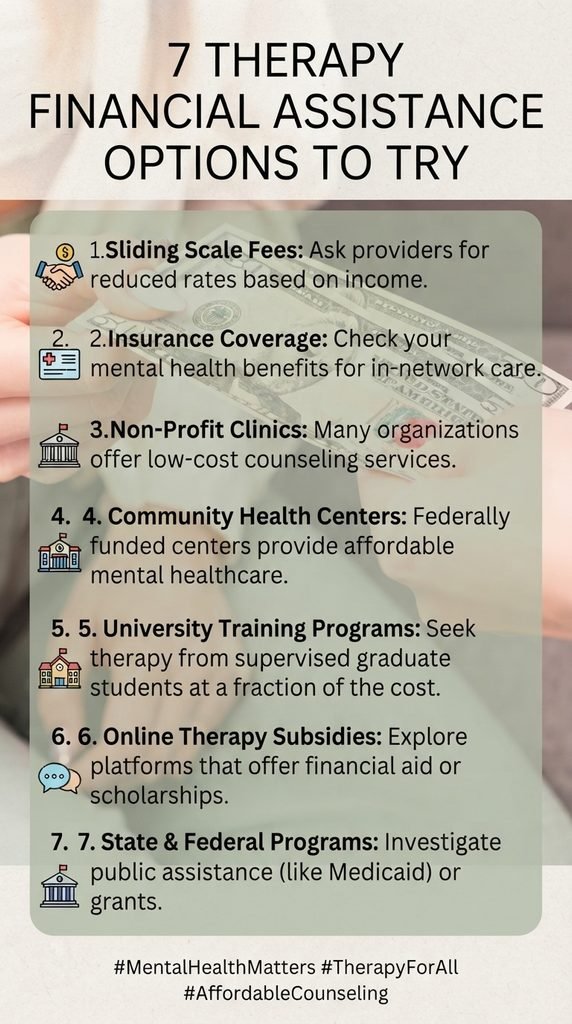
    If affordability is your main barrier, broaden the search beyond one payment method. Community mental health centers, training clinics, employee assistance programs, group therapy, and sliding-scale providers can all be worth considering. Online matching can also make it easier to identify therapists who fit your preferences, availability, and budget before you spend time on multiple consultations.

    TheraConnect helps clients begin that search without a fee, connecting them with vetted mental health professionals for virtual care. Whether you hope to use insurance, pay directly, or explore a lower-cost option, starting with clear information makes the process less overwhelming.

    The right payment path is the one that leaves room for the work therapy asks of you: showing up honestly, returning when life gets complicated, and building support that can last. Check your benefits, ask about rates, and give yourself permission to choose care that feels both clinically and financially possible.

  • Is there such thing as an addictive personality? By Dr.

    Is there such thing as an addictive personality? By Dr.

    Stephen Bright

    Most of us know somebody who tends to get over involved in certain behaviours, and the saying often goes that they must have an “addictive personality”. But is there such a thing?

    The idea of an addictive personality is more pop-psychology than scientific.

    What is personality?

    To understand why the idea of an addictive personality is flawed, it’s important to first understand what psychologists mean when referring to personality.

    Personality is comprised of broad, measurable, stable, individual traits that predict behaviour. So by definition, engaging in excessive behaviours cannot be considered a personality trait.


    Though, there are personality traits that are associated with addiction.

    Don’t let yourself be misled. Understand issues with help from experts

    Neuroticism is one of the “big five” personality dimensions. These are the five core traits that drive behaviour. They include openness to experience, conscientiousness, extraversion/introversion, agreeableness and neuroticism.

    People who score high in neuroticism tend to be easily emotionally aroused. They are also more likely to engage in a number of excessive behaviours, including: over-eating, excessive online gamingsocial media over-use and substance dependence.

    People who are highly neurotic might engage in excessive behaviours to help manage their emotions. Neuroticism has also been associated with a range of mental health conditions, which could lead one to wonder whether addiction is caused by mental illness.

    There is evidence of this for some people. In these cases people’s addictive behaviour reduces negative emotions caused by the mental illness. Though it could also be that certain personality factors such as neuroticism predispose a person to both mental illness and addiction separately.

    Nature versus nurture

    There is some evidence that both personality and addictive behaviours have a genetic component.

    Five key genes have been found to appear to predispose people to experience substance dependence and other addictive behaviours.

    One of these genes has also been associated with extroversion, another of the big five personality dimensions. Extroversion refers to the degree to which people “search for novel experiences and social connections that allow them to interact with other humans as much as possible”.

    Extroverts seek out new ways to come into contact with other people. from www.shutterstock.com

    These five genes reduce the functioning of the dopamine, or reward, system of the brain. The brains of people with variants of the genes associated with extroversion and addictive behaviours use dopamine less efficiently. It has been proposed that this leads them to seek out pleasure.


    Dopamine is often misrepresented as the pleasure neurotransmitter. A more accurate description of dopamine is that it is the motivation neurotransmitter. It motivates people to engage in certain behaviours – particularly those behaviours needed for survival such as eating and sex.

    It makes sense then that variants of these genes have been found to be associated with “sensation seeking”, another dimension of personality. Sensation seeking is a “trait defined by the seeking of novel sensations, and the willingness to take physical, social, legal and financial risks for the sake of such experiences”. People with addictive behaviours also score high on this personality dimension.

    Though to say these are genes for an addictive personality is a bit like saying the genes for height are the basketball genes. While some people who are tall are good at basketball, not all tall people have the opportunity or desire to learn the game.

    Similarly, not everybody with variants of the dopamine genes associated with excessive behaviours develops problems with substance dependence or other addictive behaviours. Environment is also important.

    It’s likely that some people whose dopamine system is less efficient due to genetic variations get their dopamine fix through other activities such as car racing, snowboarding, surfing, sky diving and so on. And some people who develop a dependence on alcohol and other drugs do not have this genetic predisposition. They might develop problems due to a range of environmental influences such as trauma or social modelling of drug use.

    So while there are common factors associated with personality that predict addiction, there is no personality type that will cause someone to partake in excessive behaviours. Addiction has multiple causes and just chalking it up to someone’s personality probably isn’t very helpful in dealing with it.

  • What’s a ‘sleep debt’? Can I ever pay it back? An expert explains By Dr. Amelia Scott

    What’s a ‘sleep debt’? Can I ever pay it back? An expert explains By Dr. Amelia Scott

    Maybe you’re a new parent or someone who lies awake at night. If so, you may have started to worry you’re not getting enough sleep.

    Sleep wearables don’t help. They can show your “sleep debt”, a running total of how far you’ve fallen behind.

    But the word “debt” assumes your sleep works like a bank account. It assumes lost hours stack up, carry over, and you must eventually repay them in full.

    But sleep doesn’t really work this way. And chasing “enough sleep” may not be helping.

    https://embed.bsky.app/embed/did:plc:7gclecrm37gckssy2cam4qcp/app.bsky.feed.post/3mount5jlac2y?id=4243212320262396&ref_url=https%253A%252F%252Ftheconversation.com%252Fwhats-a-sleep-debt-can-i-ever-pay-it-back-an-expert-explains-284318

    What is a sleep debt?

    Two systems control your sleep. One is your body clock, which helps keep wakefulness and sleep aligned with the day and night. The other is the one that matters here: sleep pressure.

    Sleep pressure builds the longer you stay awake and eases while you sleep. At its highest, it’s hard to resist. Someone pulling an all-nighter might find themselves nodding off unintentionally.

    This biological process is what “sleep debt” is trying to describe. If you sleep less than your body needs, pressure for sleep builds. Given the opportunity to recover after lost sleep, you sleep longer. In this broad sense, the debt metaphor works.

    But this metaphor has some assumptions that don’t fit with our biology.

    If you have a financial debt, the maths is exact: you owe a precise sum, which stays there until you pay it down. Sleep pressure does none of those things. Our sleep systems are more dynamic and adaptable.

    Read news based on evidence, not tweets or TikToks

    https://www.google.com/recaptcha/api2/anchor?ar=1&k=6Lf3Oc0UAAAAAIbME3Lv7iS7EVeuQzpru1Jbij5N&co=aHR0cHM6Ly90aGVjb252ZXJzYXRpb24uY29tOjQ0Mw..&hl=en-US&type=image&v=A7KpaEASfhDcK0nXxgQEyyYv&theme=light&size=invisible&badge=bottomright&anchor-ms=20000&execute-ms=30000&cb=z74wei6bhlswSubscribe

    This site is protected by reCAPTCHA and the Google Privacy Policy and Terms of Service apply.

    What happens next?

    To study the effects of short sleep, researchers bring volunteers into a lab and restrict how much they can sleep, such as four or six hours a night, sometimes for a week or two. Watching what happens under these conditions tells us how our body handles the shortfall.

    The first thing it does is reorganise. When sleep is cut short, the body protects its deepest sleep (the stage that does most of the restorative work) and sacrifices lighter sleep.

    People also fall asleep faster and spend less time awake in bed. In other words, given less time, the body spends that time more carefully and efficiently.

    When people are freed from sleep restriction conditions, we watch what the body does to recover. “Recovery sleep” is characterised by a few nights of longer, deeper sleep. After this point, the debt appears to be cleared. But you do not sleep “back” the same number of hours you lost.

    What this means in everyday life is that after a run of short nights, you tend to sleep a little longer and deeper for a night or two, then your sleep settles back to its usual length.

    What about the sluggishness that follows after a few nights of short sleep?

    These same sleep experiments also measure sleep-sensitive outcomes such as cognitive performance.

    These outcomes follow their own recovery timelines and often take a little longer to return to baseline. You may have had all the recovery sleep you are going to get, but you still need a few more nights of normal sleep before your cognitive performance catches up.

    https://embed.bsky.app/embed/did:plc:746sksvmlwppi6zda5c7rtzb/app.bsky.feed.post/3maf2u6ooqw25?id=5411318566565151&ref_url=https%253A%252F%252Ftheconversation.com%252Fwhats-a-sleep-debt-can-i-ever-pay-it-back-an-expert-explains-284318

    Could knowing my sleep debt make things worse?

    Receiving feedback about the previous night’s sleep seems to affect your mood, energy levels and alertness the next day.

    One study showed giving participants negative feedback about their sleep – for example “your sleep quality was poor” – made them feel more tired and negative the next day.

    Another small experiment showed people’s cognitive performance was influenced by how long participants believed they had slept.

    No study has directly examined what happens if we tell people how much sleep debt they have. But, based on what we know, it is possible that knowing it can make you more worried about your sleep, and have worse sleep as a result.

    False precision and moving targets

    There is a deeper problem with the whole idea of calculating a sleep debt.

    To calculate a debt, you need to know exactly what you owe in the first place, that is, a precise idea of how much your body needs. Trackers try their best to model how much sleep you need, but it is a slippery number.

    How much sleep someone needs varies widely from person to person. Some healthy adults feel fine on around six hours, others need closer to nine.

    How much sleep you need is not fixed. You need more sleep when unwell or start training hard at the gym. Sleep shifts with the seasons, with people generally sleeping more in winter.

    Sleep trackers also estimate how much sleep you had overnight. They are increasingly accurate, but this is still an estimate, not the truth. So, trackers measure one guess (how much we slept) against another (how much we need).

    https://embed.bsky.app/embed/did:plc:746sksvmlwppi6zda5c7rtzb/app.bsky.feed.post/3mjvobxqe2k2u?id=7136458995550717&ref_url=https%253A%252F%252Ftheconversation.com%252Fwhats-a-sleep-debt-can-i-ever-pay-it-back-an-expert-explains-284318

    The bottom line

    Sleep debt is a handy metaphor to help us understand sleep regulation. Sleep pressure builds the longer you’re awake, and a short night can leave you needing a longer one to follow.

    However, the way our bodies manage short sleep is not an ever-accumulating tally you must repay in full. To calculate a debt you’d also need to be certain how much you need and how much you got, which are both hard to know.

    The good news is that we are built to withstand and recover from the times life gets in the way of a good night’s sleep. There’s no need to carry a ledger or chase a sleep debt to zero.

    Author

    Honorary Affiliate and Clinical Psychologist at the Woolcock Institute of Medical Research, and Macquarie University Research Fellow, Macquarie University

  • Childhood experiences of LGBTQ+ stigma can harm romantic relationships decades later – psychologists explain how to reconnect with yourself and your partner By Melissa Gates and Christina Balderrama-Durbin

    Childhood experiences of LGBTQ+ stigma can harm romantic relationships decades later – psychologists explain how to reconnect with yourself and your partner By Melissa Gates and Christina Balderrama-Durbin

    Childhood rejection, discrimination and bullying can affect your well-being as an adult. If your friends, family or community pushed you away because of your sexuality or gender, these childhood experiences of prejudice can also affect your future relationships.

    Many LGBTQ+ people encounter difficult experiences as children, including abuse, neglect and challenges at home, because of their sexuality or gender. Other negative experiences – including bullyingwitnessing your peers be harassed or ostracized, and the need to conceal your identity to protect yourself – may make it especially challenging to accept your sexuality or gender as an adult.

    Developing a negative self-view as a result of these harmful experiences during your formative years is not uncommon. Feelings of shame or unworthiness can carry into your 20s, 30s and beyondharming your mental health along with your ability to form and maintain romantic relationships.

    Fortunately, making meaning of your early experiences can help you heal, reconnecting and strengthening your relationships as a result.


    Quarter life, a series by The Conversation

    No one’s 20s and 30s look the same. You might be saving for a mortgage or just struggling to pay rent. You could be swiping dating apps, or trying to understand childcare. No matter your current challenges, our Quarter Life series has articles to share in the group chat, or just to remind you that you’re not alone.

    Read more from Quarter Life:


    Internalized stigma harms relationships

    Our psychology research team focuses on understanding the connection between childhood anti-LGBTQ+ experiences, well-being and relationship health.

    Read news based on evidence, not tweets or TikToks

    https://www.google.com/recaptcha/api2/anchor?ar=1&k=6Lf3Oc0UAAAAAIbME3Lv7iS7EVeuQzpru1Jbij5N&co=aHR0cHM6Ly90aGVjb252ZXJzYXRpb24uY29tOjQ0Mw..&hl=en-US&type=image&v=A7KpaEASfhDcK0nXxgQEyyYv&theme=light&size=invisible&badge=bottomright&anchor-ms=20000&execute-ms=30000&cb=i5wz83c5uk3nSubscribe

    This site is protected by reCAPTCHA and the Google Privacy Policy and Terms of Service apply.

    We found that a factor called internalized stigma can notably affect the romantic relationships of LGBTQ+ people. Internalized stigma refers to when society’s negative views and biases toward a part of your identity shapes how you think and feel about yourself. This can influence how you view romantic relationships and how you interact with your romantic partners.

    People with higher levels of internalized stigma report more conflicts and less satisfaction in their relationships. Research suggests that internalized stigma can negatively affect key aspects of romantic relationships that keep people satisfied with their partners, including trust, connection and intimacy.

    Person sitting on the edge of a bed, facing away from another person sitting against the headboard
    Internalized stigma can lead to conflict in relationships. zoranm/E+ via Getty Images

    For some, internalized stigma might result in low self-esteem, feeling like you are inadequate or unworthyfeeling disengaged from the LGBTQ+ community or wanting to pass as heterosexual or cisgender.

    Internalized stigma can also shape how secure you feel in romantic relationships. For some, these negative self-views can lead to difficulties with commitment and more conflict between partners.

    In our study of 80 LGBTQ+ couples, we found that childhood emotional wounds tied to sexuality or gender can carry into adulthood, shaping a person’s relationships in their 20s and 30s.

    Specifically, LGBTQ+ adults with more childhood anti-LGBTQ+ experiences reported less trust in their partner and reduced emotional and sexual intimacy – key ingredients in a healthy and satisfying romantic relationship.

    Overcoming childhood trauma

    It’s worth remembering that these negative beliefs about yourself don’t develop overnight. It also takes time to recognize and change how you react to them.

    Exploring whether your symptoms of guilt, shame and low self-esteem are related to internalized stigma is a critical part of beginning to navigate it. Recognizing and pinpointing where these beliefs came from, which may include negative messages from society or your family, is an important first step.

    Practicing self-compassion – that is, offering yourself warmth, nonjudgment and understanding during stressful and challenging moments – can reduce anxiety, depression and internalized stigma. Instead of becoming overwhelmed by your emotions and the stressors you encounter, self-compassion allows you to attend to these experiences in a balanced way.

    Show yourself patience and acceptance after difficult moments, such as when you’re feeling undervalued, alone or ashamed because of your sexuality or gender. Adopting mantras such as “I am enough,” “I can overcome hard things” and “May I be kind to myself and give myself compassion in this moment” is one way to practice self-affirmation.

    Person with leaning head against hand as another person touches their face in consolation
    Talking to your partner about challenging experiences can help build intimacy. FG Trade/E+ via Getty Images

    Building in opportunities in your daily life to engage with your interests and finding positive outlets for stress can improve your mood by reigniting joy and a sense of accomplishment. For some, this might include expressive writing, reading, going for a walk or listening to a podcast.

    You may also want to explore how shame and guilt around your sexual or gender identities can show up in your relationships. Intentionally carving out ways to support and connect with your partner can create emotional safety by building intimacy and closeness.

    Importantly, stigma and shame don’t have to become the only thing you and your partner talk about. Strengthening positive aspects of your relationship can help you continue finding ways to bond.

    Finding and giving support

    Talking with your partner or other community members who have had similar experiences may provide a sense of connection.

    Seeking professional support for your relationships can help reconnect you with your partner. Many LGBTQ+ people face barriers to seeking professional relationship support, including fear of discrimination and concerns about working with providers who lack expertise on LGBTQ+ issues.

    Online self-directed relationship programs that are tailored for LGBTQ+ relationships may be more approachable. Find trained providers who are LGBTQ+ friendly, affirming and willing to advocate for your needs.

    Lastly, recognize that the onus for change is not solely on you and your partner. Change also needs to come at a societal level. You can empower yourself and others by connecting with other people in the LGBTQ+ community, including mentoring LGBTQ+ youth. Many face similar experiences, and you are not alone.

  • Therapy Intake Forms: What to Expect

    Therapy Intake Forms: What to Expect

    Starting therapy can feel hopeful, awkward, and a little intimidating all at once. If you’re wondering about therapy intake forms what to expect, you’re not alone. For many people, the paperwork before the first session feels like the most unfamiliar part – and sometimes the part that raises the most questions.

    The good news is that intake forms are not a test, and there are no perfect answers. They are simply a starting point. Therapists use them to understand who you are, what brought you in, and how to support you safely and effectively from the very beginning.

    Therapy intake forms: what to expect before your first session

    Most therapy intake forms cover a mix of practical details, mental health history, and current concerns. Some are short and straightforward. Others are more detailed, especially if a provider wants a fuller picture before meeting with you. In online therapy, these forms are usually completed through a secure portal before your appointment.

    You can expect questions about your contact information, emergency contact, insurance or payment details if relevant, and basic health history. Then the form usually moves into more personal topics, such as your symptoms, stress levels, past therapy experience, medications, relationships, work life, and goals for treatment.

    This can feel like a lot on paper. That does not mean your therapist expects you to explain your whole life story before you even say hello. In many cases, the form helps them avoid spending the first session on logistics alone, so they can focus more quickly on what matters to you.

    Why therapists ask for so much information

    A therapy intake form is partly administrative, but it is also clinical. Therapists are responsible for providing appropriate care, and that starts with context. If you mention panic attacks, a recent breakup, trouble sleeping, and a history of depression, your therapist begins to see patterns that may shape the first few conversations.

    They also need to understand any immediate safety concerns. Questions about self-harm, suicidal thoughts, substance use, trauma history, or major life instability can feel personal very quickly. Still, these questions are there for a reason. They help a therapist know whether your needs fit their scope of practice and whether any urgent support should be addressed right away.

    There is also a practical side. Intake forms often include consent to treatment, privacy policies, cancellation rules, telehealth information, and communication preferences. It may not be the emotional heart of therapy, but it helps set clear expectations. That clarity can make the process feel safer.

    What is usually included in therapy intake forms

    Every practice is a little different, but most intake forms ask for the same core categories. Personal details usually come first, including your name, date of birth, address, and the best ways to contact you. If you’re using insurance, there may be additional billing questions.

    Next comes background information. A therapist may ask about your physical health, current medications, previous diagnoses, past counseling or psychiatric care, and whether mental health conditions run in your family. Some forms also ask about sleep, appetite, energy, and concentration because those details can reveal quite a bit about your current state.

    You will probably also see questions about your daily life. This may include work, school, relationships, living situation, cultural background, and major stressors. These questions are not filler. Therapy does not happen in a vacuum, and your environment matters.

    Finally, many forms ask what brings you to therapy now. Sometimes this is a short written response. Sometimes it is a checklist of concerns like anxiety, depression, grief, trauma, burnout, relationship problems, or life transitions. If your reason feels hard to define, that is okay. You do not need perfect wording to begin.

    How honest do you need to be?

    As honest as you can be, with room for your own pace.

    That answer may sound simple, but real life is not. Some people are ready to be direct on day one. Others freeze when a form asks about trauma, substance use, or suicidal thoughts. If a question feels hard to answer, it is still better to respond as accurately as you can than to leave out something important out of fear of being judged.

    That said, intake forms are not the only chance to clarify your experience. If you write something brief and plan to explain it in session, that is completely normal. You might put, “I have anxiety and a lot of stress at home,” and then talk through the details later. Therapy is a process, not a one-time disclosure event.

    If you truly do not know how to answer, say that. Writing “not sure” or “hard to explain” is more helpful than forcing an answer that does not fit. A good therapist will understand the difference between reluctance, uncertainty, and avoidance, and will meet you with curiosity rather than pressure.

    What if the questions feel too personal?

    That reaction is common, especially if this is your first experience with mental health care. A form may ask about abuse, hospitalizations, sexual history, substance use, or thoughts of self-harm. Seeing those questions in writing can feel abrupt.

    It helps to remember that therapists ask these questions routinely, not because they assume the worst, but because they do not want to miss something important. Mental health care works better when the provider has a realistic picture of what is going on.

    You are still allowed to have boundaries. If a form requests details you are not ready to write out, you can often give a brief answer and note that you would prefer to discuss it in session. The trade-off is that less information upfront may mean your therapist needs more time in the first appointment to assess your needs. That is not a problem – it just shapes the pace.

    How to make filling them out less stressful

    Try not to complete intake forms in a rush, especially five minutes before your session. Give yourself a little quiet time if possible. Even ten or fifteen focused minutes can make the experience feel less overwhelming.

    Read each question once before answering. Some people get anxious and assume every response has to be polished or detailed. It does not. Most therapists are looking for useful, clear information, not perfect grammar or a dramatic personal narrative.

    If memory is a problem, estimate when needed. You may not remember the exact year you started having anxiety or the full list of medications you tried in college. Approximate answers are often enough to start. You can always update details later.

    It may also help to think in terms of your current top concerns. If you are unsure what to write in the goals section, start there. Maybe you want to sleep better, stop feeling on edge, manage grief, set boundaries, or feel less stuck. Clear goals can emerge over time, but even a rough starting point is helpful.

    What happens after you submit the forms

    Usually, your therapist reviews the intake before meeting you. That allows them to notice immediate concerns, prepare follow-up questions, and use your first session more thoughtfully. They may begin by checking something specific you wrote, such as recent panic attacks or a family conflict that feels urgent.

    Do not be surprised if they ask about information that was already on the form. That does not mean they did not read it. Written answers often need context, and therapy is about understanding your experience, not just collecting data.

    Sometimes the form also helps determine fit. If your needs require a level of care or specialty outside that therapist’s expertise, that may come up early. While disappointing in the moment, it is usually a sign of ethical care. The right match matters.

    For people using online platforms to find care, this part can feel more efficient when the process is built around thoughtful matching. At TheraConnect, the goal is to make that first step feel clearer and less intimidating by helping clients connect with vetted professionals who fit their needs and budget.

    A few things people worry about that usually are not a problem

    Many clients worry they will say too much, say too little, sound dramatic, or forget something important. All of that is normal. Intake forms are not there to measure whether you are “bad enough” for therapy or “good enough” at self-reflection.

    People also worry that a messy answer means they are starting therapy the wrong way. There is no wrong way to begin if you are showing up honestly. You can be uncertain, emotional, skeptical, hopeful, or all four at once.

    If you have been putting off therapy because the paperwork feels intimidating, that hesitation makes sense. But the form is not the hard part of healing – it is just the doorway. Once you are through it, the real work becomes a conversation, one step at a time.

  • How to Review Online Therapy for Anxiety

    How to Review Online Therapy for Anxiety

    That first moment of looking for help can feel oddly overwhelming: you know anxiety is taking up too much space, but every therapy profile, subscription plan, and promise of fast support starts to blur together. A thoughtful review online therapy for anxiety process can turn that uncertainty into a clearer next step – without expecting you to have all the answers before your first session.

    Online therapy can be a meaningful option for many people. It may make it easier to fit care around work, family, transportation, mobility, or privacy concerns. But convenience alone does not make a therapy service right for you. The quality of the therapeutic relationship, the provider’s qualifications, the cost, and the platform’s privacy practices all matter.

    What online therapy can help with

    Anxiety does not look the same for everyone. You may be dealing with persistent worry, panic symptoms, social anxiety, health fears, a stressful life transition, or anxiety that shows up alongside depression, grief, trauma, or relationship strain. A qualified therapist can help you understand patterns, build coping skills, and work toward goals that matter to you.

    Many online therapists use approaches that are commonly used for anxiety, including cognitive behavioral therapy (CBT), acceptance and commitment therapy (ACT), mindfulness-based techniques, and exposure-based strategies when appropriate. The best approach depends on your symptoms, history, preferences, and comfort level. You do not need to know which therapy model you need before getting started, but it is reasonable to ask how a therapist typically works with anxiety.

    Online care is not the best fit for every situation. If you are in immediate danger, thinking about hurting yourself or someone else, or unable to stay safe, call 911, call or text 988, or go to the nearest emergency room. A therapy platform is not a substitute for urgent crisis care.

    How to review online therapy for anxiety

    Start by separating the platform from the therapist. A polished app or an affordable plan can be helpful, but your care ultimately depends on the professional you meet with and whether their approach fits your needs. Review the service with both pieces in mind.

    Check credentials and state licensing

    Look for clear information about each provider’s professional license, education, and areas of practice. Depending on the clinician, credentials may include psychologist, licensed clinical social worker, licensed professional counselor, marriage and family therapist, or psychiatrist. A psychiatrist can evaluate medication needs, while many other licensed mental health professionals provide psychotherapy.

    For online therapy, licensing is especially relevant because therapists generally need to be authorized to provide care in the state where you are physically located during sessions. If you travel often or expect to move, ask how that may affect your ability to continue care. A trustworthy platform should make provider qualifications and service availability understandable rather than burying them in fine print.

    Look for anxiety-specific experience

    “Anxiety” is a broad concern. If panic attacks are your main issue, a therapist experienced in panic disorder may be more useful than someone who only lists general stress management. If you avoid social situations, have intrusive thoughts, or feel anxious after a traumatic event, describe that when you are matched or during an initial consultation.

    You are not being difficult by asking direct questions. Consider asking: “What experience do you have treating concerns like mine?” and “What might our first few sessions focus on?” A therapist should be able to answer in plain language without promising a guaranteed outcome.

    Understand how sessions actually work

    Online therapy may be offered through live video, phone sessions, messaging, or a combination of these options. Video sessions often feel most similar to traditional therapy because you and the therapist can talk in real time and notice nonverbal cues. Phone sessions can work well if video feels uncomfortable or your internet connection is unreliable. Messaging may provide flexibility, but it is not always a replacement for scheduled, live therapy.

    Before signing up, check session length, scheduling availability, cancellation policies, and how quickly you can expect responses outside appointments. If anxiety makes it hard to advocate for yourself, clear expectations can reduce stress before it starts.

    Compare the full cost, not just the advertised price

    Affordability is personal. A low introductory rate may rise later, and a monthly membership may not make sense if you only want occasional appointments. Ask whether the platform accepts insurance, offers superbills for possible out-of-network reimbursement, has sliding-scale options, or charges separately for messaging and sessions.

    Also consider the cost of missed appointments and the financial pressure of a long-term commitment. Therapy works best when it is sustainable. There is no value in choosing the least expensive option if it leaves you unable to continue after a few weeks, but higher cost does not automatically mean better care either.

    Review privacy and communication policies

    It is normal to want reassurance about privacy when discussing anxiety online. Read how the service protects health information, where sessions take place, and what happens if technology fails during an appointment. Make sure you understand whether your therapist can communicate by text or email, how quickly they respond, and what to do if you need support between sessions.

    Privacy also includes your own setting. If possible, choose a room where you can speak freely, use headphones, and silence notifications. If home is not private, tell your therapist. They may be able to help you think through safer, more comfortable options.

    The match matters more than a perfect profile

    Credentials and logistics are essential, but they cannot predict every therapeutic relationship. After one or two sessions, ask yourself whether you felt heard, respected, and able to be honest. You do not have to feel instantly relaxed – discussing anxiety can be uncomfortable – but you should feel that the therapist is attentive, collaborative, and clear about the plan.

    A good therapist will not judge you for needing reassurance, struggling to complete a suggested exercise, or asking why a particular method is being used. They should welcome feedback. If something feels off, bring it up. If the fit still does not improve, changing therapists can be a healthy decision, not a failure.

    This is where a matching-focused service can reduce some of the burden. TheraConnect connects clients with vetted mental health professionals based on individual needs, preferences, and budget, so you can begin with more than a random profile search. Signing up is free, which can make it easier to explore your options before committing to care.

    Questions worth asking before your first appointment

    You do not need an interview script, but a few practical questions can help you choose with confidence. Ask about the therapist’s experience with your type of anxiety, their typical approach, appointment frequency, fees, and availability. If you are using insurance, confirm coverage directly with both the platform and your insurer before assuming a session is covered.

    It can also help to ask what progress may look like. Therapy is rarely linear. Some sessions may bring relief, while others may surface difficult feelings or ask you to practice new skills between appointments. A clinician should set realistic expectations and revisit your goals as treatment develops.

    Make your first session easier on yourself

    You do not need to arrive with a polished explanation of everything you have been feeling. A few notes can help if your mind tends to go blank under pressure: when anxiety started, what triggers it, how it affects sleep or daily life, what you have already tried, and what you hope could be different.

    Then give the process a fair chance. If the provider is qualified and the fit feels promising, consistency matters more than saying the perfect thing in session. Get started with the information you have, and allow yourself to adjust the plan as you learn what support feels useful. Seeking care is already a practical act of self-respect.

  • Case Study: Rural Teletherapy Access That Works

    Case Study: Rural Teletherapy Access That Works

    A 45-minute drive may not sound impossible until it becomes a weekly requirement, winter roads close, childcare falls through, or the only available appointment conflicts with a work shift. This case study rural teletherapy access example shows how virtual care can reduce those barriers without pretending that a video call solves every challenge facing rural communities.

    The person in this example is a composite drawn from common access issues reported by people seeking mental health support in rural areas. The details are illustrative, but the decisions, trade-offs, and practical concerns are real. The goal is not to say teletherapy is right for everyone. It is to show what can change when care is matched to a person’s needs, budget, privacy, and connection options.

    The access problem was bigger than distance

    Maya, a 34-year-old parent living in a small agricultural community, had been dealing with persistent anxiety and trouble sleeping for more than a year. The nearest in-person therapist accepting new clients was about 50 miles away. Driving there meant taking time away from hourly work, paying for gas, arranging school pickup, and hoping the weather cooperated.

    She had tried to find help before. One practice did not return her call for two weeks. Another had an opening during the middle of her workday. A third provider was outside her budget. By the time Maya looked again, she was discouraged and unsure whether therapy was realistic for her family.

    This is a common misconception about rural mental health access: the issue is not simply that there are fewer providers nearby. Availability is shaped by scheduling, insurance, transportation, cost, broadband, stigma, and the type of care a person actually needs. A clinician may be geographically close but still inaccessible in every practical sense.

    How rural teletherapy access changed the equation

    Maya decided to look for virtual options after realizing she could use a private room at a relative’s home one evening a week. She did not need to travel, but she still needed a provider who could meet after work, was licensed to serve clients in her state, and had experience with anxiety and caregiving stress.

    The matching process mattered. A broad directory can leave people sorting through dozens of profiles while they are already overwhelmed. A more guided approach asks about practical preferences alongside clinical needs: availability, payment range, communication style, specialty areas, and whether the client is comfortable with video sessions.

    Maya was matched with a vetted therapist whose evening schedule and fee structure fit her situation. Her first session took place from her parked car near a quiet community center after hours. It was not an ideal long-term setup, but it was private, safe, and far more workable than a 100-mile round trip.

    After a few sessions, Maya and her therapist developed a plan for a more reliable location and discussed what to do if the internet dropped during an appointment. That small conversation was essential. Teletherapy works best when logistics are treated as part of care, not as an afterthought.

    What improved

    The clearest change was consistency. Without travel time, Maya could attend more appointments and had fewer last-minute cancellations. She also felt less pressure to choose between therapy and family responsibilities.

    The relationship with her therapist had room to develop because the care was sustainable. Over several months, Maya practiced strategies for recognizing anxious thoughts, setting boundaries around work messages, and creating a nighttime routine that supported better sleep. Therapy did not remove the financial and family pressures in her life. It gave her a dependable space to respond to them differently.

    There was another benefit that is easy to overlook: choice. Rural clients are often expected to work with whoever is available nearby, even if the fit is poor. Virtual care can widen the pool of licensed providers available within the client’s state. A better match can mean a therapist whose approach, identity, specialty, or schedule feels more comfortable.

    What did not disappear with teletherapy

    It would be misleading to frame virtual therapy as effortless. Maya’s rural internet service was inconsistent, particularly during storms. Some sessions began with a lag, and one had to be rescheduled when her connection failed. She and her therapist agreed on a backup plan, including a phone call when appropriate and a clear method for confirming changes.

    Privacy was another concern. Many rural households are multigenerational or have limited space. Not everyone has a room with a door that closes. Some clients use a parked car, a private office during a break, or a trusted community space. Each option requires attention to confidentiality, safety, weather, and whether the client can speak openly.

    Cost also remained a factor. Virtual care can lower transportation and missed-work costs, but it is not automatically affordable. Clients should ask about session fees, sliding-scale availability, insurance, cancellation policies, and how often sessions may be recommended. A lower per-session rate is helpful, but the more meaningful question is whether care can continue long enough to be useful.

    Teletherapy is not the best fit for every circumstance. Someone in immediate danger, experiencing a severe psychiatric crisis, or needing a higher level of care may need local emergency services, in-person evaluation, or specialized treatment. A qualified therapist should be transparent about what virtual care can provide and when a different form of support is needed.

    What clients can check before choosing a therapist

    A good first conversation can prevent frustration later. Before booking, ask whether the therapist is licensed in your state, whether they have experience with the concerns bringing you to therapy, and whether their appointment times work with your life. It is also reasonable to ask how they handle internet disruptions, what platform they use, and what privacy steps they expect clients to take.

    You do not need to know the exact therapy method you want before reaching out. You do deserve clear answers about qualifications, cost, scheduling, and next steps. Feeling respected during the search process is often an early sign that a provider or platform takes accessibility seriously.

    For clients who are unsure about video sessions, a short consultation can help answer a basic but important question: Can I picture myself talking with this person regularly? The right fit is not about finding a perfect therapist. It is about finding someone qualified who listens well, communicates clearly, and can provide care in a format you can realistically maintain.

    What providers can learn from this rural teletherapy access case study

    Providers who serve rural clients often focus first on clinical readiness, and that matters. They also need operational readiness. A thoughtful intake process should include questions about internet reliability, private spaces, emergency location procedures, preferred contact methods, and backup plans for technical problems.

    Flexible scheduling can make a meaningful difference, especially for clients working shifts, farming seasonal hours, or managing family care. That does not mean clinicians must be available at all times. It means being honest about availability and considering whether even a limited number of early morning, evening, or lunch-hour appointments could reach people who otherwise cannot attend.

    Clear communication reduces dropout. Explain fees before the first appointment. State what happens if a client loses connection. Confirm how to contact local emergency support if a serious safety concern arises. These details build trust because they show clients that virtual therapy has been planned with their real circumstances in mind.

    Platforms also have a responsibility. TheraConnect is built around the idea that clients should be able to search for qualified support without paying simply to begin the process. Careful provider vetting and meaningful matching can reduce the burden on people who have already spent months trying to find help.

    Access is the ability to keep showing up

    The outcome of this case was not that Maya’s life suddenly became easy. It was that therapy moved from an occasional hope to a regular part of her support system. By removing the travel barrier and finding a provider who fit her schedule and budget, she had a realistic chance to keep going.

    If you live far from mental health services, start by checking what would make therapy workable for you: a certain appointment time, a lower cost, a private location, a therapist with a specific specialty, or a backup plan for weak internet. Those needs are not obstacles you should apologize for. They are useful information that can help you find care designed to meet you where you are.

    Get started when you are ready, and give yourself permission to ask practical questions before committing. The right support should feel possible to return to next week.

  • How to Prepare for a Teletherapy Session

    How to Prepare for a Teletherapy Session

    A teletherapy appointment can happen from your bedroom, parked car, office, or kitchen table. That convenience is valuable, but it can also make it easier to treat therapy like just another video call. Knowing how to prepare for teletherapy session helps you protect the time, reduce distractions, and arrive ready to talk about what is actually on your mind.

    You do not need to have the perfect space, a carefully written life story, or a clear answer to every question before you begin. A little practical preparation is enough. The goal is not to perform well in therapy. It is to create conditions where you can be honest, present, and supported.

    How to Prepare for a Teletherapy Session Before You Log In

    Start by choosing a location where you can speak as openly as possible. Privacy matters because therapy often involves subjects you may not want roommates, children, coworkers, or family members to overhear. A room with a closed door is ideal, but it is not the only option. You might use headphones in a private corner, sit in your car somewhere safe and stationary, or schedule your appointment during a time when the house is quieter.

    If another person will be nearby, consider a simple boundary: let them know you have an appointment and need uninterrupted time. You do not owe anyone details about why. If privacy is limited, tell your therapist at the start of the session. They can help you decide what feels safe to discuss and may adjust the conversation accordingly.

    Think about comfort, too. Sit somewhere you can remain for the length of the appointment without feeling cramped or exposed. Keep water nearby, and have tissues available if that feels reassuring. Small details can make it easier to stay engaged when a difficult topic comes up.

    Test the practical details

    Technical issues happen, and they do not mean you have done anything wrong. Still, a quick check can prevent your first few minutes from being spent troubleshooting. Charge your device, make sure you know how to access the session platform, and test your internet connection if possible. Headphones can improve sound quality and offer an extra layer of privacy.

    Have a backup plan in mind. For example, know whether your therapist will call, message, or reschedule if the video connection drops. If your Wi-Fi is unreliable, moving closer to the router or using a phone hotspot may help. If technical problems are common where you live, mention that early so you and your therapist can plan around it.

    Try to log in five to 10 minutes before your session rather than exactly at the start time. That brief buffer lets you settle in without rushing.

    Give Yourself a Transition Into Therapy

    One challenge of online care is that there may be no commute between daily life and therapy. You can go from answering emails, making dinner, or helping a child with homework directly into a conversation about grief, anxiety, or relationship stress. That abrupt switch can make it hard to access your thoughts at first.

    Create a short transition ritual before your appointment. You might silence notifications, take three slow breaths, make tea, or sit quietly for a few minutes. The routine does not need to be elaborate. It simply tells your attention that this time is different from the rest of the day.

    If you are coming from a hectic moment, say so. A therapist does not expect you to arrive calm and organized. Starting with, “I am having trouble shifting gears today,” is useful information. Therapy can begin right there.

    Decide What You Want to Bring Up, Without Writing a Script

    You do not need an agenda for every session. Sometimes the most useful conversation begins with what happened that morning or with the feeling you cannot quite name. Still, many people find it helpful to jot down a few notes beforehand, especially if they tend to forget concerns once the session starts.

    Consider what has felt hardest since your last appointment. Maybe you noticed a recurring worry, had an argument, struggled to sleep, avoided something important, or experienced a moment that went better than usual. Progress belongs in therapy, too. Sharing what helped can reveal strengths and patterns worth building on.

    A few prompts can help when you are unsure where to start:

    • What has been taking up the most emotional space lately?
    • Is there a situation I keep replaying or avoiding?
    • What do I wish someone understood about my experience?
    • What would feel even slightly better by the next session?

    You do not have to cover everything at once. Therapy is a process, not a test you can fail by forgetting a topic. If something feels urgent, say that at the beginning so your therapist can help prioritize the time.

    Be Honest About What Feels Awkward

    Teletherapy may feel natural quickly, or it may take a few sessions to get used to seeing yourself on camera and talking about personal subjects through a screen. Either response is normal. Some people feel safer at home; others miss the separation and structure of an in-person office.

    Bring up what is not working. You can ask your therapist to slow down, repeat a question, explain an approach, or spend more time on a particular concern. You can also say that you are unsure about the fit. A strong therapeutic relationship is built through openness, not by pretending every method or conversation feels comfortable.

    It also helps to set realistic expectations. One session may bring relief or clarity, but meaningful change often takes time. Some appointments may feel focused and productive, while others feel emotional, messy, or quieter than expected. That does not mean therapy is ineffective. It may mean you are working with something that deserves patience.

    Protect Your Time After the Session

    When possible, avoid scheduling an intense task immediately after therapy. You may leave feeling lighter, tired, reflective, or emotionally activated. Give yourself 10 to 20 minutes to decompress before returning to work, driving somewhere, or taking care of other people.

    You might write down a takeaway, a question to revisit, or any practice your therapist suggested. Then choose one gentle next step: take a walk, eat something nourishing, sit outside, or simply let yourself be quiet. There is no requirement to process every insight right away.

    If a session brings up strong feelings, use the coping strategies you and your therapist have discussed. For immediate danger or thoughts of harming yourself or someone else, call or text 988 in the United States for the Suicide & Crisis Lifeline, call 911, or go to the nearest emergency room. Teletherapy is meaningful support, but emergency situations require immediate crisis care.

    Let Preparation Serve You, Not Pressure You

    The best preparation is the kind that makes showing up easier. A private spot, a charged device, a few notes, and a moment to breathe can go a long way. But if your day falls apart and you join from a less-than-perfect setting, you can still have a valuable session.

    Finding a therapist whose approach, availability, and cost fit your needs can make that first step feel more manageable. TheraConnect helps connect people with qualified mental health professionals so care can feel more accessible and personal. When you are ready, get started with the simple act of setting aside one protected hour for yourself.