We’re professorswho research how employees interact and workplace well-being. After noticing that research on mental health and work had not kept up with the increasing prevalence of mental health challenges, we reviewed existing findings on mental health and work to see how scholars can best investigate these issues going forward.
We found that employers could greatly reduce the causes of many of their employees’ mental health challenges through basic human resources approaches, such as taking tasks away from someone who is perpetually swamped or providing more job flexibility. But those fixes, as we explained in the journal Academy of Management Annals, would require work-related changes employers rarely make or authorize.
We analyzed the findings from 556 articles by researchers on this topic and observed that helping individual employees cope after their problems emerge is far more common than taking steps to preemptively fix problems that are contributing to workers’ conditions.
Yet, we found that the tasks employees perform are often not what leads to their mental health degradation. Instead, an employer’s culture and the way its jobs are designed play big roles.
One great story in your inbox every afternoon
Try our Substack
This pattern can explain why poor mental health manifests in all lines of work, not just emotionally demanding jobs. The Centers for Disease Control and Prevention has found, for instance, that suicide rates for farmworkers, truckers and warehouse workers are among the nation’s highest.
An employer’s culture lays the groundwork for the quality of social interactions among its employees – and, depending on the profession, with clients, students or the public.
Workplace culture and job design also matter for people doing inherently traumatic jobs.
A review of 61 studies of humanitarian aid workers’ mental health made clear that poor leadership and insufficient support for workers caused disproportionate damage to their mental health. These factors were separate from the trauma they regularly witnessed and experienced in the aftermath of disasters.
This body of research indicates that all employers can reduce work-related mental health risks by scrutinizing how jobs are designed and determining whether any positions should be reconfigured for the sake of their employees’ mental health.
Mental health benefits
Employers have a choice. They can take steps to prevent mental health damage before it occurs, or they can deal with its aftermath. Both are important, but according to the body of research we’ve reviewed, the latter is far more common.
People with chronic mental illnesses can thrive at work in the right conditions. And most U.S. employers today do provide access to mental health benefits, partly due to the Affordable Care Act. The ACA, which Congress passed in 2010, requires insurance companies to treat mental health care the same way they treat physical health care when offering coverage.
About 78% of U.S. employers provide mental health benefits, including employee assistance programs, and work benefits that provide individual mental health, financial and legal support. Such measures are useful, but only after the harm has taken place. These benefits generally do nothing about psychological hazards tied to work and preventing work-related harm.
4 steps to reduce the toll work takes on mental health
Here are four steps employers can take to address the causes of poor mental health:
Revise job descriptions. Employers should eliminate ambiguity, wherever that’s possible, about core duties and responsibilities. They should communicate with employees to ensure they understand why their jobs might require flexibility and adaptation. In times when workloads get unavoidably large, such as what happens at accounting firms in the weeks before Tax Day, employers should strive to balance long shifts with opportunities for employees to rest and recharge.
Proactively train staff on the positive behaviors expected of them. Just as employers strategically plan which job-related skills are important, they can also strategically identify what interpersonal skills are important and value these like technical capabilities with hiring and promotions. If employees engage in bullying behavior, employers can retrain, reassign or fire them accordingly.
Help employees build resilience. Research on police officers suggests that when they get resilience-building training before experiencing trauma on the job, it can reduce the risk of developing post-traumatic stress disorder. Similar types of resilience training could also help in less inherently traumatic lines of work.
Don’t assume that employees will speak up. Only 65% of employees with mental health challenges say that they would tell a co-worker, manager or human resources representative about those problems. They may conceal the severity of these issues even if they do talk about them, due to the stigma associated with mental health problems. Proactively addressing the causes of poor mental health for everyone is key, because there’s no way for employers to know the extent of these problems.
Employers can strengthen workers’ mental health, just as physical safety has gotten better over time at construction sites. Westend61/Getty Images
Spotting hazards
Spotting physical hazards on the job is easier than identifying psychological hazards. Yet that doesn’t mean the psychological hazards are less dangerous or can’t be addressed.
Being an excellent mental health professional is only part of building a successful practice.
Whether you are a therapist, psychologist, mental care coach, life coach, wellness professional, or another qualified provider, people need a way to discover you.
The challenge is that today’s clients have more choices than ever.
Someone looking for support may search Google, browse a provider directory, ask for recommendations, look at professional websites, or search for a specific specialty. If your professional information is difficult to find, potential clients may never discover the services you offer.
That’s why online visibility matters for mental health professionals.
A strong online presence can help people understand:
Who you are
What you specialize in
Who you help
What services you offer
Where you are located or serve
How they can learn more about you
How they can take the next step
This guide explains how mental health professionals can improve their online visibility, create a stronger professional presence, and make it easier for people seeking mental care to find them.
What Is a Mental Health Professional?
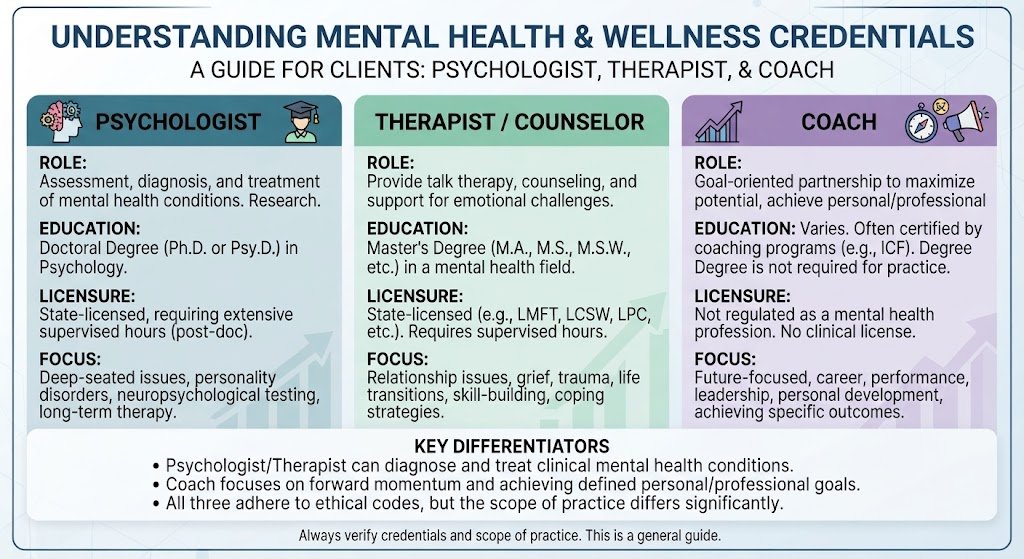
The term mental health professional can include a range of professionals who provide mental, emotional, behavioral, or wellness-related support.
Depending on licensing, credentials, training, and scope of practice, this may include:
Therapists
Psychologists
Counselors
Social workers
Mental health professionals
Life coaches
Mental care coaches
Wellness coaches
Other wellness professionals
It is important for every provider to clearly communicate their credentials, qualifications, services, and scope of practice.
For people searching for support, clarity is important.
They want to know what type of professional they are considering and whether that professional’s services are appropriate for their needs.
Why Online Visibility Matters for Mental Health Professionals
Imagine having an excellent professional practice but being difficult to find online.
Someone searches for a provider in their area.
Your name doesn’t appear.
They search for your specialty.
Your website doesn’t appear.
They search for a coach or therapist who works with a particular concern.
You aren’t visible in the results.
The person moves on.
This is one of the biggest challenges facing independent professionals.
Being qualified doesn’t automatically make you discoverable.
Online visibility helps bridge that gap.
A provider directory can give professionals another place where their name, professional information, specialties, services, and website can be discovered.
How Do People Find Mental Health Providers?
People use many different paths when searching for mental care.
Search engines
Google and other search engines are often the first place people go when looking for information.
Someone might search:
“therapist near me”
“anxiety therapist”
“mental health counselor”
“life coach near me”
“mental health coach”
“wellness coach”
“psychologist near me”
“mental health professional”
Provider directories
Directories make it easier to compare different professionals in one place.
A person can potentially discover multiple providers instead of searching through dozens of individual websites.
Professional websites
A provider’s own website remains an important part of their online presence.
A professional website can provide more detailed information about:
Credentials
Experience
Specialties
Services
Philosophy
Contact information
Booking information
Social media
Social platforms can help professionals demonstrate expertise, share educational content, and build familiarity.
However, social media should complement—not replace—a professional online presence.
What Makes a Strong Professional Profile?
A professional directory profile should answer the questions a potential client is likely to have.
1. Your Name
Your professional name should be clear and consistent across your online presence.
2. Your Professional Credentials
Clearly identify applicable credentials, licenses, certifications, and professional qualifications.
3. Your Specialties
Specialties help people determine whether your services may be relevant to their needs.
For example:
Anxiety
Stress
Relationships
Life transitions
Self-esteem
Personal development
Emotional wellness
Career concerns
Trauma-related support
Only list specialties and services that accurately represent your professional qualifications and scope.
4. Your Services
Explain what you offer in simple language.
Avoid making potential clients guess what working with you involves.
5. Your Professional Story
People want to know who they may be working with.
A short professional biography can help establish familiarity and trust.
6. Your Website
Your professional website gives potential clients another place to learn more about you.
7. How People Can Contact You
Make the next step obvious.
A person shouldn’t have to search through multiple pages to determine how to reach you.
Why a Provider Directory Can Help You Get Found
A provider directory can function as another digital doorway to your professional practice.
Instead of relying exclusively on your own website, you can create an additional online presence where people searching for mental care may discover your professional information.
Think of it as another opportunity to appear where potential clients are already looking.
For professionals building their practice, additional discoverability can be valuable.
Therapists: How to Improve Your Online Visibility
Therapists often compete for attention in crowded search results.
A strong online presence should clearly communicate:
Who you help + what you specialize in + where you practice + how someone can contact you.
For example, instead of simply writing:
“I am a therapist who helps people.”
A stronger profile could explain:
“I provide professional support for adults experiencing anxiety, relationship challenges, life transitions, and emotional stress.”
The exact wording should reflect the therapist’s actual practice.
Important therapist profile information can include:
License type
Credentials
Areas of specialization
Populations served
Location
Telehealth availability
Services offered
Professional website
Contact information
The goal is clarity.
Psychologists: Make Your Expertise Easier to Discover
Psychologists also benefit from clearly communicating their professional expertise online.
A strong profile can explain:
Professional credentials
Areas of expertise
Populations served
Services
Approach
Location
Professional website
Contact options
Potential clients shouldn’t need to decipher complicated terminology to understand what you offer.
Use clear, accessible language while accurately representing your professional qualifications.
Coaches: You Belong in the Conversation Too
Not everyone looking for mental or emotional support is looking for a therapist.
Some people specifically want to connect with a coach.
That distinction matters.
People may search for:
Life coaches
Wellness coaches
Mental care coaches
Relationship coaches
Career coaches
Personal development coaches
Other coaching professionals
Coaches should clearly explain their services and qualifications while staying within their professional scope.
A strong coach profile can communicate:
What you help with + who you help + what coaching with you looks like + how people can connect.
For coaches, being listed where people are actively discovering different types of mental-care and wellness professionals can create another opportunity for visibility.
Wellness Professionals Need Visibility Too
The mental and emotional wellness space extends beyond traditional categories.
People may be looking for professionals who support:
Personal growth
Stress management
Wellness
Mindfulness
Life transitions
Personal development
Healthy lifestyle changes
Emotional well-being
The key is accurately describing what you provide.
Clear positioning helps potential clients determine whether you are the right type of professional for what they are looking for.
7 Ways Mental Health Professionals Can Get Found Online
1. Create a Complete Professional Profile
Incomplete profiles create uncertainty.
Include as much relevant professional information as appropriate:
The more useful your profile is, the easier it is for someone to understand your professional offering.
2. Use the Words People Actually Search
Think about how your ideal client searches.
A provider might describe themselves as:
“A practitioner specializing in integrative emotional wellness.”
But a potential client might search:
“mental health coach near me.”
Both descriptions may be meaningful, but search visibility depends partly on using language people actually use.
Include relevant terms naturally throughout your website and professional profiles.
Don’t keyword-stuff.
Write for people first.
3. Build Your Own Website
Your website should serve as your professional home online.
Consider creating pages for:
About
Services
Specialties
Contact
Frequently Asked Questions
Professional credentials
Resources or blog
A provider directory can complement your website rather than replace it.
4. Create Helpful Content
Educational content can help demonstrate expertise and create additional opportunities for search visibility.
Potential topics include:
How to recognize signs of emotional burnout
Questions to ask when choosing a therapist
What to expect from coaching
When to seek professional support
How therapy differs from coaching
Ways to manage everyday stress
How to find the right mental health professional
Content should be educational and accurate and should not misrepresent your qualifications.
5. Keep Your Information Consistent
Your name, credentials, location, website, services, and professional information should be consistent across platforms.
Inconsistent information can create confusion.
Review your online listings periodically.
6. Use Professional Directories
Directories can provide another path for potential clients to discover you.
Rather than relying on a single source of traffic, consider creating a broader digital footprint.
Your website can be one doorway.
Social media can be another.
A professional directory can be another.
Search engines can connect all of them.
7. Make the Next Step Easy
Once someone discovers you, what should they do?
Don’t make them figure it out.
Use clear calls to action such as:
Learn More
Visit My Website
Contact Me
Book a Consultation
Explore My Services
The appropriate call to action depends on your profession and how you work with clients.
SEO for Mental Health Professionals
Search engine optimization, or SEO, helps search engines understand your content and can improve your chances of appearing for relevant searches.
Important SEO elements include:
Page title
Create a descriptive title that reflects the page’s subject.
Meta description
Write a concise description explaining what the page offers.
Headings
Use logical H1, H2, and H3 headings.
Internal links
Connect related pages on your website.
Professional information
Clearly explain your credentials, specialties, services, and location.
Local SEO
If you serve a particular geographic area, make your service area clear.
Helpful content
Create genuinely useful content that answers questions your audience is asking.
Local SEO for Therapists, Coaches & Providers
Local searches can be especially important for professionals who serve specific communities.
Someone may search:
“therapist in Seattle”
“life coach near me”
“psychologist in Washington”
“mental health counselor near me”
Your online profiles should accurately communicate your service area.
For professionals offering remote services, clearly explain where you are licensed or otherwise authorized to provide services and where you accept clients, as applicable.
How to Stand Out From Other Providers
You don’t need to be the loudest professional online.
You need to be clear.
Ask yourself:
Who do I help?
Be specific.
What do I help with?
Explain your specialties.
What makes my approach different?
Describe your professional philosophy or approach without making unsupported claims.
What should someone do next?
Give them a clear path.
A strong profile doesn’t need to be complicated.
It needs to be useful.
TheraConnect: A Place to Be Found
TheraConnect is a mental care discovery directory designed to help people discover mental care professionals.
The goal is simple:
Make it easier for people to find the type of professional they are looking for.
TheraConnect welcomes a range of professionals, including:
Therapists
Psychologists
Coaches
Mental care coaches
Wellness professionals
Other eligible mental-care and wellness providers
Providers can create a professional presence where potential clients can learn more about them.
Your profile can showcase:
Your name. Your photo. Your credentials. Your specialties. Your services. Your story. Your website. Your professional information.
That means potential clients have a place to learn about you before deciding what their next step should be.
Why “Get Found” Matters
Your work matters.
But if people cannot find you, they cannot consider you.
Getting found isn’t about promising more clients.
It is about increasing the number of opportunities for the right people to discover your professional services.
Your online visibility can become part of your overall practice-growth strategy.
Be discoverable. Be clear. Be professional. Make it easy to connect.
A Simple Online Visibility Checklist
Before promoting your practice, review your online presence.
Professional Profile
☐ Name is correct ☐ Credentials are accurate ☐ Professional photo included ☐ Biography completed ☐ Specialties listed ☐ Services explained ☐ Service area listed ☐ Website included ☐ Contact information available
SEO
☐ Relevant keywords used naturally ☐ Page titles optimized ☐ Meta descriptions written ☐ Headings organized ☐ Internal links added ☐ Local information included where appropriate
Marketing
☐ Professional directory profile ☐ Website ☐ Google Business Profile if eligible ☐ Social media presence ☐ Educational content ☐ Consistent professional branding
Frequently Asked Questions
What is a mental health provider directory?
A mental health provider directory is an online resource that allows people to discover professionals who provide mental-health-related, emotional wellness, coaching, or related services.
How can therapists get found online?
Therapists can improve visibility by maintaining a professional website, creating complete directory profiles, using relevant SEO terms, publishing helpful content, maintaining accurate local information, and building a consistent online presence.
Can coaches be listed in a mental care directory?
Some directories welcome qualified coaches alongside therapists and other professionals. Coaches should clearly describe their services, qualifications, and professional scope.
Why should mental health professionals have a professional profile?
A professional profile provides a centralized place for potential clients to learn about a provider’s credentials, specialties, services, and professional background.
Is a provider directory a replacement for a professional website?
No. A directory can complement a professional website by creating another opportunity for people to discover a provider and then visit the provider’s own website.
How do people find mental health professionals?
People may use search engines, provider directories, professional websites, referrals, social media, and local searches.
The Bottom Line: Make It Easier to Find You
You don’t have to be everywhere.
But you should make it easy for the people who are looking for your type of professional support to discover you.
A complete professional profile, strong website, helpful content, accurate information, and strategic directory listings can all contribute to a stronger online presence.
For therapists, psychologists, coaches, and wellness professionals, getting found is the first step toward getting considered.
And sometimes, the person searching isn’t looking for a therapist.
Sometimes they want a coach.
Sometimes they want a wellness professional.
Sometimes they’re still figuring out exactly what kind of support they need.
That’s why creating a place where people can discover different types of professionals matters.
Every year on October 10, people around the world pause to talk openly about mental health. World Mental Health Day is a reminder that mental health is part of everyone’s health, and that no one should have to struggle alone or in silence.
This guide covers where the day came from, what the numbers say, simple ways to take part, how to check on someone you care about, and where to find support for yourself. Bookmark it, share it, and use it all year long.
What is World Mental Health Day?
World Mental Health Day was first observed on October 10, 1992. The World Federation for Mental Health (WFMH) started it, with Deputy Secretary General Richard Hunter leading the effort. Yearly themes began in 1994, and the World Health Organization now supports the day with awareness campaigns around the world (Wikipedia).
The 2026 theme: “Lived Experiences Heard: Real Voices, Real Change”
This year’s theme puts people with lived experience of mental health conditions at the center of the conversation (WFMH). The message is simple: the people who have been through it understand what helps and what doesn’t, and their voices should shape how support is designed and offered.
For the rest of us, it’s an invitation to listen. Hearing real stories breaks down stigma, helps people feel less alone, and makes it easier for someone who is struggling to reach out.
Mental health by the numbers
Mental health conditions are among the most common health issues in the world. According to the World Health Organization, more than 1 billion people are living with a mental health condition, and anxiety and depression are the most common (WHO / PAHO, 2025).
Statistic
Figure
Source
People worldwide living with a mental health condition
Behind every number is a person: a coworker, a parent, a friend, maybe you. That’s exactly why this year’s focus on lived experience matters.
The treatment gap: why people don’t get help
Mental health conditions are treatable, but many people never get care. In the U.S., only 52.1% of adults with a mental illness received treatment in 2024, and on average about 11 years pass between when symptoms start and when someone gets treatment (NAMI). Worldwide, fewer than 10% of people in low-income countries receive care, compared with more than half in higher-income countries (WHO / PAHO, 2025).
The most common barriers are:
Stigma and shame. Worrying about what others will think keeps many people quiet.
Not enough providers. More than 120 million Americans live in a designated Mental Health Professional Shortage Area (NAMI).
Cost and insurance. 9.6% of U.S. adults with a mental illness had no insurance coverage in 2024 (NAMI).
Not knowing where to start. Finding the right person, with the right approach and price, can feel overwhelming.
Every one of these barriers gets smaller when we talk openly, and that’s what October 10 is for.
10 ways to take part on October 10
You don’t need to organize an event to make a difference. Small actions count.
Check on three people. Send a text: “Thinking of you today. How are you really doing?”
Share a story, or listen to one. In honor of this year’s theme, invite someone to share their experience, and simply listen.
Wear green. Green is the color of mental health awareness, and it’s an easy conversation starter.
Post a resource. Share the 988 Suicide & Crisis Lifeline or a guide like this one on social media.
Take a real break. Step outside for a 15-minute walk, phone in your pocket.
Start a conversation at work. Bring up mental health at a team meeting, or share your company’s support resources.
Learn the warning signs. Knowing what to look for helps you notice when someone needs support.
Book the appointment you’ve been putting off. For yourself, or help someone you love find a provider.
Donate or volunteer. Support a mental health nonprofit in your community.
Be kind to yourself. Rest, eat well, and give yourself the same grace you’d give a friend.
How to check on someone you care about
You don’t need to be an expert to help. Most of the time, what helps most is showing up and listening.
What to say
Try saying
Instead of
“I’ve noticed you seem stressed lately. Want to talk?”
“You seem off. What’s wrong with you?”
“That sounds really hard. I’m glad you told me.”
“It could be worse.”
“How can I help right now?”
“Just think positive.”
“You don’t have to go through this alone.”
“Everyone feels that way sometimes.”
“Would it help to talk to someone? I can help you look.”
“You should see a therapist.”
If you’re worried about their safety
The National Institute of Mental Health recommends five action steps (NIMH):
Ask. Ask directly if they’re thinking about suicide. Research shows asking does not increase suicidal thoughts or behavior.
Be there. Listen without judgment.
Help keep them safe. Help make dangerous items or places harder to reach during a crisis.
Help them connect. Share the 988 Lifeline, or help them reach a trusted person or professional.
Follow up. Keep checking in. Ongoing contact can make a real difference.
Caring for your own mental health
Self-care isn’t a cure, but small daily habits build a strong foundation. The National Institute of Mental Health recommends (NIMH):
Move your body. Just 30 minutes of walking a day can boost your mood, and short bursts add up too.
Eat regular, balanced meals and drink water. Steady fuel helps your energy and focus.
Protect your sleep. Keep a regular schedule and cut back on screens before bed.
Make time to relax. Try breathing exercises, meditation, music, reading or time in nature.
Set priorities. Decide what needs doing now and what can wait, and say no when you’re stretched thin.
Practice gratitude. Name specific things you’re thankful for each day.
Challenge negative thoughts. Notice harsh self-talk and question it.
Stay connected. Reach out to friends and family who lift you up.
Pick one habit to start this October 10. Small and consistent beats big and occasional.
When to get professional help
NIMH advises talking to a professional if you’ve had severe or distressing symptoms for 2 weeks or more (NIMH), such as:
The right support might be a licensed therapist, a psychologist, a counselor, or an experienced coach or wellness professional, depending on what you need. TheraConnect brings every kind of support together in one welcoming place. Sign up at no cost to browse providers, read their profiles, and reach out directly to the person who feels right for you.
TheraConnect was built by the team behind FitnessHacksForLife.org, a 501(c)(3) nonprofit dedicated to making wellness support easier to find. Want to learn more first? Read our guide, When Is It Time to Get Help? Signs Therapy Could Help.
If you need help right now
If you or someone you know is in crisis, help is available 24/7:
988 Suicide & Crisis Lifeline (U.S.): Call or text 988, or chat at 988lifeline.org. It’s free and confidential, for anyone facing emotional distress, a mental health struggle or substance use concerns, or who just needs someone to talk to.
Immediate danger: Call 911.
Outside the U.S.: Contact your local emergency number or crisis line.
Reaching out is a sign of strength, not weakness.
Frequently asked questions
When is World Mental Health Day 2026? Saturday, October 10, 2026. It falls on October 10 every year.
What is the 2026 theme? “Lived Experiences Heard: Real Voices, Real Change,” chosen by the World Federation for Mental Health.
What color represents mental health awareness? Green. Many people wear a green ribbon or green clothing on October 10.
Who started World Mental Health Day? The World Federation for Mental Health, in 1992. The World Health Organization also supports it.
How can I celebrate at work? Share support resources, start an open conversation in a team meeting, encourage real breaks, and remind coworkers about any employee assistance program.
How do I know if I need therapy? If distressing symptoms have lasted two weeks or more, or are getting in the way of daily life, it’s a good time to talk to a professional. You don’t have to be in crisis to deserve support.
37% reported having included PWLE in training delivered to primary health care workers on mental health.
45% reported having ongoing collaboration with PWLE and family or caregiver advocacy groups in the planning, delivery or monitoring of mental health promotion, prevention, treatment and rehabilitation services.
59% reported that mental health legislation had been developed in consultation with PWLE
80% of countries with a mental health policy or plan reported that it had been developed in consultation with PWLE.
Lived experience can help make mental health programmes more relevant.
PWLE bring knowledge that cannot be gained from professional training or research alone. They can identify barriers that others may overlook and help ensure that policies, services and programmes respond to people’s actual needs and circumstances.
The shift toward community-based care is happening too slowly.
About 1 in 10 of countries (9%) have fully transitioned from institution-based mental health care to community-based models. Around half (53%) remain in the early stages of this transition. And around half (49%) of reported psychiatric hospital admissions are involuntary, and more than one in five hospital stays (23%) last longer than a year. Deinstitutionalization (DI) means developing quality services and practical support within communities so that people can live with dignity, exercise choice, and remain connected to their families and communities.
Sources
World Federation for Mental Health. “World Mental Health Day 2026.” Link
Pan American Health Organization / World Health Organization. “Over a billion people living with mental health conditions; services require urgent scale-up.” September 2, 2025. Link
National Alliance on Mental Illness. “Mental Health By the Numbers.” 2024 data. Link
National Institute of Mental Health. “5 Action Steps to Help Someone Having Thoughts of Suicide.” Link
National Institute of Mental Health. “Caring for Your Mental Health.” Link
American Psychiatric Association. “What Is Psychotherapy?” Link
Finding the right mental-care provider can feel overwhelming. Whether you’re looking for help with anxiety, depression, trauma, grief, relationships, burnout, or a major life transition, knowing where to begin can make the search easier.
TheraConnect helps people discover mental-care providers in New York by making it easier to explore provider profiles, specialties, services, and locations.
Mental Health Care in New York
Access to mental-health care can vary considerably across communities. Federal Health Professional Shortage Areas identify geographic areas, populations, and facilities where there is a shortage of mental-health professionals. KFF
As of December 31, 2025, New York had 200 designated mental-health HPSAs, representing approximately 3.77 million people in designated areas. The KFF data reported that approximately 15.2% of the need was met within those designated areas. KFF
For people looking for support, knowing how to search for providers—and how to compare them—can be an important first step.
How to Find the Right Therapist in New York
Start with what you want help with.
You may be looking for a provider who works with:
Anxiety and stress
Depression
Trauma
Grief and loss
Relationship concerns
Family concerns
Burnout
Self-esteem
Life transitions
Narcissistic abuse recovery
Other emotional or mental-health concerns
Searching according to your specific needs can help you narrow your options.
What Type of Mental-Care Provider Are You Looking For?
Mental-care professionals have different education, credentials, licensing requirements, and areas of practice.
Depending on your needs, you may encounter:
Therapists
Licensed mental-health counselors
Licensed clinical social workers
Marriage and family therapists
Psychologists
Mental-health coaches
Other mental-care professionals
When reviewing a provider, look at their credentials, specialties, experience, services, and the type of support they provide.
New York’s Office of the Professions provides online license verification for regulated professionals, including mental-health counselors and psychologists. New York State Education Department
Online or In-Person Mental Health Support?
You don’t necessarily have to limit your search to providers located close to your home.
Some providers offer online sessions, while others offer in-person appointments. Some offer both.
When reviewing a provider profile, consider:
Online availability
In-person availability
Location
Areas of specialty
Services offered
Whether they’re accepting new clients
The populations they work with
If you’re considering online care, confirm that the provider can serve clients in your location and that the service is appropriate for your needs.
How to Choose a New York Mental-Health Provider
Once you’ve found several providers who appear to fit your needs, take time to compare their profiles.
Ask yourself:
Does this provider work with the issue I’m experiencing?
Do their credentials and experience fit what I’m looking for?
Do they offer the type of sessions I want?
Are they accepting new clients?
Do their services fit my needs and circumstances?
Do I feel comfortable reaching out to them?
You don’t have to choose the first provider you find.
The goal is to find someone whose experience and services align with what you’re looking for.
Find Mental-Care Providers Across New York
New York includes communities with very different needs and access to services.
TheraConnect helps people explore mental-care providers based on factors such as specialty, services, and location.
You can review provider profiles and learn more about professionals before deciding who you’d like to contact.
Whether you’re looking for help with anxiety, trauma, relationships, grief, burnout, depression, or another concern, starting with your specific needs can make the search more focused.
Find a Mental-Care Provider on TheraConnect
Searching for mental-care support shouldn’t require visiting dozens of different websites.
TheraConnect provides a place where people can discover mental-care providers and explore professional profiles.
Are You a Mental-Care Provider in New York? Get Found.
TheraConnect isn’t only for people looking for care.
It’s also designed for therapists, counselors, psychologists, coaches, and other mental-care professionals who want another way to be discovered online.
Your professional profile can showcase:
Your professional credentials
Your specialties
Your experience
Your services
Your location
Online or in-person options
Information potential clients can use when deciding whether to contact you
Your online presence doesn’t have to depend entirely on social media or people finding your individual website.
Make it easier for people looking for mental care to discover you.
Your Expertise Matters. Get Found.
Create your professional TheraConnect profile and put your services where people are looking for mental-care providers.
Finding Mental Care Doesn’t Have to Feel So Complicated
Start with what you need.
Look for providers who specialize in those concerns. Review their profiles and credentials. Consider whether online or in-person care works best for you. Then reach out to providers who appear to fit your needs.
TheraConnect helps make the discovery process easier.
Most people who need a therapist or coach start the same way: they type a search into their phone, often late at night, often after weeks of working up the courage. If your name doesn’t show up in that moment, they’ll reach out to someone else.
You became a therapist, psychologist, counselor or coach to help people, not to learn search engine optimization. But how clients find care has changed. Being good at your work is no longer enough on its own. People also need to be able to find you.
The numbers: clients search first
Search is now the most common way people look for a new provider, ahead of asking a friend. A 2024 survey by Harmony Healthcare IT found that 46% of patients use Google to find a new doctor, and 46% check a provider directory. Only 32% rely on word of mouth, and 29% on a referral from another provider (TechTarget).
The last two numbers matter most. Showing up online isn’t enough. You need to show up near the top, because almost no one scrolls to page two.
Why word of mouth isn’t enough anymore
Referrals still matter. A recommendation from a trusted friend or doctor carries real weight. But even referred clients usually look you up before they call.
Mental health adds another layer. Many people aren’t ready to tell a friend they’re looking for a therapist. They search privately first, read quietly, and reach out only when a provider feels like the right fit. If the only way to find you is through someone who already knows you, you’re invisible to the people searching on their own.
A referral starts the conversation. What they find when they search is what gets them to reach out.
What clients look for when they find you
Once someone finds your name, they’re trying to answer one question: is this person right for me? A clear profile answers it quickly. Most people look for:
Who you help. The concerns you specialize in, like anxiety, grief, relationships or life transitions.
How you work. Your approach in plain language, not just a list of acronyms.
The practical details. Location or online sessions, fees, and whether you take insurance.
A real person. A friendly photo and a few sentences in your own voice.
What others say. Reviews matter: 90% of patients use them to evaluate providers (Software Advice).
An easy next step. A simple way to reach out, without hunting for a phone number.
A client who can’t find these answers in under a minute usually moves on to the next result.
SEO in plain language
SEO, or search engine optimization, just means setting up a page so Google understands who it’s for and shows it to the right people. For a provider, three pieces matter most:
Page title and meta description. This is the headline and short summary people see in search results. A clear one, like “Anxiety Therapist in Portland | Jane Smith, LCSW,” tells both Google and the reader exactly what you offer.
The words on your page. Google matches searches to the words you use. Naming your specialties, location and approach in everyday language helps the right people find you.
Links from trusted sites. When a reputable site links to your page, Google treats it as a vote of confidence and is more likely to rank you higher.
None of this is hard, but it takes time and know-how that most clinicians would rather spend with clients.
How TheraConnect helps you get found
TheraConnect gives every provider their own professional profile page, and our team handles the SEO and meta tags for you. You share who you are and how you work. We make sure the page is set up so people searching online can find it.
Your own page and link. Share it in your email signature, on social media or on business cards.
SEO and meta done for you. No keywords to research, no website to build.
Direct client inquiries. Clients contact you, and you keep 100% of your session fees.
Open to every kind of support. Therapists, psychologists, counselors, experienced coaches and wellness professionals are all welcome.
TheraConnect was built by the team behind FitnessHacksForLife.org, a 501(c)(3) wellness nonprofit. Founding Provider membership is $199 a year, with no setup fees. Premium ($650 a year) adds a blog spotlight article, a do-follow backlink to your website, and promotion on Facebook and Pinterest.
Heath, S. “Most patients find new doc online, via provider directories.” TechTarget Patient Engagement, June 26, 2024. Reporting on the 2024 Harmony Healthcare IT patient survey. Link
Software Advice. “How Patients Use Online Reviews.” 2020 patient survey. Link
Backlinko. Google organic click-through rate study of 4 million search results, originally published August 2019, updated April 2025. Link
A therapist match can look quiet from the outside: a client finally says the thing they have avoided saying for years, leaves a session feeling less alone, or sends a message that reads, “I think this is helping.” Examples of successful therapist matches are not usually about instant breakthroughs. They are about finding a qualified professional whose approach, communication style, availability, and experience make it easier to keep showing up.
The right fit is personal. A therapist who is excellent for a college student managing panic may not be the best fit for a parent grieving a loss or a couple rebuilding trust. That is why a thoughtful matching process matters. It can reduce the pressure to guess and help you begin care with clearer expectations.
What successful therapist matches have in common
A successful match does not mean therapy always feels comfortable. Some conversations should challenge familiar patterns, and progress can be uneven. The stronger sign is that you feel respected enough to be honest, including when you disagree, feel stuck, or need something different from treatment.
Good matches usually have a few things in common. The therapist has relevant training and experience, the client understands the general approach being used, and practical details such as cost, session times, and virtual access are manageable. When those basics are in place, the relationship has room to do its most meaningful work.
It also helps when the therapist explains their role clearly. They should be willing to discuss confidentiality, goals, fees, scheduling, and what happens if you need more support than virtual therapy can provide. Transparency is not a bonus. It is part of feeling safe in care.
Examples of successful therapist matches in real life
The following examples are illustrative. Every person and treatment plan is different, but these situations show what a strong fit can make possible.
The anxious professional who needed structure
Jordan had begun turning down presentations, avoiding social plans, and replaying work conversations late into the night. They wanted help with anxiety but worried that therapy would feel vague or endless. Their best match was a therapist who regularly worked with anxiety disorders and used a structured, skills-based approach.
In early sessions, the therapist helped Jordan identify specific goals: speak during weekly meetings, reduce reassurance-seeking, and sleep more consistently. They practiced coping skills, reviewed what happened between sessions, and adjusted the plan when a strategy did not help. Jordan did not stop feeling anxious overnight. What changed was their confidence in responding to anxiety rather than organizing life around avoiding it.
This match worked because Jordan wanted clear direction, and the therapist could provide it without treating Jordan like a project to fix. For someone else, a less structured approach might feel more supportive. The point is not that one therapy style is best. It is that the style matched the need.
The new parent who needed a therapist who understood the season
After the birth of her first child, Maya felt overwhelmed, isolated, and ashamed that she was not enjoying every moment. She found it difficult to attend in-person appointments with feeding schedules and limited childcare. A virtual therapist with experience in perinatal mental health made care more realistic.
The therapist did not minimize Maya’s feelings or offer generic encouragement. They explored the pressure Maya felt to be grateful, helped her recognize signs that warranted additional medical support, and worked with her on boundaries, rest, and asking for help. Virtual sessions let Maya attend from home during a fragile and demanding period.
The successful part of this match was not only clinical experience. It was practical access. A therapist can be highly qualified, but if getting to appointments creates another impossible task, consistency becomes harder. Online therapy can be a meaningful option when privacy, technology, and a reliable place to talk are available.
The client processing trauma who needed control and pacing
Carlos had tried therapy once before and stopped after feeling pushed to discuss painful memories before he was ready. When he looked again, he sought a therapist experienced in trauma-informed care. In the first few sessions, the therapist focused on trust, emotional regulation, and what Carlos needed to feel in control of the process.
They talked openly about pace. Carlos learned that he could pause, ask questions, and say when an exercise felt like too much. Over time, he began connecting present-day reactions to past experiences without feeling pressured to share every detail at once.
This match succeeded because the therapist did not confuse urgency with progress. Trauma treatment may involve difficult work, but it should include consent, collaboration, and attention to safety. If you have had a bad therapy experience before, naming what did not work can help guide a better match.
The older adult who wanted room for grief and change
Elaine reached out after the death of her spouse and a move away from her longtime neighborhood. Friends kept telling her to stay busy, but she wanted a place where grief would not be treated as a problem to solve quickly. Her therapist had experience supporting adults through loss, caregiving transitions, and life changes.
Instead of setting a timeline for “moving on,” the therapist gave Elaine room to tell the story of her marriage while also helping her rebuild routines and connections. Some sessions focused on sadness; others focused on a practical next step, such as calling a friend or joining a local activity.
A successful match can honor both parts of healing: making space for pain and making space for a life that continues. For Elaine, being listened to without being rushed was central to the fit.
The couple who needed balanced, direct guidance
Nia and Ben were having the same argument about money and household responsibilities every week. They did not need a therapist to decide who was right. They needed someone who could slow down the conflict, identify the cycle they were caught in, and make sure both partners had a voice.
Their couples therapist set clear expectations about participation and respect. Rather than letting sessions turn into a debate, the therapist helped them notice how criticism, defensiveness, and withdrawal were affecting both of them. They practiced more direct requests and created agreements they could revisit at home.
Couples therapy is a specialized service, so experience matters. A therapist who is a strong fit for individual anxiety care may not offer couples work. Asking about the therapist’s training, approach, and how they handle safety concerns is a reasonable part of choosing care.
How to recognize a good fit after the first few sessions
You do not need to decide after one appointment whether you have found your therapist for life. The first session can feel awkward because you are sharing personal information with someone new. Give the relationship enough time to establish a rhythm, unless you feel unsafe, judged, pressured, or consistently dismissed.
After two to four sessions, consider a few practical questions. Do you understand what you are working toward? Does the therapist listen and remember what matters to you? Can you speak honestly without worrying about being shamed? Are appointments affordable and realistic to maintain? Do you leave with a sense that the work has a purpose, even when the session brings up difficult emotions?
A good fit also includes professional boundaries. Your therapist should not make the relationship about their needs, promise outcomes they cannot guarantee, or make you feel responsible for managing their reactions. If something feels off, trust yourself enough to ask about it or look for another provider.
Make the matching conversation more useful
Before you begin, it can help to identify what you want support with and what would make therapy easier to continue. You might prefer a therapist with experience in a particular concern, a certain therapeutic style, flexible evening appointments, or a fee that fits your budget. You may also have preferences related to culture, faith, identity, language, or life experience.
You do not need perfect wording. A simple statement such as, “I want help with anxiety, but I also need someone who gives practical feedback,” gives a matching team or potential therapist useful information. It is equally helpful to say if you are unsure what you need. Many people start therapy with only the knowledge that something is not working.
TheraConnect helps clients begin that process by connecting them with vetted mental health professionals based on individual needs, preferences, and availability. Signing up is free, and a thoughtful match can save you from spending weeks trying to sort through profiles alone.
Finding the right therapist is not about finding a perfect person who always knows what to say. It is about finding qualified care where you can be honest, feel respected, and keep taking the next workable step. When you are ready, get started with the details that matter most to you.
People are living longer, reshaping what it means to grow old.
By the late 2060s, an estimated 2.5 billion people worldwide will be age 60 or older – more than the number of people under 18. The population age 80 and older is expected to grow even faster, more than tripling between 2023 and 2060 to about 545 million.
Living longer means spending more years navigating the changes that can accompany later life. Those changes can raise questions and concerns that people may explore in counseling or therapy settings. Yet older adults are far less likely than younger adults to receive counseling or therapy.
A comment from a 79-year-old acquaintance helped me put this into perspective. After accompanying a family member to a counseling session where much of the conversation focused on aging and death, he reflected that older adults need opportunities to talk about more than dying. They also need someone willing to listen to them talk about living, along with the changes they are navigating, the decisions they are making and what matters to them now.
The role of counseling in older adulthood is broader than addressing illness, loss and bereavement. These are important concerns, but counseling can also help people navigate changes in work, health, abilities, relationships, independence and identity, and consider what comes next.
Join 1,724 readers who give monthly to fund research-based journalism
According to national data from 2024, 7.5% of adults ages 65 to 74 and 5% of adults 75 and older received counseling or therapy from a mental health professional – compared with 20.2% of adults ages 18 to 29.
There is no single reason older adults are less likely to seek counseling. Some obstacles are practical. Cost, health problems, transportation and difficulty accessing services can all make getting help more complicated.
What’s more, many older adult don’t generally think of counseling as an option in the first place, research suggests – instead preferring informal sources of help over professional mental health services. Stigma, negative beliefs about therapy and cost were among the most frequently reported barriers.
Expectations about aging may matter, too. A 2025 review found that older adults and health professionals who hold negative stereotypes about aging may have less faith that psychotherapy can lead to change or improvement.
These factors help explain why counseling may be difficult to access or may not feel like somewhere to turn for support. But they don’t tell the whole story. Some of the changes that come with growing older can be difficult to navigate, even when people don’t think of what they’re experiencing as a reason to consider counseling.
Later life can bring decades of change
Aging is characterized by so many transitions – some chosen and others shaped by circumstance: A person may be retiring after a career that shaped their daily life and identity for 40 years. Or they may want – or need – to continue working but can no longer do the same job.
Others may be learning to live with a disability, giving up driving, caring for a spouse, moving from a longtime home, beginning a new relationship or adjusting to changes in independence.
These transitions can affect more than daily routines. Retirement, for example, can challenge a person’s sense of meaning in life. Other later-life transitions – including bereavement, relocation and changes in physical health – can also affect purpose and well-being.
The way counselors think about mental health support in later life has also evolved since the early 2000s. Researchers and practitioners have begun to pay greater attention to the wide differences in how people experience aging, the strengths older adults bring to later life, and their capacity for continued growth and change.
Updated 2024 guidelines for working with older adults reflect this broader view, emphasizing individual circumstances, relationships, health, abilities and the social realities of aging.
That shift can change what a person chooses to talk about with a counselor. Giving up driving may be about independence as well as transportation. Leaving a career may raise questions about identity, purpose and what comes next. Adjusting to a disability may involve figuring out what is still possible and how someone wants to move forward. Counselors’ assumptions about aging can also shape those conversations.
Research has found that even counselors who work with older adults may hold age-related biases. If a counselor views an older person’s struggles primarily through the lens of age, illness, death or bereavement, they may lose sight of other areas of life that are equally important to the person, such as independence, relationships, identity, purpose, changing roles and the life still ahead.
What counseling can offer in later life
Research shows that older adults can benefit from counseling as much as younger adults do – not just to address a mental health diagnosis but when navigating a life change. Counseling can offer a place to talk not only about what has changed but what that change means and how someone wants to live moving forward.
If you’re considering counseling later in life, here are a few things to keep in mind:
Don’t assume counseling isn’t for what you’re going through. Retirement, caregiving, changes in independence, disability, relationships or questions about what comes next can all be reasons to seek support.
When choosing a counselor, the American Psychological Association recommends asking about their experience. Inquiring whether a counselor you’re considering has experience working with older adults, and whether they have experience with the issues that matter to you, will help you evaluate whether they are a good fit.
In your first few sessions, pay attention to how the conversation feels. Counseling is collaborative, and feeling comfortable with the person you choose matters. If the conversation is not addressing what brought you there, it is reasonable to say so or to consider whether another provider might be a better fit.
Counseling in later life may sometimes involve grief, illness and loss. But it can also provide a place to ask a different kind of question: What do I want my life to look like now?
Choosing a therapist can feel personal before you have even said a word in session. You may be sharing experiences you have not told anyone else, so therapist credential verification is not just paperwork. It is one practical way to confirm that a provider has the education, training, and legal authority to offer the care they describe.
Credentials cannot tell you everything about what therapy with a person will feel like. They can, however, give you a grounded place to start. When you understand what to check and what each credential means, you can spend less time guessing and more time finding care that feels right for you.
What therapist credential verification actually means
Therapist credential verification is the process of confirming that a mental health professional is qualified to practice. In most cases, this includes checking their professional license, the state where that license is active, their education, and whether they are permitted to provide telehealth services to someone in your location.
A verified provider should be able to clearly share their full name, professional designation, license type, and the state or states where they are licensed. Depending on their role, you may see letters such as LPC, LMHC, LCSW, LMFT, psychologist, or psychiatrist after their name. These titles reflect different educational paths and scopes of practice.
For example, a licensed clinical social worker commonly holds a master’s degree in social work and clinical licensure. A licensed marriage and family therapist has specialized education in relationship and family systems. Psychologists generally hold doctoral degrees, while psychiatrists are medical doctors who can evaluate medication needs. None of these titles automatically make one provider better than another. The right choice depends on the support you are seeking.
Why verification matters before online therapy
Virtual therapy makes it possible to connect with qualified care from home, which can be especially helpful for people with busy schedules, limited transportation, or few local options. It also means that location and licensing rules require extra attention.
In the United States, mental health licenses are usually issued by states. A therapist may be highly qualified but still may not be able to provide therapy to a client who is physically located in a state where they are not licensed or otherwise authorized to practice. This is generally based on where the client is during the session, not where the therapist’s office is located.
Verification also helps protect you from misleading titles. Terms like “coach,” “counselor,” or “therapist” can be used differently depending on the setting and state. A provider can offer valuable support without holding a clinical license, but they should be transparent about their training, services, and limits. If you are seeking treatment for anxiety, depression, trauma, relationship distress, or another mental health concern, understanding that distinction helps you make an informed choice.
A platform’s screening process can reduce the work you need to do alone. At TheraConnect, provider vetting and thoughtful matching are designed to help clients begin with qualified professionals while still giving them a meaningful choice in their care.
What a thorough verification process should check
The strongest verification process looks beyond a profile photo and a list of specialties. It checks whether a license is current and active, whether the provider is authorized to practice in the relevant state, and whether their listed credentials match official professional records.
It should also consider any public disciplinary history where applicable. A past complaint does not always provide the full story, and clients should avoid making assumptions from a record without context. Still, public licensing information can help you recognize serious concerns, such as a suspended or revoked license.
Education and clinical training matter, too. Graduate programs, supervised clinical hours, and licensing examinations all play a role in preparing a provider for independent practice. Providers may also pursue additional training in areas such as trauma-focused therapy, perinatal mental health, grief, substance use, or couples counseling.
Specialized training can be useful when it aligns with your needs, but it should not be treated as a promise of results. Therapy is collaborative. A clinician’s approach, your goals, the consistency of sessions, and the relationship you build together all affect the experience.
How to review a therapist’s credentials yourself
You do not need to become an expert in licensing regulations to ask clear, reasonable questions. Start by reviewing the provider’s professional title and the state where they are licensed. If something is unclear, it is appropriate to ask directly: “What is your license type, and are you able to see clients who are located in my state?”
You can also ask about their experience with the concern bringing you to therapy. Someone may be fully licensed yet not be the best fit for a specific issue. If you are looking for help with panic attacks, for instance, ask how they typically work with anxiety and what approach they use. If you are navigating a major life change, ask whether they have worked with clients in similar transitions.
Be alert to vague answers about qualifications, pressure to commit before you have your questions answered, or claims that sound too certain. Ethical therapists do not guarantee a cure, promise quick transformation, or present themselves as the only person who can help you. They should be able to explain their fees, cancellation policy, privacy practices, and how they handle urgent safety concerns.
You may also want to ask whether they accept insurance, offer sliding-scale options, or can provide a superbill for possible reimbursement. Affordability is part of access. A therapist who is clinically well qualified but consistently outside your budget may not be a sustainable choice, and that is a valid factor in your decision.
Credentials and connection are both necessary
Verification establishes a baseline of trust. It does not replace the human side of therapy. After your first few sessions, consider whether you feel heard, respected, and able to speak honestly. Notice whether your therapist explains their recommendations in a way you understand and welcomes your feedback.
Sometimes a qualified therapist is simply not the right match. Their communication style may feel too structured or too open-ended. Their availability may not work with your schedule. You may need someone with deeper experience in a particular area, or you may prefer a therapist who shares an aspect of your identity or life experience. Changing therapists in those circumstances is not a failure. It is part of taking your care seriously.
If you have immediate concerns about safety, ethical behavior, or whether a provider is practicing within their scope, pause treatment and seek guidance from the appropriate licensing authority or a trusted health professional. For an urgent mental health crisis, contact emergency services or a crisis resource in your area.
Finding therapy should not require blind trust. Credentials give you evidence that a provider has met professional standards; a good conversation gives you a sense of whether you can work together. Check both, then give yourself permission to choose care that feels qualified, clear, and genuinely supportive. When you are ready, get started with the questions that matter most to you.
For many therapists and mental-health professionals, accepting insurance has been an important way to make care accessible and build a client base.
But insurance participation can also involve contracts, reimbursement requirements, administrative processes, credentialing and network rules.
For some providers, the question eventually becomes:
“Is staying on this insurance panel still the right model for my practice?”
Depaneling from insurance means ending participation with an insurance company’s provider network. A provider may leave one panel while remaining contracted with others, or may eventually transition toward a private-pay or out-of-network practice.
The decision is individual, and the process requires planning.
The American Psychological Association’s 2025 Practitioner Pulse Survey found that 38% of psychologists reported that they did not accept any form of health insurance. Among psychologists who did accept insurance, 10% reported stopping participation in a private or commercial insurance panel during the previous year. Among psychologists who did not accept insurance or had stopped participating in some panels, insufficient reimbursement, administrative issues and payment reliability were among the reported barriers.
What Does Depaneling From Insurance Mean?
Depaneling means a provider terminates participation in an insurance network.
Depending on the provider’s contracts and practice model, this could mean:
Leaving one insurance panel
Leaving several insurance panels
Remaining in-network with selected insurers
Moving toward out-of-network care
Moving toward a private-pay model
Creating a hybrid practice
Depaneling does not automatically mean that every client must immediately stop seeing the provider.
The applicable insurance contract, state requirements and circumstances surrounding the termination matter.
Why Are Therapists Leaving Insurance Panels?
There isn’t one reason.
Every provider has different financial, professional and practice-management considerations.
However, national survey data show that insurance participation can present challenges for psychologists.
In the APA’s 2025 Practitioner Pulse Survey, psychologists who did not accept insurance or had stopped participating in an insurance panel most commonly identified insufficient reimbursement (75%), administrative issues (57%), and concerns about payment reliability (43%) as barriers.
The APA’s 2024 survey similarly found that psychologists in the relevant group cited insufficient reimbursement, administrative issues and payment reliability as leading barriers.
These are survey findings among psychologists. They should not be interpreted as meaning every therapist has the same experience with insurance.
Depaneling Doesn’t Have to Mean Going Completely Private Pay
These terms are sometimes confused.
Depaneling
Leaving participation with a particular insurance network.
Out-of-network
A provider isn’t contracted as an in-network provider with a particular plan. Depending on the client’s insurance policy, out-of-network benefits may still be available.
Private pay
The client pays the provider directly rather than the provider treating the client as an in-network insurance patient.
Hybrid practice
A provider accepts some insurance plans while also serving private-pay or out-of-network clients.
A therapist can therefore make changes gradually rather than necessarily changing the entire practice model at once.
Start With Your Insurance Contract
Before notifying an insurance company, review the agreement.
Look for provisions addressing:
Termination
Required notice
Effective termination date
Existing clients
Claims after termination
Documentation
Credentialing
Provider directories
Post-termination responsibilities
Payment and recoupment provisions
Don’t assume every payer follows the same process.
The contract controls the contractual relationship, subject to applicable law and regulation.
If you’re unsure about your obligations, consider consulting an attorney or qualified healthcare-contract professional.
How Much Notice Is Required?
There is no single notice period that applies to every insurance contract.
Your agreement may specify the required notice and the method by which notice must be provided.
Ask the insurance company to confirm in writing:
That your notice was received.
Your official termination date.
Any remaining contractual obligations.
How existing clients will be handled.
How outstanding claims should be submitted.
When your directory information will be updated.
Keep copies of your correspondence.
What Happens to Existing Clients?
This is one of the most important issues to consider.
A client who selected your practice because you were in-network may face different costs when your network participation ends.
Depending on the circumstances, continuity-of-care protections may apply.
Washington’s Office of the Insurance Commissioner explains that consumers can have continuity-of-care protections when a provider-insurer contract ends, under qualifying circumstances. Washington also has requirements concerning notices about provider-network contract terminations.
Federal continuity-of-care protections under the No Surprises Act may also apply in qualifying circumstances.
Providers should determine which requirements apply to their specific situation rather than assuming that one rule applies to every client.
Washington Providers: Pay Attention to Current Requirements
For therapists practicing in Washington, the state’s provider-network rules are particularly important.
Washington’s Office of the Insurance Commissioner states that state law requires standard notices when certain provider contracts are expiring or being terminated. The OIC provides standard template language for these notices.
The OIC also explains that Washington law provides continuity-of-care protections in qualifying situations when a provider’s contract with an insurer ends.
Requirements can change, so Washington providers should check current OIC guidance and applicable law when planning a network termination.
Talk With Your Clients Before the Change Creates a Surprise
A client shouldn’t ideally discover that your insurance status has changed when they receive an unexpected bill.
Depending on your contractual and legal obligations, consider communicating clearly about:
What is changing?
Explain which insurance relationship is ending.
When is it changing?
Provide the applicable effective date.
What could change financially?
Explain that the client’s insurance coverage and out-of-pocket responsibility may change.
What options might exist?
Depending on the client’s plan and your practice, options could include:
Continuing as a private-pay client
Using out-of-network benefits
Finding another in-network provider
Exploring other coverage
Transitioning to another clinician
Avoid guaranteeing a specific insurance reimbursement amount unless the client’s plan has confirmed it.
Out-of-Network Doesn’t Always Mean No Insurance Coverage
This distinction is important for both providers and clients.
Some insurance plans offer out-of-network benefits. Others may provide little or no coverage for out-of-network care.
The Washington OIC advises consumers to check their individual plan for out-of-network benefits and other cost-sharing requirements.
Therefore:
Out-of-network does not automatically mean uninsured.
Clients should verify their individual benefits directly with their insurance company.
Build Your Referral Strategy Before You Depanel
One of the biggest business considerations is what happens to referrals.
If an insurance directory has been a major source of new clients, leaving that network may change how prospective clients discover you.
Before depaneling, consider developing multiple referral channels:
Your website
Google search
Professional directories
Physician referrals
Therapist-to-therapist referrals
Community organizations
Professional networking
Social media
Educational content
Existing professional relationships
Mental-care directories
The goal isn’t necessarily to replace one referral source with another overnight.
It’s to create multiple ways for potential clients to discover your practice.
Your Online Visibility Matters
When someone is looking for a therapist, they may want to know:
What does this provider specialize in?
Who do they work with?
Where are they located?
Do they offer telehealth?
What types of concerns do they address?
What credentials do they have?
How can I contact them?
Are they accepting new clients?
A clear professional profile can answer those questions before a prospective client ever makes a phone call.
Our Clients Come From Diverse Backgrounds
TheraConnect is designed for people from all backgrounds, identities, life experiences and walks of life who are looking for mental-care support.
There isn’t one type of person who seeks mental-care support.
People searching for a provider may have different:
Cultural and family backgrounds
Ages and stages of life
Personal experiences
Careers and educational backgrounds
Locations and communities
Mental-health concerns
Goals for support
Preferences for care
Interest in in-person or virtual sessions
That diversity matters to providers.
Your practice may be highly relevant to someone who is specifically looking for your specialty, experience, approach or type of care.
A directory can provide another way for those people to discover you.
Your expertise may be exactly what someone is looking for.
Why Provider Discoverability Matters After Depaneling
Leaving an insurance panel can change where clients find you.
That’s why building a strong discovery strategy can be an important part of the transition.
A professional directory profile can provide another place where prospective clients can learn about:
Your credentials
Your specialties
Your services
Your location
Your session format
Your professional website
How to contact you
For a therapist moving toward private pay or a hybrid model, discoverability becomes part of practice marketing.
Don’t Let Leaving Insurance Mean Becoming Invisible
Your practice doesn’t disappear when you leave an insurance network.
Your:
Experience. Credentials. Specialties. Website. Professional relationships. Reputation. Knowledge. Community presence.
all remain part of your practice.
What may change is how people find you.
That is why it can be useful to develop several referral and visibility channels before your insurance relationship ends.
Build a Diversified Referral System
Consider building several sources of new-client discovery.
1. Search
Make your website easy to discover when people search for your specialty.
2. Professional referrals
Build relationships with other healthcare and mental-health professionals.
3. Educational content
Publish useful information related to your areas of expertise.
4. Professional directories
Maintain accurate profiles where potential clients search for providers.
5. Community relationships
Connect with organizations and communities that may refer people to appropriate care.
6. Social media
Use social media to educate and establish your professional presence.
No single source has to carry your entire practice.
Depaneling From Insurance Checklist
Before You Leave
☐ Review your insurance contract ☐ Identify the termination requirements ☐ Determine your effective termination date ☐ Review applicable state requirements ☐ Determine how existing clients will be handled ☐ Review outstanding claims ☐ Determine your post-termination obligations
Client Transition
☐ Identify affected clients ☐ Review continuity-of-care requirements ☐ Communicate changes appropriately ☐ Explain potential changes in cost or coverage ☐ Provide appropriate transition information
Online Presence
☐ Update your website ☐ Review your insurance information ☐ Update professional directories ☐ Review your Google Business Profile ☐ Update social-media profiles ☐ Make private-pay information clear
Referral Strategy
☐ Build professional referral relationships ☐ Improve your website SEO ☐ Create or update professional directory profiles ☐ Publish educational content ☐ Develop community referral relationships ☐ Make your specialties easy to find
Questions to Ask Your Insurance Company
Before completing the transition, consider asking:
What is the required termination notice?
What is my official termination date?
How will affected clients be notified?
Are continuity-of-care provisions applicable?
How should outstanding claims be handled?
Are there post-termination documentation requirements?
When will my provider-directory listing be updated?
Are there additional forms I need to submit?
Are there outstanding credentialing requirements?
Can you provide written confirmation of my termination date?
The Business Side of Going Private Pay
Moving away from insurance isn’t simply a billing decision.
It can change the way your practice operates.
Your marketing, website, referrals and professional visibility may become more important because potential clients may no longer be discovering you through an insurance network.
That can mean putting more attention into:
SEO
Professional directories
Google Business Profile
Referral relationships
Educational content
Community networking
Professional branding
Online discoverability
The objective is to create a practice that can be discovered through multiple channels.
How TheraConnect Fits Into the Transition
TheraConnect is a mental-care discovery directory, not a therapy provider and not an insurance billing platform.
For providers building or expanding a private-pay or hybrid practice, TheraConnect offers another place where prospective clients can discover their professional information.
Your TheraConnect profile can help showcase:
Your professional profile
Your specialties
Your credentials
Your practice information
Your care format, where applicable
Your website
Information potential clients can use when deciding whether to contact you
TheraConnect’s client audience includes people from diverse backgrounds and walks of life who are looking for mental-care
resources and providers.
Your Expertise Deserves to Be Found
You built your practice to help people.
If you’re changing your insurance model, you shouldn’t have to disappear from the places where potential clients are searching.
Get found. Get connected. Help more people.
Join TheraConnect
Create your professional profile and make your practice easier for potential clients to discover.
Depaneling is the process of ending a provider’s participation in an insurance network. A provider may leave one panel while remaining in other networks.
Why do therapists leave insurance panels?
Reasons vary. APA surveys of psychologists have identified reimbursement rates, administrative requirements and payment reliability as commonly reported barriers to insurance participation.
Can I leave one insurance panel but keep another?
A provider may have different contractual relationships with different insurers. Whether you can do so depends on the applicable contracts and requirements.
Can clients continue seeing me after I leave an insurance panel?
Potentially. Continuity-of-care protections may apply in certain circumstances. Providers should review applicable federal and state requirements and their contracts. Washington, for example, provides continuity-of-care protections in qualifying situations.
Can clients use out-of-network benefits?
Some insurance plans provide out-of-network benefits, while others do not. Clients should contact their insurer to verify their specific benefits.
Do I need a referral strategy before depaneling?
It can be useful to establish multiple sources of prospective-client discovery before leaving a network, particularly if insurance directories have historically generated referrals.
Can a mental-health directory help private-pay therapists?
A directory can provide another discovery channel where prospective clients can learn about a provider’s professional information and determine whether the provider may be appropriate for their needs.
Final Thoughts
Depaneling from insurance is a practice transition—not simply a billing change.
Before making the change, understand your contract, determine your obligations, consider affected clients, review continuity-of-care requirements and develop a referral strategy.
Then make sure prospective clients can still find you.
For providers building a private-pay or hybrid practice, visibility matters.
TheraConnect gives providers another place to put their professional expertise in front of people who are searching for mental-care support—including people from diverse backgrounds, experiences and walks of life.
American Psychological Association — 2025 Practitioner Pulse Survey: current insurance participation and reported barriers among psychologists.
American Psychological Association — 2024 Practitioner Pulse Survey: insurance participation and reported barriers.
Washington State Office of the Insurance Commissioner — Provider Network and Contract Negotiations: network changes and continuity-of-care information.
Washington State Office of the Insurance Commissioner — Network Access Filing: provider-contract termination notice requirements and standard notices.
Important: This article is educational content for TheraConnect and isn’t legal, insurance, billing, or clinical advice. Requirements vary by payer, contract, state and individual circumstances.
Body dissatisfaction among children and adolescents is commonplace and has been linked to decreased quality of life, worsened mood and unhealthy eating habits.
I also have firsthand experience with this topic: I am 15 years post-recovery from an eating disorder, and I grew up when people were beginning to widely use social media. In my view, the impact of social media on diet and exercise patterns needs to be further researched to inform future policy directions, school programming and therapeutic treatment.
A recent review found that, as with mass media, the use of social media is a risk factor for the development of an eating disorder, body image dissatisfaction and disordered eating. In this review, social media use was shown to contribute to negative self-esteem, social comparisons, decreased emotional regulation and idealized self-presentation that negatively influenced body image.
Another study, called the Dove Self-Esteem Project, published in April 2023, found that 9 in 10 children and adolescents ages 10 to 17 are exposed to toxic beauty content on social media and 1 in 2 say that this has an impact on their mental health.
Eating disorders are complex mental illnesses that develop because of biological, social and psychological factors. Eating disorder hospitalizations and the need for treatment have dramatically increased during the pandemic.
Some reasons for this include isolation, food scarcity, boredom and social media content related to weight gain, such as the “quarantine15.” That was a reference to the weight gain some people were experiencing at the beginning of the pandemic, similar to the “freshman 15” belief that one will gain 15 pounds in the first year of college. Many teens whose routines were disrupted by the pandemic turned to eating disorder behaviors for an often-false sense of control or were influenced by family members who held unhealthy beliefs around food and exercise.
Researchers have also found that increased time at home during the pandemic led to more social media use by young people and therefore more exposure to toxic body image and dieting social media content.
While social media alone will not cause eating disorders, societal beliefs about beauty, which are amplified by social media, can contribute to the development of eating disorders.
‘Thinspo’ and ‘fitspo’
Toxic beauty standards online include the normalization of cosmetic and surgical procedures and pro-eating-disorder content, which promotes and romanticizes eating disorders. For instance, social media sites have promoted trends such as “thinspo,” which is focused on the thin ideal, and “fitspo,” which perpetuates the belief of there being a perfect body that can be achieved with dieting, supplements and excessive exercise.
Some social media posts feature pro-eating-disorder content, which directly or indirectly encourages disordered eating. Other posts promote deliberate manipulation of one’s body, using harmful quotes such as “nothing tastes as good as thin feels.” These posts provide a false sense of connection, allowing users to bond over a shared goal of losing weight, altering one’s appearance and continuing patterns of disordered eating.
Small steps at home to cut down on social media consumption can also make a difference. Parents and caregivers can create phone-free periods for the family. Examples of this include putting phones away while the family watches a movie together or during mealtimes.
Mindful social media consumption is another helpful approach. This requires recognizing what one is feeling during social media scrolling. If spending time on social media makes you feel worse about yourself or seems to be causing mood changes in your child, it may be time to change how you or your child interact with social media.