
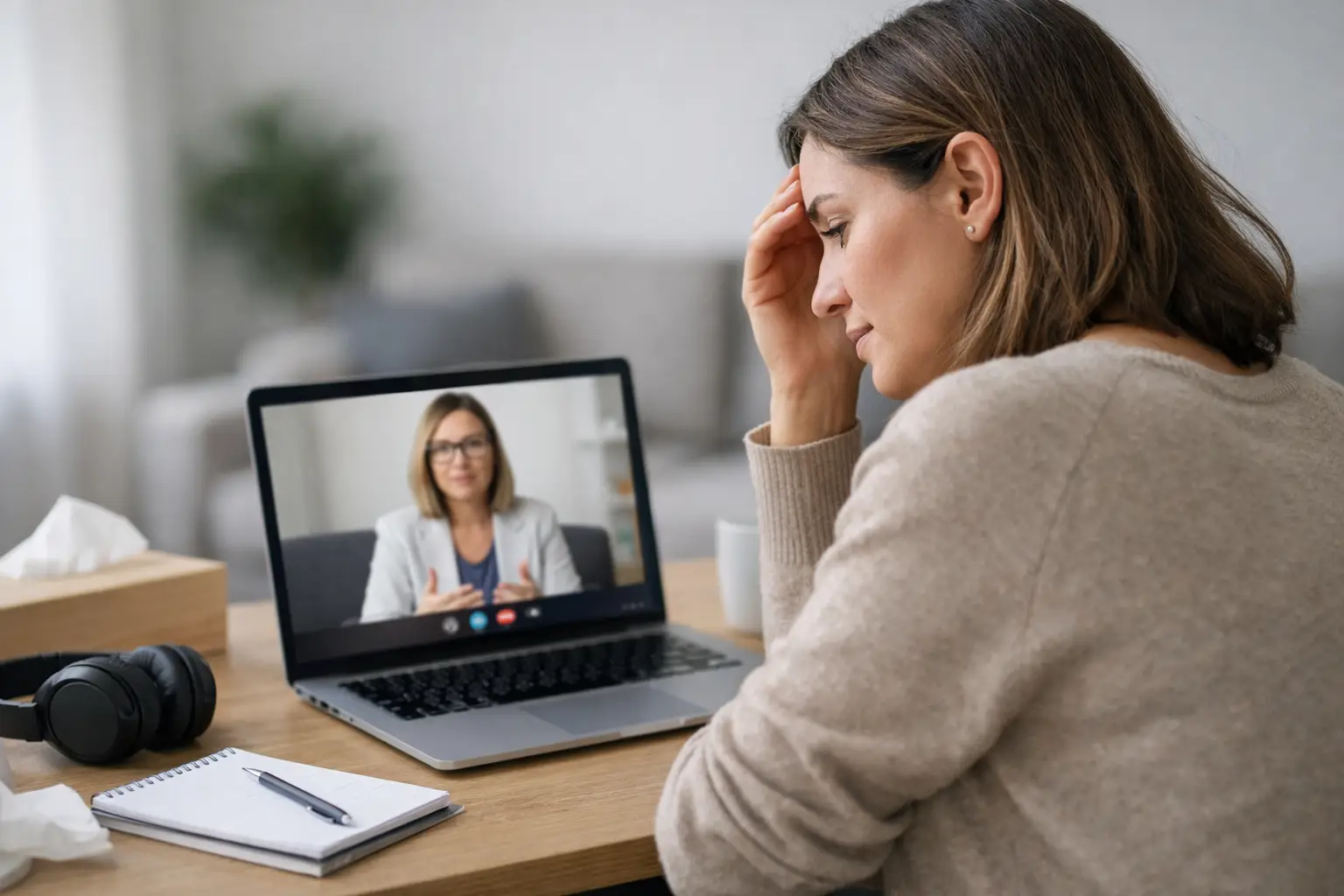
If anxiety has been running your schedule – making sleep harder, work feel heavier, or simple plans feel like too much – getting help can start to feel urgent. A common question we hear is, is online therapy effective for anxiety? For many people, the answer is yes. But like most mental health care, the real answer depends on your symptoms, your therapist, and whether the format fits your life.
Is online therapy effective for anxiety? What the evidence shows
Online therapy is not a watered-down version of care. For many anxiety concerns, virtual therapy can be as effective as in-person therapy, especially when it uses proven approaches like cognitive behavioral therapy, exposure-based strategies, and skills for nervous system regulation.
That matters because anxiety often responds well to structured, consistent treatment. If you can meet regularly, practice between sessions, and feel comfortable opening up through video or phone, online therapy can work very well. Many clients also find it easier to start when they do not have to commute, sit in a waiting room, or rearrange half their day to attend a session.
Research has been especially encouraging for generalized anxiety, social anxiety, panic symptoms, health anxiety, and stress-related anxiety. In those cases, the quality of treatment tends to matter more than whether the therapist is sitting across from you in the same room.
Still, online therapy is not magic. It helps when the therapist is qualified, the treatment approach matches the problem, and the client is ready to participate honestly and consistently. A bad fit online is still a bad fit.
Why online therapy works well for many people with anxiety
Anxiety can make access harder. You may keep putting off appointments, overthink whether your problem is “serious enough,” or feel overwhelmed by finding someone nearby who takes your budget and availability into account. Online therapy removes some of that friction.
When therapy is easier to access, people are more likely to begin and more likely to stay with it long enough to see change. That consistency matters. Anxiety treatment usually is not about one breakthrough conversation. It is about repetition – noticing patterns, challenging fearful thinking, practicing new responses, and building tolerance for discomfort over time.
Virtual therapy can also feel safer at first. For someone with social anxiety or panic symptoms, attending from home may lower the barrier to speaking openly. That can be a real advantage in the early stages of treatment. As therapy progresses, a good clinician can still help you work toward anxiety-provoking goals rather than letting comfort become avoidance.
There is also a practical side. Flexible scheduling, wider provider access, and lower transportation costs can make therapy more realistic. For many people, realistic is what makes effective possible.
When online therapy may be just as good as in-person care
Online therapy tends to be a strong option when your anxiety is mild to moderate, you have a private place to talk, and you are comfortable using video, phone, or secure messaging tools. It can also be a great fit if your symptoms are getting in the way of daily life but you are still able to engage in conversation, reflect on patterns, and practice skills between sessions.
It may be especially effective if your therapist is using a clear treatment plan. Anxiety often improves when therapy includes specific goals, not just open-ended venting. That might mean learning how panic works in the body, identifying avoidance habits, practicing cognitive reframing, or gradually facing situations you have been escaping.
People who are busy, live in areas with limited mental health options, or want access to a broader range of specialties often do well online. A larger pool of therapists can make it easier to find someone who understands your specific concerns, whether that is work stress, relationship anxiety, trauma-related anxiety, or anxiety that overlaps with depression.
Where online therapy has limits
Saying online therapy can be effective is not the same as saying it is the best fit for every situation. Severe mental health crises usually need a higher level of care than a virtual therapy platform can provide. If someone is actively suicidal, experiencing psychosis, unable to stay safe, or dealing with substance use that requires close supervision, online outpatient therapy may not be enough on its own.
There are also smaller but real limitations. Privacy can be hard if you live with family, roommates, or a partner and do not have a quiet room. Internet issues can interrupt emotionally important moments. Some clients simply connect better in person and feel more grounded when they share physical space with a therapist.
Anxiety can complicate online treatment, too. If attending from home makes it easier to avoid real-world triggers, a therapist has to be thoughtful about that. For example, someone with agoraphobia or intense social fears may need treatment that includes real-life exposure work, not just talking about fear from a bedroom or couch.
That does not mean online therapy cannot help in these cases. It means the plan has to be intentional.
What makes online therapy effective for anxiety
The biggest factor is not the screen. It is the match.
A qualified therapist who understands anxiety disorders and uses evidence-based methods will usually matter more than the format. Good therapy should feel collaborative, not generic. Your therapist should be able to explain how they think anxiety works, what approach they recommend, what progress may look like, and what to do if the current plan is not helping.
The second factor is consistency. Anxiety treatment often involves practicing outside of sessions. You might track triggers, challenge automatic thoughts, work on breathing and grounding, or test feared situations in small steps. If you are only showing up to talk once a week but not applying anything between appointments, progress can be slower.
The third factor is fit on a human level. You do not need to feel perfectly comfortable right away, but you should feel respected, heard, and understood. If you spend every session feeling mismatched, misunderstood, or rushed, the issue may not be online therapy itself. It may be the provider.
This is one reason thoughtful matching matters. Platforms like TheraConnect are built to help people find qualified therapists based on needs, preferences, and budget, which can make the first step less overwhelming.
How to tell if online therapy is helping your anxiety
Progress is not always dramatic. Often it shows up in small, solid changes. You may still feel anxious sometimes, but the anxiety stops running everything. Maybe you recover faster after stress. Maybe you stop canceling plans, sleep a little better, or spend less time spiraling after a difficult conversation.
You may also notice that your relationship to anxiety changes. Instead of treating every anxious feeling like danger, you start recognizing it as a signal you can respond to without obeying. That shift is a big deal.
A good therapist will help you measure progress in concrete ways. That could include symptom check-ins, changes in avoidance behavior, or specific goals like driving again, speaking up at work, or getting through a social event without leaving early. If months go by with no movement, it is fair to ask whether the treatment plan needs adjusting.
How to choose the right online therapist for anxiety
Start by looking for credentials and experience, but do not stop there. Ask how the therapist treats anxiety specifically. Do they use CBT, exposure work, acceptance-based approaches, or trauma-informed care when needed? Can they explain their process in plain language?
You should also think about logistics. Can you meet at times you can actually keep? Do you have a private space? Does the therapist’s fee fit your budget over time, not just for one session? Accessibility is not a side issue. If therapy is hard to sustain, it is hard to benefit from.
The first few sessions are often about fit. Pay attention to whether you feel judged, dismissed, or pushed too fast. Also notice the opposite problem: therapy that stays so comfortable and vague that nothing changes. Anxiety treatment usually needs both support and structure.
If you are comparing options, the goal is not to find a perfect therapist on paper. It is to find a qualified therapist you can realistically work with, consistently, in a way that moves you forward.
So, is online therapy effective for anxiety?
For many people, yes. It can be practical, evidence-based, and genuinely life-changing. It can also fall short when the therapist is not a good match, the care is too general, or the level of support needed goes beyond outpatient online treatment.
If anxiety has been shrinking your world, the best format is usually the one you can start, stick with, and use well. Getting help does not have to be complicated to be meaningful. Sometimes the most effective next step is simply choosing care that fits your life closely enough that you can actually begin.
If that is where you are, trust that asking the question is already movement. The right support should make the path feel clearer, not harder.
Explore More Ways to Grow Your Practice
Looking for more ways to expand your reach and connect with clients?
- Join an Online Therapist & Coach Directory
- Psychology Today Alternatives for Therapists
- Mental Health Coach Platforms
Ready to get started? Apply to become a TheraConnect Founding Provider
Leave a Reply