Blog

  • How to Find Therapist by Specialty Online

    How to Find Therapist by Specialty Online

    You may know you want therapy, but still feel stuck on one question: what kind of therapist do you actually need? That is where many people lose momentum. If you are trying to find therapist by specialty online, the goal is not just to book the first available appointment. It is to find someone trained to help with the specific issue bringing you in.

    That distinction matters more than most people realize. Therapy is not one-size-fits-all. A therapist who is excellent with grief may not be the best match for obsessive-compulsive disorder. Someone who works well with couples may not specialize in trauma. Online platforms make access easier, but they also give you more options, which can feel helpful and overwhelming at the same time.

    The good news is that you do not need to understand every therapy term before you start. You just need a clear way to narrow the field.

    Why specialty matters when you find therapist by specialty online

    People often begin by searching for a therapist who takes their insurance, has evening availability, or offers virtual sessions. Those factors matter. But specialty is what helps move therapy from general support to targeted care.

    If you are dealing with panic attacks, postpartum depression, eating concerns, ADHD, trauma, or relationship conflict, a therapist with direct experience in that area may recognize patterns faster and use approaches that fit your needs. That does not mean a generalist therapist cannot help. It means specialty can shorten the trial-and-error phase.

    There is also a practical side to this. When a therapist regularly works with a specific concern, they are often better at setting expectations. They can explain what treatment may look like, how progress is measured, and where online care works well versus where you may need additional support.

    Start with your main reason for seeking support

    Before comparing profiles, take a minute to name what is bothering you most right now. Not every issue needs a formal diagnosis. In fact, many people begin therapy because something feels off, heavy, or hard to manage.

    You might be looking for help with anxiety that is affecting work, a recent breakup that left you depressed, ongoing family stress, burnout, unresolved trauma, or parenting strain. Try to identify the main issue and any secondary concerns. For example, you may come in for anxiety, but also want support with sleep and boundaries.

    This step helps because many people search too broadly. If you simply look for therapy online, you will get a long list. If you search with your main concern in mind, the list becomes more relevant.

    What specialties to look for

    A therapist specialty usually refers to the issues, populations, or treatment methods they focus on. Issue-based specialties include anxiety, depression, trauma, grief, substance use, OCD, and bipolar disorder. Population-based specialties might include teens, veterans, LGBTQ+ clients, couples, or new parents. Method-based specialties refer to treatment styles such as CBT, EMDR, DBT, psychodynamic therapy, or exposure therapy.

    You do not need to choose all three perfectly. But it helps to notice which one matters most to you. If your main concern is trauma, issue-based expertise may be the priority. If you are seeking support for your child, population fit may come first. If you have already tried therapy and know you respond well to a structured approach, treatment method may matter more.

    It also helps to be honest about urgency. If you need support soon, you may need to balance ideal specialty with current availability.

    How to read therapist profiles without getting lost

    Online profiles can be useful, but they are also marketing tools. That does not mean they are misleading. It just means you should read them with a practical eye.

    Start with licensure and qualifications. Look for a fully licensed mental health professional in your state, since licensing rules usually depend on where the client is located. Then look at the concerns they treat regularly, not just a long list of every issue they mention once.

    Pay attention to whether the therapist explains how they work. A profile that says they treat anxiety, trauma, relationships, and life transitions is common. More helpful is one that describes their approach in plain language. Do they use structured skill-building? Do they focus on insight and patterns? Do they offer short-term support, deeper long-term work, or both?

    A good profile should make you feel more oriented, not more confused.

    Questions to ask before booking

    Once you narrow your options, the next step is not guessing. It is asking a few direct questions.

    You can ask whether they regularly work with your main concern, what therapy approach they use for it, and what online sessions typically look like. If affordability is a factor, ask about rates, sliding-scale options, and session frequency. If you have used therapy before, mention what did or did not work.

    This part can feel awkward, but it is worth doing. A strong therapist will not be put off by thoughtful questions. In fact, clear questions often lead to a better match.

    It is also okay to ask about fit in a more personal sense. Some people want a therapist who is warm and conversational. Others prefer someone more direct and structured. Neither preference is wrong.

    Cost, insurance, and access are part of the match

    The best therapist on paper is not the best therapist for you if the cost makes ongoing care unrealistic. Specialty matters, but affordability matters too.

    When you compare options, consider the full picture: session fee, insurance acceptance, out-of-network reimbursement, cancellation policy, and how often you may need appointments. Weekly therapy is common at the beginning, so even a small price difference can add up quickly.

    This is one reason online matching platforms can be helpful. A well-designed platform lets you filter by specialty while also considering practical factors like budget, state availability, and scheduling. For many people, that saves time and reduces the stress of reaching out to therapists one by one. TheraConnect is built around that idea, making it easier to find vetted providers who fit both your needs and your budget.

    Red flags and green flags in online therapist matching

    Not every mismatch is a red flag. Sometimes a therapist is qualified and kind, but simply not the right fit. Still, there are a few things to watch closely.

    Be cautious if a profile is vague about credentials, makes broad promises, or presents one therapy style as a cure-all for every issue. Mental health care is more nuanced than that. It also helps to be wary of any provider who cannot clearly explain whether they are licensed to work in your state.

    Green flags are usually simpler. Look for transparency, clear specialties, realistic language about outcomes, and a thoughtful explanation of how they work. It is also a good sign when a provider names areas outside their scope and refers appropriately when needed.

    Trust grows when information is easy to verify and easy to understand.

    What if you choose wrong?

    This is one of the biggest worries people have, and it stops a lot of first appointments. The truth is that your first choice does not have to be permanent.

    Sometimes a therapist looks right on paper but does not feel right in session. Sometimes the chemistry is fine, but the approach is not helping. Sometimes your needs become clearer after two or three meetings. That is normal.

    A good online search process does not guarantee a perfect fit on the first try. It increases the odds. If something feels off, you are allowed to switch. That is not failing at therapy. That is part of finding care that works.

    Find therapist by specialty online with more confidence

    The internet gives you access to more mental health support than ever before, but more choice is not always easier. The key is to search with purpose. Start with your main concern, look for relevant specialty experience, confirm credentials, and weigh cost and access alongside clinical fit.

    You do not need to solve your whole mental health story before reaching out. You just need enough clarity to take the next step. If a platform helps you compare qualified therapists by specialty, availability, and budget in one place, that is not cutting corners. It is a smart way to begin.

    Getting help should not feel like a guessing game. The right match is not always the most impressive profile or the first name you see. Often, it is the therapist who understands your specific concern, communicates clearly, and offers care you can actually continue. When you find that combination, starting therapy feels a little less intimidating and a lot more possible.

    If you are ready, trust the small step in front of you. Check now, ask a few good questions, and give yourself the chance to be matched with support that fits.

  • TheraConnect: The Mental Health Platform Built From a Place of Purpose

    TheraConnect: The Mental Health Platform Built From a Place of Purpose

    Mental Health & Wellness

    Published by TheraConnect  ·  theraconnect.net

    Finding the right therapist is one of the most important decisions a person can make — and one of the most exhausting. Endless directories, cold profiles, insurance confusion, waitlists that stretch for months. For millions of people already carrying the weight of anxiety, burnout, trauma, or grief, the process of finding help can feel like yet another thing to manage. That’s the problem TheraConnect was built to solve.

    But to understand what makes TheraConnect different, you need to understand where it came from.


    Rooted in a Nonprofit Mission

    TheraConnect didn’t start in a boardroom. It grew out of Fitness Hacks for Life — a 501(c)(3) nonprofit mental wellness platform based in Issaquah, Washington, that has spent years building something rare: a genuinely engaged community of people who care about their mental and emotional health.

    Fitness Hacks for Life began as a simple effort to support people living with anxiety and depression. No sales funnels, no advertising gimmicks — just honest, evidence-based content rooted in empathy and compassion. Over time, that community grew to more than 54,000 followers on Instagram alone, with a newsletter open rate of 61% — more than three times the industry average. These are real people, not passive scrollers. They’re actively engaged with mental wellness content, they trust the platform, and they’re looking for support.

    That nonprofit foundation matters. It means the people behind TheraConnect aren’t motivated by profit extraction. They’re motivated by the same thing that built Fitness Hacks for Life — the belief that mental health care should be accessible, human, and free of the pressure and confusion that so often surrounds it.

    “We built this because we’ve seen first-hand how hard it is to find the right support. So we created a space where finding help is simple, free, and human.”


    What TheraConnect Actually Does

    At its core, TheraConnect is a mental health provider directory — but that description sells it short.

    Most directories are built around search engine traffic and advertising revenue. Providers pay to be listed, clients wade through hundreds of generic profiles, and the connection that actually matters — the human one — gets buried under noise. TheraConnect takes a different approach.

    For clients, the platform is completely free. There are no waitlists, no intake teams rerouting inquiries, no pressure to commit before you’re ready. You browse verified, licensed providers, read about their approach and specialties, and reach out directly when you feel ready. That’s it. The platform is designed around the reality that reaching out for help is already a big step — so everything about the experience is built to make that step feel smaller.

    For mental health professionals, TheraConnect offers something equally valuable: direct access to a warm, motivated audience that already trusts the Fitness Hacks for Life ecosystem. Unlike platforms that take 20–30% commissions or charge per session, TheraConnect operates on a simple annual listing fee. There are no hidden costs, no algorithm deciding who gets seen, and no platform sitting between a provider and their clients.


    The Specialties That Matter Most

    One of the things that sets TheraConnect apart from generic directories is its focus on the areas of mental health that are most commonly underserved — and most urgently needed.

    The platform’s providers specialize in anxiety and stress, narcissistic abuse recovery, relationship trauma, depression, grief and loss, burnout and emotional exhaustion, family conflict, self-esteem and identity issues, and life transitions. These aren’t just categories pulled from a textbook. They reflect the real experiences of the Fitness Hacks for Life community — the conversations, the questions, the struggles that have played out across 54,000+ followers and years of content.

    That alignment between audience and provider specialty isn’t accidental. It’s the result of building a platform from the inside out — starting with the community and working backward to what they actually need.


    A Different Kind of Audience

    When a therapist lists their practice on a traditional directory, they’re competing against hundreds of other providers for the attention of people who may have found the site through a generic Google search. The connection is cold. The intent is uncertain.

    TheraConnect’s audience is different. These are people who follow Fitness Hacks for Life because they’re already invested in their mental wellness journey. They read the articles. They open the emails. They’re not passively browsing — they’re actively seeking support and looking for someone they can trust.

    For providers, this means the leads are warmer, the clients are more engaged, and the relationship starts from a foundation of trust rather than a cold click. That’s not something a bigger directory can offer, because it’s not something you can manufacture — it’s something you build over years of showing up authentically for a community.


    The Founding Provider Opportunity

    TheraConnect is currently in a pivotal growth phase, and with that comes a rare opportunity for mental health professionals who want to get in early.

    The Founding Provider program allows licensed therapists, counselors, psychologists, mental health coaches, and other professionals to lock in a listing rate of $199 per year — a 60% discount from the standard rate of $499 per year. Founding Providers receive priority placement in search results, a visible Founding Provider badge on their profile, and the rate locked in for as long as they maintain their listing.

    With only a limited number of founding spots remaining, this is a meaningful moment for providers who are looking for a platform that aligns with their values — one built on mission, not margins.


    Why This Moment Matters

    Mental health care in the United States is at an inflection point. Demand for therapy and emotional wellness support has surged, but the traditional systems for connecting clients with providers haven’t kept pace. Directories are cluttered. Insurance is complicated. Waitlists are long. And for many people — particularly those dealing with trauma, burnout, or relationship pain — the process of navigating all of that is itself a barrier to getting help.

    TheraConnect exists to remove that barrier. Not by disrupting the mental health industry with technology for its own sake, but by doing something more straightforward: taking a community that already exists, built on genuine trust over years of nonprofit work, and creating a simple, human way to connect that community with the professionals who can help them.

    That’s what Fitness Hacks for Life has always been about — and it’s what TheraConnect is carrying forward.


    Getting Started

    Whether you’re a person looking for support or a professional looking to grow your practice, TheraConnect is designed to meet you where you are.

    For clients: Browse licensed providers at theraconnect.net — free, confidential, and at your own pace. No commitment required.

    For providers: Apply for a Founding Provider listing and lock in your rate before spots close.

    New to the community? Explore free mental wellness resources, articles, and support tools at fitnesshacksforlife.org.

    Mental health care shouldn’t be this hard to find. TheraConnect is working to change that — one connection at a time.

  • Online Therapy for Grief Counseling Works

    Online Therapy for Grief Counseling Works

    Grief rarely arrives on a convenient schedule. It can hit in the grocery store, during a work call, or at 2 a.m. when the house is too quiet. That is one reason online therapy for grief counseling has become such a practical option for people who need support but cannot always make it to an office, sit in a waiting room, and hold themselves together on command.

    Loss can change everything about a normal day. You may be managing funeral logistics, family tension, sleep problems, numbness, anxiety, or sudden waves of emotion that seem to come out of nowhere. In that state, convenience is not a luxury. It can be the difference between getting help and putting it off for months.

    Why online therapy for grief counseling can help

    Grief therapy is not about rushing you toward acceptance or telling you to move on. A good therapist helps you make sense of what loss is doing to your thoughts, body, relationships, and routines. They can help you process sadness, guilt, anger, relief, confusion, or whatever mix of emotions is showing up.

    Doing that work online can be surprisingly effective. For many people, talking from home feels less intimidating than meeting face-to-face in a clinical setting. You are in your own space, with your own blanket, your own chair, your own tissues. That can make it easier to speak honestly, especially early on.

    There is also the practical side. Online sessions remove commute time, widen your options beyond your immediate zip code, and make it easier to find someone with experience in the kind of loss you are facing. That matters because grief is not one-size-fits-all. The loss of a parent, spouse, child, pregnancy, pet, or close friend can bring up very different needs. So can losses tied to addiction, suicide, traumatic events, estrangement, or complicated family history.

    What grief counseling online can actually address

    People often assume grief counseling is only for intense crying and sadness. Sometimes it is. But grief can also look like brain fog, irritability, social withdrawal, panic, exhaustion, trouble eating, or feeling strangely disconnected from the world. Some people feel pressure to be strong. Others feel ashamed that they are not grieving the way they think they should.

    A qualified therapist can help you sort through those reactions without judging them. They may help you manage daily functioning, understand grief triggers, prepare for anniversaries and holidays, or work through unresolved conflict connected to the person you lost. If the loss has stirred up older trauma, depression, or anxiety, therapy can address that too.

    This is where matching matters. Not every therapist approaches grief in the same way. Some are more structured and skills-based. Others focus on reflection, meaning-making, or relationship patterns. The best fit depends on what you need right now. If you feel overwhelmed and unable to get through the day, you may want practical coping tools first. If you feel stuck months or years later, you may need more space to process the deeper story of the loss.

    What to expect from your first few sessions

    Most people are not looking for a perfect therapeutic experience when they first reach out. They want to know, Will this person get it? Will I have to explain everything? Will this make me feel worse?

    The first session is usually focused on understanding your loss, your current symptoms, and what support would feel useful. A therapist may ask about who died, when the loss happened, what your relationship was like, and how your sleep, work, appetite, and mood have been affected. If you have had thoughts of harming yourself or feel unable to stay safe, they will also assess that directly.

    You do not need to arrive with a clear narrative. You can cry, go quiet, ramble, or say you do not know where to start. A good grief therapist will not force a script onto your experience.

    Over the next few sessions, you might begin to notice patterns. Maybe your grief spikes when the day slows down. Maybe you are carrying guilt about what you said or did not say. Maybe family members are grieving in ways that clash with yours. Therapy helps organize the chaos a bit. Not by making the loss smaller, but by making it less isolating.

    Is online grief counseling as effective as in-person therapy?

    For many people, yes. Online therapy can be highly effective for grief counseling, especially when the client has a private space, a reliable internet connection, and a therapist who is experienced with virtual care.

    That said, it depends. Some people feel more grounded in an in-person office. Others struggle to open up on video or do not have privacy at home. If your grief is tied to severe trauma symptoms, active substance use, or a mental health crisis, online care may still help, but you may need a higher level of support or a therapist with specialized training.

    The goal is not to prove that online is better than in-person. The goal is to find care you can actually access and continue. Consistent support usually matters more than the format alone.

    How to choose the right therapist for grief support

    Credentials matter, but so does fit. Look for a licensed mental health professional with experience in grief, bereavement, trauma, or life transitions. If your loss has specific factors – such as infant loss, sudden death, suicide, or caregiving burnout – it helps to find someone familiar with those experiences.

    Pay attention to how the therapist describes their style. Are they warm and collaborative? More direct and structured? Do they mention evidence-based approaches while still sounding human? Grief is personal. You want someone qualified, but you also want someone you can imagine talking to on a hard day.

    Affordability matters too. Many people delay therapy because they assume it will be out of reach. A platform like TheraConnect can make that search easier by helping people connect with qualified providers based on their needs, preferences, and budget. That kind of transparency can remove a lot of friction at a time when even small tasks may feel heavy.

    Signs it may be time to get started

    There is no perfect timeline for grief counseling. You do not need to wait until things become unbearable, and you do not need to prove that your pain is serious enough. Therapy can help soon after a loss, but it can also help years later if grief still feels unresolved or disruptive.

    You may benefit from support if your grief is affecting sleep, work, parenting, relationships, or your ability to care for yourself. It may also help if you feel emotionally flat, trapped in guilt, stuck in anger, or disconnected from the people around you. Sometimes the clearest sign is simpler than that: you are tired of carrying it alone.

    Making online therapy feel more comfortable

    The small setup details can make a real difference. Try to take your session somewhere private and quiet, even if that means sitting in your parked car or taking a walk-and-talk phone session when appropriate. Keep water nearby. Give yourself ten minutes after the appointment if you can, especially in the beginning.

    It also helps to lower the pressure. You do not have to perform grief correctly. You do not have to cry every session. Some days you may talk about funeral memories. Other days you may talk about laundry, paperwork, and how strange it feels that the world keeps going. That is grief too.

    If your first therapist is not the right fit, that does not mean therapy is not for you. It means the match was off. Finding the right person can take a little adjustment, and that is okay.

    Grief changes shape over time, but it does not always get lighter on its own. Sometimes healing begins with one practical choice: giving yourself a place to speak honestly and be met with real support. If that place is online, it still counts. In many cases, it is exactly what makes help possible.

  • Men are embracing beauty culture — many of them just refuse to call it that By Prof Jordan Foster

    Men are embracing beauty culture — many of them just refuse to call it that By Prof Jordan Foster

    Just weeks after the premiere of popular gay hockey romance series Heated Rivalry, star Hudson Williams’ extensive skincare routine has gone viral. In a now-viral video for The Cut, the 24-year-old walks viewers through his “five-step Korean beauty routine.”

    His multi-step regimen includes a close shave, a cleanse, pore-minimizing treatments, a “super-glowing” toner and serums targeted toward “rejuvenating” the young star’s face and body.

    The nearly 20-minute routine, replete with self-deprecating humour and an ironic bent against vanity, has amassed some 500,000 views (and counting), almost 2,000 comments and 36,000 likes on YouTube alone.

    Williams’ routine, and its public broadcast online, is emblematic of a wider shift in our highly visual and virtual culture among men. From style guides and intensive workout routines to recommendations for skin and hair, men are investing in their appearance.

    But, in a curious contortion, they’ve called their work on the face and body anything (and everything) but beauty.

    Understanding beauty’s cultural force

    As a researcher studying the cultural force of beauty and its various presentations online, I take questions related to appearance and attractiveness seriously.

    Read news based on evidence, not tweets or TikToks

    I look to taken-for-granted trends online — images and advertisements as well as viral video clips — and their reception among audiences to understand how young people engage with and respond to beauty, and the various privileges and penalties it commands.

    Beauty’s cultural force has long weighed upon women, who have been invited to modify their appearances in step with challenging, often contradictory, beauty norms. But in a recent and curious shift, beauty norms and appearance pressures have intensified among men.

    The rise of men’s beauty habits

    Men’s bodies are increasingly visible in product advertisements and mainstream campaigns, with a surfeit of cosmetics targeted toward men.

    Mundane investments in skincare and grooming are not uncommon, with young men especially doubling down on their efforts to refine the face and body through multi-step routines not unlike Williams’.

    Driven at least in part by social media influencers and the rise of platformed figures who dialogue around the importance of looking good, “freshening up” and keeping sharp, men are investing in their appearance as women long have.

    Alongside these investments, boys and men are enjoined to bulk up to achieve a muscled and well-defined look. Widely followed influencers and celebrities alike echo the call, endorsing a range of compound exercises to improve one’s physique and “science based” changes to boost growth.

    The drive toward muscularity is demanding, with many recommendations touting the importance of rigorous diets and intensive exercise regimes.

    In the name of beauty

    While some recommendations are innocuous enough, men have entertained more extreme, sometimes dangerous practices to modify and refine the appearance of their face and body.

    Sometimes called “looksmaxxing,” a term capturing efforts that enhance men’s appearance, practices like “mewing” and the far more dangerous exercise of “bone-smashing” are often endorsed to promote facial harmony and a stronger jawline.

    The preponderance and popularity of these appearance-focused practices online have produced what medical researcher Daniel Konig and his colleagues describe as an “almost pathological obsession” with attractiveness, with significant consequences for boys and men.

    Public reporting on men’s relationship to their appearance indicates that a growing number of men are suffering from body insecurity and lower esteem, manifesting in the rise of muscle dysmorphia, a body-image disorder focused on a perceived lack of physical size or strength.


    Read more: Muscle dysmorphia: why are so many young men suffering this serious mental health condition?


    In a similar vein, the United Kingdom’s Sexualization of Young People report indicates that online, boys are increasingly under pressure to “display their bodies in a hyper-masculine way showing off muscles and posturing as powerful and dominant.”

    Why men resist calling it beauty

    In my ongoing research with young people enrolled at the University of Toronto and MacEwan University, I am documenting a similar set of pressures.

    The young people I’ve spoken with insist that while appearance weighs heavily on everyone, men are increasingly subject to the demands of a culture preoccupied with looking good.

    A growing number of men are suffering from body insecurity and lower esteem, manifesting in the rise of muscle dysmorphia. (Getty Images/Unsplash+)

    For the boys and men I speak with, social media platforms, and the celebrities and influencers who populate them, are a particularly thorny topic. They invite an intense sense of comparison between men and their physiques and, for many, a feeling of not quite being good enough.

    Still, few describe these pressures in terms related to beauty per se. As a historically feminized domain, beauty has been derided as frivolous and unimportant. But as many men are coming to find, the truth is far more complex. Beauty returns rewards to those who are thought to possess it or, perhaps, to those who are willing to pay for it.

    Selling beauty to the masses

    Men represent a growing and lucrative ground on which to sell products and services designed to optimize their appearance.

    This previously untapped market segment is ripe for commercial exploitation, with an increasing number of men making spending on beauty products and services.

    In 2024, market researcher Mintel reported that more than half of men use facial skincare products, with members of Gen Z accounting for the greatest share of growth in skincare products — especially “high-end” and “clean” products.

    It’s estimated that the global market for men’s beauty products, including skincare and grooming, will exceed US$5 billion by 2027, adding to the industry’s already striking US$450 billion evaluation.

    Men’s interest in more costly and intensive beauty treatments is also on the rise. The American Academy of Plastic Surgeons reports that a growing number of men are pursuing body augmentation and cosmetic surgery, as well as non-invasive procedures like dermal filler injections and facial neurotoxins like Botox.

    Under both knife and needle, beauty’s cultural force is sure to be felt.


    Jordan Foster is an Assistant Professor of Sociology at MacEwan University. His research lies at the intersection of culture, media and inequality.

  • Online Therapy for LGBTQ Adults That Fits

    Online Therapy for LGBTQ Adults That Fits

    Finding a therapist is hard enough when you are only thinking about schedule, cost, and insurance. For many people, online therapy for LGBTQ adults adds another layer: you also want someone who understands identity, safety, relationships, family dynamics, and the stress that can come from moving through the world as your full self.

    That does not mean every LGBTQ adult needs a therapist who shares the same identity. It does mean the right therapist should be affirming, informed, and able to create a space where you do not have to explain the basics before you can talk about what is actually hurting. Good care starts there.

    Why online therapy for LGBTQ adults can work well

    Online therapy can remove barriers that make mental health care feel out of reach. If you live in a rural area, have a demanding job, do not want to risk being seen walking into a local office, or simply feel more comfortable talking from home, virtual care can make getting support much more realistic.

    For LGBTQ adults, privacy can matter in very practical ways. Some clients are not fully out in every part of their lives. Others live with family, roommates, or partners and need more control over when and where they attend therapy. Online sessions can offer flexibility, but that flexibility only helps if you can find a quiet and safe place to talk.

    There is also the matching advantage. In traditional in-person care, you may be limited to whoever is nearby and accepting new clients. Online platforms broaden the pool. That can make it easier to find a therapist with experience in LGBTQ-affirming care, trauma, anxiety, depression, relationship concerns, religious harm, gender identity exploration, or minority stress.

    Still, online therapy is not automatically the best fit for everyone. If your internet is unreliable, your home lacks privacy, or you are in acute crisis and need a higher level of care, virtual therapy may not be enough on its own. The right format depends on your needs, not just convenience.

    What affirming care actually looks like

    Affirming therapy is not a rainbow flag in a bio and a vague promise to be inclusive. It shows up in the details. A therapist who provides strong care to LGBTQ adults should use your name and pronouns consistently, avoid assumptions about your body or relationships, and understand that identity is not the problem.

    That sounds obvious, but many clients have had the opposite experience. They have spent sessions correcting language, hearing outdated ideas, or feeling subtly pushed toward someone else’s idea of what a healthy life should look like. Even when the therapist means well, that kind of mismatch can make therapy feel exhausting.

    Real affirming care also includes clinical skill. A therapist should recognize how discrimination, rejection, concealment, and chronic stress can affect mental health over time. They should understand that coming out can be liberating for one person and dangerous for another. They should know that family conflict, dating stress, workplace tension, and healthcare experiences can intersect with anxiety, depression, trauma, and self-esteem in ways that are not generic.

    At the same time, being LGBTQ-informed does not mean reducing every issue to identity. Sometimes you want to talk about grief, burnout, panic attacks, or a breakup without making your identity the entire focus. The best therapists know how to hold both truths at once.

    How to evaluate an online therapist

    When you are searching for online therapy for LGBTQ adults, it helps to look beyond broad labels and focus on evidence of fit. Start with licensure and credentials. A therapist should be licensed to practice in your state, and their profile should clearly explain their areas of focus.

    Then look at how they describe their work with LGBTQ clients. Specific language is usually a good sign. Experience with identity exploration, gender-affirming care, same-sex and queer relationships, trauma, or family estrangement tells you more than a generic statement about welcoming everyone.

    The intake process matters too. Good platforms make it easier to sort by budget, specialty, and availability so you do not have to spend hours reaching out one by one. That kind of transparency matters, especially if you are already overwhelmed. TheraConnect is built around that idea: making it easier to connect with vetted providers based on fit, affordability, and real clinical needs.

    Pay attention to your own reaction during an initial consultation. Did the therapist listen without steering? Did you feel respected? Did they answer questions directly about experience, cost, scheduling, and approach? You do not need instant chemistry, but you should leave feeling more at ease, not more guarded.

    Questions worth asking before you commit

    You are allowed to ask direct questions. In fact, doing so can save time, money, and emotional energy.

    You might ask how much experience the therapist has working with LGBTQ adults and whether they have supported clients with concerns similar to yours. If identity is central to what you want to address, ask how they approach topics like coming out, family rejection, internalized shame, or gender exploration. If identity is not the main issue, ask how they make space for it without turning every session into an identity lesson.

    It is also reasonable to ask about logistics. What does a typical session cost? Do they take insurance or offer sliding-scale rates? How far out are they booking? What happens if you need to reschedule? Affordability is not separate from quality. If therapy is financially unsustainable, it is not a good fit.

    If you are trans or nonbinary, you may want to ask additional questions about experience with gender-affirming care, letters for medical treatment when appropriate, or support around social and medical transition. A respectful therapist will answer clearly and without defensiveness.

    Common concerns, and what is normal

    A lot of people worry they are being too picky. They are not. Therapy works better when you feel emotionally safe, and emotional safety is not a bonus feature.

    It is also common to worry that online therapy will feel distant or less personal. For some clients, that is true at first. A screen can feel awkward for the first session or two. For others, being in their own space makes it easier to open up. There is no universal rule here. What matters is whether the format helps you show up honestly.

    Another common concern is whether an affirming therapist will understand the full picture if they do not share your exact identity. Sometimes yes, sometimes no. Shared identity can help, especially when you are tired of explaining yourself. But skill, humility, and experience matter just as much. A therapist does not need to be your mirror. They do need to be competent, respectful, and responsive.

    When to switch therapists

    Not every mismatch is a failure. Sometimes it just means the fit is off.

    If you repeatedly feel unseen, judged, or subtly corrected in ways that make you smaller, pay attention to that. If your therapist avoids identity topics when they matter, or overfocuses on them when they do not, that is information. If you leave sessions feeling like you had to educate your therapist instead of being supported by them, it may be time to move on.

    Switching therapists can feel discouraging, but it is often part of the process. The goal is not to force yourself to make it work with the first available person. The goal is care that actually helps.

    A more practical way to start

    If you have been putting this off, try making the process smaller. Decide what matters most right now: identity-affirming care, cost, availability, trauma experience, relationship expertise, or insurance. Then narrow your search around those priorities instead of trying to solve everything at once.

    A good matching platform can shorten the distance between wanting help and actually booking a session. That matters because many people do not stop at research because they are uninterested. They stop because the search is confusing, expensive, or emotionally draining.

    You do not need the perfect words before you reach out. You do not need to know exactly what your goals are. You only need a place to begin, with someone qualified who can meet you there.

    The right online therapist will not ask you to become easier to understand before they can help. They will make room for your life as it is, and that is often where real change begins.

  • When does clinical depression become an emergency? 4 questions answered

    When does clinical depression become an emergency? 4 questions answered

    The news that Sen. John Fetterman, a Pennsylvania Democrat, checked himself into Walter Reed National Military Medical Center on Feb. 15, 2023, to be treated for clinical depression sparked a national discussion around the need for openness about mental health struggles. This comes after Fetterman suffered a near-fatal stroke in May 2022, prompting questions about possible links between post-stroke recovery and mental health.

    The Conversation asked John B. Williamson, an associate professor of psychiatry and neuroscience at the University of Florida, to explain when depression becomes a crisis and what inpatient treatment entails.

    What is clinical depression?

    Clinical depression, or major depressive disorder, occurs in 20% of the population over the lifetime. It can surface and differ from person to person in a variety of ways.

    Clinical depression symptoms include feelings of sadness and loss of interest and motivation to engage in once pleasurable activities such as hobbies. Other symptoms include changes in appetite – either increased or decreased – changes in sleep patterns, be it too much or too little, loss of energy, restlessness and difficulty thinking and concentrating. To qualify as clinical depression, these symptoms must persist for at least two weeks.

    One form of the condition can also occur in the context of stressful situations, such as the death of a loved one, divorce or loss of a job. Depressive symptoms can also occur alongside and because of other disorders  and medical conditions like stroke and thyroid disease, and these conditions may complicate recovery.

    Severe depression can mimic other conditions, including dementia, in which an impairment in thinking is significant enough to interfere with a person’s ability to live independently. It can also worsen the quality of life in older age. Depression has also been linked with higher rates of death from any cause, such as cardiovascular disease.

    Read news based on evidence, not tweets or TikToks

    https://www.google.com/recaptcha/api2/anchor?ar=1&k=6Lf3Oc0UAAAAAIbME3Lv7iS7EVeuQzpru1Jbij5N&co=aHR0cHM6Ly90aGVjb252ZXJzYXRpb24uY29tOjQ0Mw..&hl=en-US&type=image&v=gTpTIWhbKpxADzTzkcabhXN4&theme=light&size=invisible&badge=bottomright&anchor-ms=20000&execute-ms=30000&cb=u5z2nqknmi7zSubscribe

    This site is protected by reCAPTCHA and the Google Privacy Policy and Terms of Service apply.

    Untreated depression can negatively affect overall health and quality of life.

    https://www.youtube.com/embed/MZ5r99SBLrs?wmode=transparent&start=0Depression is not a choice, and it doesn’t mean you’re fragile. What’s more, depression is treatable.

    When does depression become an emergency?

    An acute change in mood that persists for weeks or is associated with thoughts of self-harm should not be ignored. In some cases, it may constitute an emergency.

    Depressed mood, whether from a major depressive episode, or in the context of another problem, can become an emergency when there are thoughts of suicide. Suicidal thoughts may be passive, such as preferring not to be alive, or active, meaning an explicit desire to harm oneself. Broadly, this means having ideas about ending one’s life.

    It is important to understand the signs and risks for suicide to help prevent it, both for yourself and others. Feelings of hopelessness, agitation and lack of reasons to live are vulnerabilities for suicide. This vulnerability increases with poor sleep and higher risk-taking behavior, including substance abuse. Additional noticeable signs may be withdrawing from friends and family and increased preoccupation with death.

    If a person expresses suicidal thoughts or a desire to harm or kill themselves, immediate attention is needed. Help is available through the 988 Suicide and Crisis Lifeline and any emergency room.

    What is inpatient care for depression?

    Inpatient mental health care is useful when a more controlled environment is needed. This environment is important for patients at increased risk for suicide and can also be a useful tool for treating substance abuse, hallucinations and paranoia or mania in the context of bipolar disorder.

    An inpatient care unit is meant to be a calm environment with 24/7 monitored care. Services include evaluation by professionals and may involve medication management when necessary. Inpatient care settings will usually offer individual and group psychotherapy options, as well as art therapy and other expressive therapies such as writing. And they may include education on the management of mental health.

    The primary goal is stabilizing the patient, helping them to develop coping skills and connecting the patient with services to prevent future need for inpatient care.

    The average stay in an inpatient unit is about 10 days. It is possible to enter inpatient care voluntarily. Others are admitted by a physician or other authorized individual, which in most cases would be a parent, spouse or adult child. Admission sometimes occurs by way of an emergency room visit or through communication with a health care professional. For instance, sometimes a therapist or physician may facilitate inpatient admission.

    Is treatment for depression effective?

    The good news is that depression responds well to treatment. In cases in which thoughts of suicide with imminent risk of harm are not present, depression can be managed with psychotherapy, medication or a combination of both. There is a great deal of evidence for the effectiveness of these approaches.

    Clinical depression may go into remission with psychotherapy or the use of medication. Unfortunately, about half of people who experience clinical depression experience chronic or recurring symptoms. Longer-term treatment and self-care including psychotherapy and medication may be necessary.

    There are additional treatment considerations when active thoughts of suicide are involved. It is important to discuss these feelings with a medical professional. Primary care physicians commonly treat depression via medicationslightly more than 13% of Americans take them. However, it may be beneficial to seek out treatment from mental health care specialists such as psychiatrists, psychologists, psychiatric nurses and other licensed mental health care professionals.

    A conversation with either a primary care or a mental health care professional is a viable route to getting started with assessment and treatment. People who get treatment for suicidal thoughts are much less likely to kill themselves.

    The Substance Abuse and Mental Health Services Administration operates a national helpline to assist in facilitating appropriate treatment referrals for patients (1-800-662-HELP).

    Author

    1. John B. Williamson Associate Professor of Psychiatry and Neuroscience, University of Florida

  • Credential Verification for Online Therapists

    Credential Verification for Online Therapists

    The profile looks polished. The rates seem fair. The therapist says they specialize in exactly what you need. But before you book that first session, one question matters more than almost anything else: has this person actually been verified to practice?

    That is why credential verification for online therapists is not a technical detail. It is a trust issue, a safety issue, and often the difference between getting real care and wasting time with someone who is not qualified to treat you.

    Online therapy has made mental health support easier to access, especially for people with tight schedules, limited local options, or a need for privacy. That convenience is a real advantage. At the same time, the internet can make almost anyone look credible. A professional headshot and a calm bio are not proof of licensure, training, or legal authority to provide therapy in your state.

    Why credential verification for online therapists matters

    In the US, therapy is a regulated profession. That means mental health providers usually need specific education, supervised clinical training, and an active license issued by a state board. Those requirements exist for a reason. They help protect clients from harm and create accountability when something goes wrong.

    When credential verification is skipped, clients may not realize they are speaking with a coach, an unlicensed helper, or someone whose license has expired or been restricted. That does not automatically mean the person is dishonest or incapable of offering support. It does mean they may not be legally qualified to diagnose, treat, or provide psychotherapy.

    The risk is not only clinical. It can also affect privacy, insurance, records, and emergency response. A properly licensed therapist is generally expected to follow professional standards around confidentiality, informed consent, recordkeeping, and crisis procedures. If those safeguards are missing, the whole care experience becomes less reliable.

    What credential verification actually includes

    People often assume verification means checking whether a therapist has letters after their name. It should go further than that.

    At a minimum, verification should confirm that a provider has an active license, that the license is in good standing, and that they are authorized to practice in the state where the client is located. This last point matters more than many people realize. In online therapy, the client’s physical location during the session often determines whether the therapist can legally provide care.

    Verification may also include reviewing education, clinical training, identity, disciplinary history, malpractice coverage, and experience with telehealth. A therapist can be excellent in person and still need to adapt to online practice. Virtual care requires thoughtful communication, secure technology, and a clear process for emergencies.

    If a platform says it vets providers, that should mean more than collecting a résumé. It should mean there is a process for reviewing licenses and eligibility before providers are listed and ideally checking them on an ongoing basis.

    How to verify an online therapist yourself

    You do not need to be an expert in professional licensing to do a basic check. In most cases, a therapist should be willing to share their full name, license type, licensing state, and license number if asked.

    From there, you can look up that information through the appropriate state licensing board. The exact board varies by profession. A psychologist, clinical social worker, marriage and family therapist, and licensed professional counselor may all be regulated by different boards depending on the state.

    What you want to see is simple: active status, no major unresolved disciplinary issues, and a license that matches the services being offered. If a provider says they serve clients nationwide, be careful. Cross-state practice rules are complicated. Some therapists can practice in multiple states, but that depends on where they are licensed, whether interstate compacts apply, and where the client is physically present during care.

    A good provider should also explain what kind of therapy they offer, what their credentials mean, and whether they are licensed to treat your concerns. If their answers feel vague or evasive, pay attention to that.

    Red flags that deserve a closer look

    Not every concern means a therapist is unqualified. Still, a few patterns should make you pause.

    One is a profile that highlights life experience or personal healing but barely mentions licensure. Another is confusing language such as “certified therapist” without naming the actual state-issued license. Certifications can be meaningful, but they are not the same as a clinical license.

    Another red flag is reluctance to discuss where the therapist is licensed or whether they can legally work with clients in your state. Clear, direct answers matter here. So does transparency about fees, privacy practices, and what happens if you are in crisis.

    You should also be cautious if someone promises guaranteed results, immediate transformation, or treatment for every issue under the sun. Ethical therapists tend to be specific about their scope and honest about limits. Mental health care is personal, and the best fit is not always the provider with the most impressive marketing.

    The role platforms play in trust

    For many clients, the easiest path is using a platform that handles part of the verification process before therapists ever appear in search results. That does not remove the client’s right to ask questions, but it can reduce the burden and create a safer starting point.

    This is where platform standards matter. A trustworthy platform should be clear about who can join, what qualifications are reviewed, and whether providers are monitored over time. It should also make it easier for clients to understand what they are paying for and who they are speaking with.

    TheraConnect, for example, is built around provider vetting and thoughtful matching because accessibility only works when trust is part of the experience. Affordable care is important, but affordability should never mean lower standards for qualification or safety.

    That said, no platform can replace your own judgment entirely. Verification tells you a provider is qualified to practice. It does not tell you whether they are the right fit for your personality, goals, or communication style. Those are separate questions, and both matter.

    Credentials matter, but fit matters too

    A verified license is the floor, not the finish line. Once you know a therapist is properly credentialed, the next step is figuring out whether they are a good match for you.

    That may include their experience with anxiety, depression, trauma, relationships, identity issues, grief, or stress. It may also include practical concerns like session times, cost, insurance, and whether they offer a pace and style that feels comfortable. Some clients want structured, goal-oriented sessions. Others want more open-ended support. Neither preference is wrong.

    This is one reason online therapy can work so well. It gives people more options, especially if they live in areas with limited local providers. But more options can also create more noise. Verification helps narrow the field to professionals who meet the basic standard of legal and ethical practice. From there, you can focus on the human side of choosing care.

    Questions worth asking before you book

    If you are considering an online therapist, ask a few direct questions early. What is your license type and where are you licensed? Do you work with clients in my state? What is your experience with the issues I want help with? How do you handle emergencies or safety concerns during virtual sessions?

    You can also ask how they protect privacy online and what platform they use for sessions. A thoughtful provider should answer these questions without defensiveness. You are not being difficult. You are checking whether the care you are about to receive is legitimate, appropriate, and safe.

    If you are a therapist offering care online, this process matters for you too. Clear credentials build trust faster than polished branding ever will. Clients want reassurance that they are speaking with someone qualified, accountable, and prepared to help.

    Credential verification for online therapists is part of good care

    The best online therapy experience starts before the first session. It starts when a client can tell, without confusion, who the provider is, what they are licensed to do, and whether they are legally able to help.

    That kind of transparency should not feel extra. It should be normal. When credential verification for online therapists is handled well, clients can spend less energy second-guessing and more energy focusing on what brought them to therapy in the first place.

    If you are searching for support, trust your need for clarity. Ask questions. Check credentials. Then give yourself permission to keep going until you find someone who is both qualified and right for you. That small step at the beginning can make the whole process feel steadier.

  • Telehealth Therapy: What to Expect

    Telehealth Therapy: What to Expect

    Maybe the hardest part of starting therapy is not the session itself. It is figuring out how to fit it into real life when your schedule is full, your energy is low, or the nearest provider is too far away. Telehealth therapy has changed that for many people by making support easier to reach without lowering the standard of care.

    For some, virtual therapy is the reason they started at all. A parent can talk to a therapist during a lunch break. A college student can keep care consistent while moving between home and campus. Someone living in a smaller town can connect with a specialist they would never find locally. That kind of access matters, especially when mental health support already feels difficult to ask for.

    What telehealth therapy really means

    Telehealth therapy is mental health counseling provided through secure video sessions, phone calls, or sometimes messaging tools, depending on the provider and state rules. The goal is the same as in-person therapy: helping you work through anxiety, depression, stress, trauma, relationship issues, grief, life transitions, and more. The format is different, but the core work is still built on trust, consistency, and a strong therapeutic relationship.

    That last part is worth emphasizing. People sometimes assume online therapy is less personal because it happens through a screen. In practice, many clients feel more comfortable opening up from home, where they have familiar surroundings and more control over their environment. Others miss the structure of going into an office. Neither reaction is wrong. The better question is not whether one format is universally better, but which one helps you show up honestly and regularly.

    Who telehealth therapy works well for

    Telehealth therapy can be a strong fit for people with packed schedules, limited transportation, mobility challenges, childcare responsibilities, or privacy concerns about visiting a local office. It can also help if you want a wider pool of therapists, including providers with experience in a specific concern, cultural background, language, or treatment approach.

    It is often especially helpful for clients who value convenience but still want individualized care. Being able to attend from home can reduce the friction that leads people to postpone treatment. When getting to therapy feels simpler, staying consistent tends to feel simpler too.

    That said, convenience is not the only benefit. In many cases, virtual care can also improve matching. If you are not limited to the providers within driving distance, you may have a better chance of finding someone who fits your preferences, insurance situation, budget, and clinical needs.

    When online therapy may not be the best fit

    Telehealth therapy is not ideal for every situation. If you are in immediate crisis, need emergency support, or require a level of care beyond outpatient therapy, a virtual session is not the right first step. Some people also struggle to find a private place to talk, which can make sessions feel tense or rushed.

    There are practical issues too. Unstable internet, shared living spaces, or discomfort with technology can get in the way. And while many therapists do excellent work online, some treatment styles or client preferences are better served in person. If you know you focus better in a dedicated office or feel more grounded face-to-face, that matters.

    This is where honesty helps. You do not need to force yourself into a format because it seems modern or convenient. Good care is about fit, not trends.

    What to expect in your first telehealth therapy session

    The first session usually feels more like a conversation than a breakthrough moment. Your therapist will likely ask why you are seeking support, what has been going on lately, any mental health history, and what you hope to get out of therapy. You may also cover logistics like scheduling, cancellation policies, privacy, and how to handle technical problems.

    You do not need to prepare a perfect explanation of your feelings. It is enough to say, “I have been overwhelmed,” or “I am not doing as well as I want people to think.” A qualified therapist knows how to help you sort through what is clear, what is messy, and what is still hard to name.

    It can help to treat the session like an appointment you want to protect. Find a quiet place, use headphones if possible, and give yourself a few minutes before and after to settle in. That small buffer can make the experience feel less like another video call and more like real time devoted to your mental health.

    How to tell if a therapist is a good fit

    A good fit is not about finding a perfect person. It is about finding someone qualified who makes you feel respected, safe, and understood enough to do honest work. Credentials matter, but so does connection.

    In telehealth therapy, fit often comes down to a few simple questions. Does the therapist listen carefully? Do they explain their approach clearly? Do you feel rushed, judged, or talked over? Are they responsive to your goals, culture, identity, and preferences? After a session, you do not need to feel relieved every time, but you should have some sense that the relationship could become useful.

    This is also where thoughtful matching can make a difference. Platforms like TheraConnect aim to reduce the guesswork by connecting clients with vetted providers based on needs, preferences, and budget. That does not remove the human element, but it can make the search feel less overwhelming.

    Cost, access, and the question most people ask first

    For many people, the real barrier to therapy is not willingness. It is cost. Telehealth therapy can sometimes be more affordable than in-person care, but not always. Prices vary based on the therapist, session length, specialty, location, and whether insurance is accepted.

    What matters most is transparency. Before booking, it is reasonable to ask what a session costs, whether sliding scale rates are available, if insurance is accepted, and what happens if you need to reschedule. Clear answers are a good sign. Confusing pricing is not.

    Accessibility also includes time. Evening appointments, shorter wait times, and easier scheduling can make therapy possible for people who would otherwise put it off for months. If you have ever thought, “I want help, but I cannot make traditional therapy work,” virtual care may be worth another look.

    How to get more out of telehealth therapy

    Online therapy works best when you treat it as real therapy, not background support squeezed between errands. That means showing up consistently, being honest even when it feels awkward, and giving the process time to work.

    It also helps to notice your own patterns. Some people open up more easily online. Others become distracted by notifications, household noise, or the temptation to multitask. If that happens, make small changes. Silence your phone. Sit somewhere private. Keep a notebook nearby. Those details sound minor, but they shape how present you feel.

    Outside the session, progress usually comes from the ordinary work of reflection and repetition. You might practice a coping skill, set a boundary, track your mood, or simply pay attention to what triggers stress during the week. Therapy is rarely about one powerful conversation. More often, it is about gradual change that becomes visible over time.

    A more flexible path to care

    One of the strongest arguments for telehealth therapy is not that it replaces in-person care. It is that it expands the number of ways people can receive support. That flexibility matters in a country where mental health care can still feel uneven, expensive, and hard to access.

    For some clients, virtual care will be the best option long term. For others, it may be a starting point before switching to in-person sessions later. And for many, it is simply the format that makes getting help realistic right now.

    If you have been waiting for the perfect moment to start therapy, it may not arrive as a dramatic turning point. It may look much smaller than that – checking your options, asking a few questions, and taking one practical step toward support that fits your life.

  • Every Type of Mental Care Provider in Washington — And How to Find the Right One for You

    Every Type of Mental Care Provider in Washington — And How to Find the Right One for You

    TheraConnect  |  Built for Care, |  Providers Nationwide

    Getting mental health support is one of the most courageous things a person can do. But before you can even start, you’re faced with a confusing alphabet soup of credentials — LMHC, LICSW, PsyD, MFT, ARNP. What does it all mean? And more importantly, who is right for you?

    Whether you’re in Washington State or searching from anywhere in the country, TheraConnect makes it easy to find verified, licensed mental care providers who are ready to help — for free. Here’s your complete guide to understanding exactly who’s out there and what they do.

    Licensed Mental Health Counselors (LMHC)

    In Washington State, the primary counseling license is the Licensed Mental Health Counselor (LMHC), regulated by the Washington State Department of Health. LMHCs hold a master’s degree in counseling, have completed thousands of hours of supervised clinical experience, and have passed a rigorous national board exam.

    They are trained to assess, diagnose, and treat a wide range of mental and emotional conditions — from anxiety and depression to trauma, grief, and relationship challenges. LMHCs are among the most common and accessible mental care providers you’ll find on TheraConnect.

    Licensed Clinical Social Workers (LICSW / LCSW)

    Licensed Clinical Social Workers hold a master’s degree in social work and are trained to provide therapy, connect clients with community resources, and address the social and environmental factors that affect mental health. They are particularly skilled at supporting clients navigating life transitions, family conflict, trauma, and systemic barriers to wellness.

    In Washington, the highest level is the Licensed Independent Clinical Social Worker (LICSW), who can practice independently. Their whole-person approach makes them a powerful ally on your mental wellness journey.

    Licensed Marriage and Family Therapists (LMFT)

    LMFTs specialize in relationships — couples, families, and the complex dynamics between people. They hold a master’s degree and are trained in systemic approaches to therapy, looking at the whole picture: how your relationships, history, and environment shape your mental health.

    Washington’s marriage and family therapist roles are projected to grow by 26% through 2030 — well above the national average — reflecting just how high the demand is for this type of support.

    Psychologists (PhD / PsyD)

    Psychologists hold doctoral degrees and are among the most extensively trained mental care providers available. Beyond therapy, they are uniquely qualified to conduct psychological testing and assessments — including ADHD evaluations, autism assessments, and neuropsychological testing.

    If you’re dealing with complex or longstanding mental health challenges, or need formal diagnostic testing, a psychologist may be the right fit. Their depth of training is unmatched.

    Psychiatric Nurse Practitioners (ARNP)

    Advanced Registered Nurse Practitioners (ARNPs) with a psychiatric specialty are independent practitioners in Washington State. They can diagnose mental health conditions, provide therapy, and prescribe medication. If you’re exploring whether medication might be part of your mental wellness journey, a psychiatric ARNP can assess and manage that alongside therapy.

    Mental Health Coaches

    Mental health coaches are not licensed clinicians, but they play a powerful and complementary role in mental wellness. They work with people on goal-setting, mindset, emotional resilience, and recovery from burnout, narcissistic abuse, or toxic relationships.

    Coaching is often more accessible and affordable than clinical therapy, and for many people — particularly those managing day-to-day stress rather than a clinical diagnosis — it can be exactly what’s needed. TheraConnect includes vetted mental health coaches alongside licensed providers so you can find the right level of support for where you are right now.

    Substance Use Disorder Professionals

    Washington State has a specific license for Substance Use Disorder Professionals (SUDPs), who specialize in addiction counseling and recovery support. They work with people dealing with alcohol, drug, or behavioral addictions, combining clinical counseling with peer support and community resources.

    Find Any of These Providers — Free — on TheraConnect

  • Is Therapy Affordable Without Insurance? Here’s What You Need to Know

    Is Therapy Affordable Without Insurance? Here’s What You Need to Know

    Is Therapy Affordable Without Insurance? Here’s What You Need to Know

    By Fitness Hacks for Life  |  Mental Wellness For Real Life

    Mental health support is something everyone deserves — but for millions of people, the cost of therapy feels completely out of reach. No insurance. No employer benefits. No idea where to start.

    The good news? Affordable mental health care exists. You just need to know where to look.

    In this post, we break down exactly what therapy costs without insurance, what affects the price, and — most importantly — how to get the support you need without breaking your budget.

    What Does Therapy Actually Cost Without Insurance?

    Without insurance, a single therapy session typically costs between $100 and $200. Depending on where you live and the type of provider, prices can go higher — especially in major cities or with specialist providers.

    Here’s a quick breakdown:

    • In-person therapy: $100–$200 per session
    • Online therapy platforms: Often more affordable, with subscription-style pricing
    • Group therapy: The most budget-friendly option, as costs are shared
    • Couples or family therapy: Usually higher than individual sessions

    Why Are Some Mental Care Providers More Expensive Than Others?

    Several factors affect what a mental care provider charges:

    • Credentials — Psychologists (PhD/PsyD) typically charge more than licensed counselors or mental health coaches
    • Location — Urban providers often charge significantly more than rural ones
    • Session length — Standard sessions are 45–50 minutes; shorter sessions cost less
    • Session format — In-person adds overhead costs; video or phone sessions can be cheaper

    Real Ways to Access Affordable Mental Health Care

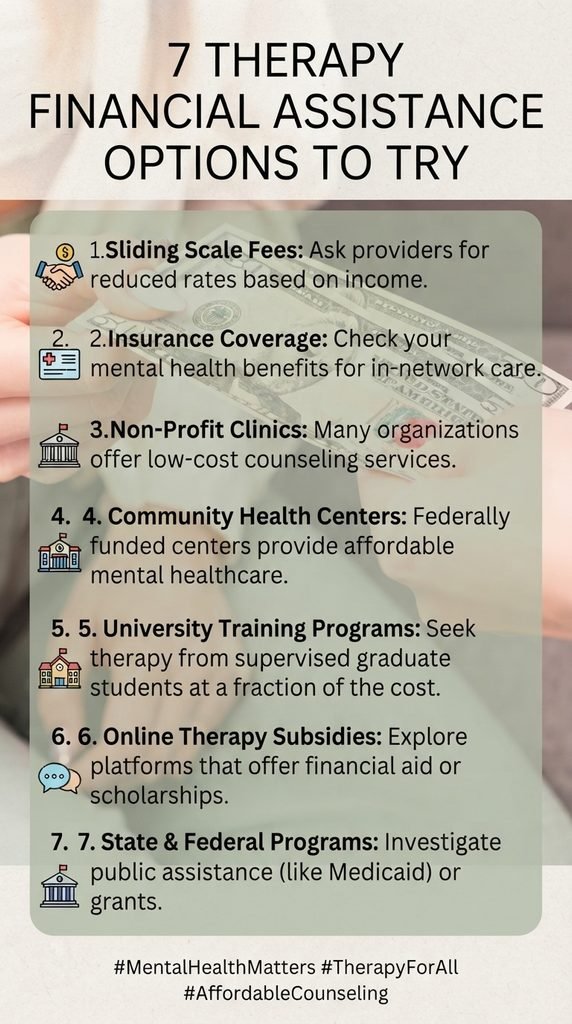
    Cost should never be the reason someone goes without support. Here are proven options that make care accessible:

    1. Sliding scale fees

    Many independent therapists offer sliding scale pricing based on your income. It’s always worth asking — most providers would rather work with you than see you go without help.

    2. Online therapy directories

    Platforms like TheraConnect connect you directly with licensed mental care providers — including therapists, counselors, and mental health coaches — nationwide. Based in Washington State but serving clients across the country, TheraConnect’s growing network means wherever you are, there’s a provider who can help. Browse real providers, read their specialties, and reach out directly. It’s completely free for clients to search.

    3. Community mental health clinics

    Federally qualified health centers and community clinics offer mental health services on a sliding scale. Search for one in your area through SAMHSA’s treatment locator.

    4. University counseling centers

    If you’re near a university, their counseling departments often offer free or very low-cost sessions with supervised graduate students — who are trained, professional, and fully supported.

    5. Employee Assistance Programs (EAP)

    Check with your employer. Many companies offer free short-term counseling sessions through EAPs — even part-time workers are sometimes eligible.

    6. FSA / HSA accounts

    If you have a Flexible Spending Account or Health Savings Account, therapy sessions are typically an eligible expense — meaning you pay with pre-tax dollars.

    What If You Still Can’t Afford It?

    If cost remains a barrier, free mental wellness resources can still make a meaningful difference. Reading, self-guided tools, and community support won’t replace therapy — but they’re a real and valuable starting point.

    At Fitness Hacks for Life — a 501(c)(3) nonprofit headquartered in Washington State — we provide completely free mental wellness articles, tools, and resources to over 54,000 people nationwide. Our community exists because we believe support shouldn’t depend on what you can afford, whether you’re here in Washington or anywhere across the country.

    Finding the Right Fit Matters Too

    Affordability is only part of the equation. The relationship you have with your mental care provider — known as the therapeutic alliance — is the single most important factor in whether care actually helps you.

    If you’re not feeling heard, understood, or like you’re making progress, it’s okay to switch. TheraConnect’s fit checker tool can help you assess whether your current provider is the right match — and guide your next step.

    Ready to find support you can afford?

    Browse licensed mental care providers for free at TheraConnect — providers nationwide, no waitlists, no fees to search, and no pressure. Whether you’re here in Washington State or anywhere across the country, there’s someone ready to help.

    And if you’re looking for free ongoing mental wellness support, join our 54,000+ community at Fitness Hacks for Life — a 501(c)(3) nonprofit proudly rooted in Washington and serving people nationwide.

    Are you a mental care provider who believes in making care accessible? We’re actively welcoming providers in Washington State and across the nation. Join TheraConnect today — no monthly fees, ever.

    This article is for informational purposes only and is not a substitute for professional medical advice. If you are experiencing a mental health crisis, call 988 (Suicide & Crisis Lifeline) or go to your nearest emergency room.