Blog

  • How to Help Teen Girls’ Mental Health Struggles

    How to Help Teen Girls’ Mental Health Struggles

    By Dr. Elizabeth Englander and Meghan K. McCoy, Ed.D.

    6 Research-based Strategies for Parents, Teachers and Friends

    It’s a well-established fact that children’s and teens’ mental health took a hit during the pandemic. But new research suggests that teen girls in particular are suffering in unprecedented ways.

    A survey by the Centers for Disease Control and Prevention that was published in early February 2023 found that, in 2021, 57% of high school girls reported experiencing “persistent feelings of sadness or hopelessness in the past year,” up from 36% in 2011. That’s nearly twice as high as the 29% of males who reported having those feelings in 2021.

    What’s worse, 30% of the girls surveyed reported seriously considering suicide and 13% attempted suicide one or more times in 2021. That is beyond shocking. It’s appalling.

    We are a research team that studies children and their social and emotional development, and during the pandemic we’ve been specifically focused on mental health in children and adolescents. Since 2020, we’ve seen more changes in girls, overall, including increases in depression and thoughts of suicide.

    In our view, a number of key factors have converged to create this mental health crisis in teen girls.The stress experienced by teens is unique and significant.

    A perfect storm of factors

    Previous CDC research has shown that the COVID-19 pandemic disproportionately affected girls. And in a 2021 study that our team conducted with 240 teens, 70% of girls said that they “very much” missed seeing people during the pandemic, compared with only 28% of boys reporting that sentiment.

    Help knowledgeable voices rise above the noise

    Support The Conversation

    A second factor is social media, which can be a wonderful source of support but also, at times, a crushing blow to the self-esteem and psychological well-being of girls.

    Finally, we think that all young people are struggling with issues like climate change and social upheaval. These aren’t just abstractions for many boys and girls: They are their future. Children and teens are usually neither indifferent to nor unaware of political realities.

    So how can parents, teachers and friends help girls through this crisis?

    Here are six strategies that research shows can work.

    1. More emphasis on social support

    Social and emotional connectivity between humans is likely one of the most potent weapons we have against significant stress and sadness. Studies have found strong links between a lack of parental and peer support and depression during adolescence. Support from friends can also help mitigate the link between extreme adolescent anxiety and suicidal thoughts. In one study of teens, social support was linked to greater resilience – such as being better able to withstand certain types of social cruelty like bullying.

    2. Supporting one another instead of competing

    During the 1970s and 1980s, competition between women was seen as something that held women back. Unfortunately, this message seems to have been lost in the tsunami of media coverage about bodies, looks and social achievement. Research has found that social media encourages competition between girls, particularly around their physical appearance.

    Teaching girls at young ages to be cheerleaders for one another – and modeling that behavior as grownups – can help ease the sense of competition that today’s teens are facing.

    3. Showcasing achievements

    Thinking about your own appearance is natural and understandable. But an overemphasis on what you look like is clearly not healthy, and it is strongly associated with depression and anxiety, especially in women.

    Adults can play a key role in encouraging girls to value other qualities, such as their artistic abilities or intelligence. Childhood can be a canvas for children to discover where their talents lie, which can be a source of great satisfaction in life.

    One way that adults can help is simply by acknowledging and celebrating those qualities. For instance, at the Massachusetts Aggression Reduction Center, an organization we direct and manage that is focused on prevention of bullying and cyberbullying, staff members post female achievements – be they intellectual, artistic, scientific, athletic or literary – on social media channels every Friday, using the hashtag #FridaysForFemales.This young woman once felt sad, anxious and trapped.

    4. Empowering women

    Girls look to grown women for examples of how they can behave and what they can do. You may not be the chief executive officer of a huge corporation, but maybe you are a wonderful teacher, or maybe you run a small business that provides an important product or service. Modeling pro-women attitudes means valuing all of the roles that people play in a society.

    In addition, teaching the history behind women’s movements and other important steps toward equality, such as the women’s right to vote, is key to empowering girls to value themselves and their roles. Women played central roles in war efforts during World War II. Women have led social movements and fought for people’s rights. And women have been renowned scientists, writers, artists and experts in virtually every other profession you can name.

    Black and white image of Marie Curie sitting in front of a work table watching as her daughter adjusts an instrument.
    Marie Curie, seated, was a Polish-born physicist and pioneer in radioactivity. Together with her husband she won a Nobel Prize for Physics in 1903. Her daughter, Irene, standing in photo, won a joint Nobel Prize for Chemistry in 1935. Culture Club/Hulton Archive via Getty Images

    5. An honest look at social media

    Social media represents a unique form of human interaction that has taken on an outsize role in the lives of teens. This is magnified for teenage girls, for whom every social media interaction may feel consequential and potentially cataclysmic.

    Interacting in a fun and positive way with peers on social media platforms can be a positive and affirming experience. On the other hand, seeing the things that others post, and comparing it with your own stuff, can make people of any age feel anxious about how they’re appearing, and whether they’re being socially included or excluded. This anxiety applies to both boys and girls, but the potential for emotional distress seems to be higher for girls.

    Awareness of how social media has the capacity to influence your feelings and mental health seems to help people keep some distance from their interactions on social media. Adults can help girls by discussing with them how social media influences their feelings, their self-perception and even their body image.

    6. Teaching kids to recognize their feelings

    Learning to recognize and label feelings doesn’t come automatically for many people. The good news, though, is that kids can learn ways to help themselves when they’re experiencing anxiety or depression. Kids can learn to appreciate how hugging their dog, playing a board game, or talking with their parent(s) can help reduce anxiety, once they understand the feelings.

    We think it’s worth noting that everything discussed here can also be helpful for boys, who are by no means immune to mental health problems. Encouraging achievement recognition, understanding how moods can be influenced by social media, and increasing support for both boys and girls is a positive step as we move toward a post-pandemic world.

    Englander Headshot 180x220 1

    Dr. Elizabeth Englander is the founder and Executive Director of the Massachusetts Aggression Reduction Center at Bridgewater State University, a Center which delivers programs, resources, and research to more than 400 schools every year nationwide

    Megan Qeci28g5xsl82b7sbggyicpwp8b7bu5g4p0b5pa2ts

    Meghan K. McCoy, Ed.D. is the Manager of Programs at the Massachusetts Aggression Reduction Center, at Bridgewater

    State University

    Reprinted with permission

  • Mental Health Recovery Symbols

    Mental Health Recovery Symbols

    Symbols representing mental health recovery include a wide variety of images and ideas that communicate resilience, healing, and personal development. These symbols serve as sources of hope and empowerment for people working toward mental wellness, whether physical or conceptual. From transformative imagery like the lotus to rebirth symbolism like the phoenix, each carries significant meaning and encourages inner strength.

    Key Points About Recovery Symbols

    Recovery symbols represent resilience and transformation, reflecting individual healing journeys. They function as meaningful reminders of hope and advancement, connecting with different paths toward wellness. These representations communicate strength, determination, and overcoming challenges in the mental health recovery process.

    Frequently Used Symbols in Mental Health Recovery

    Various symbols commonly appear in discussions of mental health recovery, each carrying distinct meanings related to hope, resilience, and the healing journey.

    The Semicolon

    The semicolon represents hope and continuation, symbolizing a moment when someone chose to continue their story rather than end their life. This punctuation mark reminds us that our narratives continue beyond difficult moments.

    The Butterfly

    The butterfly represents transformation and rebirth, emerging from its cocoon to symbolize the journey from struggle to freedom. In mental health contexts, it demonstrates that change is achievable and beauty can emerge from hardship.

    The Phoenix

    The phoenix is a legendary bird that rises from its ashes, representing rebirth and renewal. This representation communicates overcoming adversity and developing greater strength, reminding us that recovery is possible even after the most challenging circumstances.

    The Lotus Flower

    The lotus flower grows in muddy water but blooms beautifully above the surface, symbolizing purity, enlightenment, and overcoming obstacles. For mental health recovery, it illustrates growth and resilience despite difficult circumstances.

    The Infinity Symbol

    The infinity symbol represents the endless journey of mental health recovery, reminding us that recovery is not linear but ongoing. This symbol promotes persistence and understanding that healing requires time.

    The Green Ribbon

    The green ribbon is the universal symbol for mental health awareness. Displaying this ribbon demonstrates support for individuals experiencing mental health challenges, promotes awareness, reduces stigma, and encourages open dialogue about mental health.

    Cultural and Religious Symbolism in Mental Health Recovery

    Symbols from different cultural and religious traditions provide comfort and significance during the healing process, offering distinct forms of support throughout recovery journeys.

    Indigenous Healing Symbols

    Indigenous cultures use healing symbols to connect with their traditions and nature, such as the medicine wheel representing balance and harmony through colors and directions. Dreamcatchers offer protection against negativity and disturbing dreams. These symbols help individuals connect with cultural heritage while providing feelings of belonging and protection during recovery.

    Religious Icons and Their Significance

    Religious symbols carry deep meanings and provide spiritual support during mental health recovery. The Christian cross communicates hope, love, and forgiveness, while the Hindu Om symbol represents universal interconnectedness, encouraging inner peace and mindfulness. These icons offer comfort and strengthen connections to spiritual beliefs, supporting emotional and mental healing.

    Cultural Symbol Variations

    Different cultures have unique symbols reflecting their values and beliefs. Japanese cherry blossoms represent life’s beauty and impermanence, encouraging appreciation of each moment. Celtic knots, with their continuous loops, symbolize eternity and interconnectedness, providing a sense of support and continuity. These cultural variations allow individuals to draw strength from their heritage and discover personal meaning in recovery.

    Personal Symbols in Mental Health Recovery

    Individual symbols can significantly impact mental health recovery by providing unique, meaningful representations of personal journeys, challenges, and victories.

    Creating Individual Symbols

    Creating your own symbol can be powerful in mental health recovery, representing personal strength, hope, or achievements. These symbols provide visual reminders of your journey and progress. Consider what matters most to you—an object, animal, or shape with special meaning. Design it in a way that resonates personally. This becomes a source of inspiration, reminding you daily of your resilience and courage.

    Symbolism in Art Therapy

    Art therapy uses symbols to express feelings, ideas, and experiences that are difficult to verbalize. Creating art becomes a communication method for emotions and thoughts. Symbols in art can reveal hidden feelings and enhance self-understanding. A tree might represent personal growth, while stormy skies could symbolize struggles. Through art, you can explore and process emotions safely and creatively, facilitating healing.

    The Role of Tattoos in Recovery

    Tattoos can play a significant role in mental health journeys, with many people getting tattoos to symbolize their journey and strength. Semicolon tattoos serve as permanent reminders of overcoming difficulties and progress achieved. For some, tattoos mark milestones like maintaining sobriety or surviving difficult periods. They can be empowering, providing control over one’s body and narrative. Through meaningful designs, individuals carry recovery symbols with them, offering constant motivation and pride.

    Books, Movies, and Media Featuring Recovery Symbols

    Books and movies often use powerful symbols to represent recovery from mental health challenges. The phoenix rising appears in stories symbolizing rebirth and overcoming adversity. In “The Perks of Being a Wallflower,” the tunnel represents the healing journey. Films like “A Beautiful Mind” employ intricate patterns to symbolize mental health complexity and recovery. These symbols help audiences connect with character journeys, providing hope and inspiration.

    Music and Lyrics as Healing Symbols

    Music and lyrics play crucial roles in symbolizing healing from mental health conditions. Songs like “Fight Song” by Rachel Platten use empowering lyrics to represent strength and perseverance. Artists employ metaphors like clearing storms to represent overcoming difficult times. Listening to these songs provides relief and hope, making listeners feel understood and supported. Music therapy utilizes these symbolic elements to support recovery, demonstrating music’s profound impact on mental health healing.

    Social Media Movements and Hashtags

    Social media movements and hashtags actively symbolize mental health recovery, with campaigns like #MentalHealthAwareness and #BreakTheStigma encouraging open conversations. These movements establish supportive communities where individuals share recovery stories, provide advice, and offer encouragement. Hashtags like #HealingJourney and #RecoveryWarrior symbolize personal growth and resilience. Through participation in these movements, individuals feel less isolated and more empowered in their recovery journeys.

    Frequently Asked Questions

    What represents positive mental health?

    Positive mental health involves emotional well-being, resilience, and the ability to manage stress, featuring feeling good about oneself, maintaining fulfilling relationships, and having a sense of purpose. It enables individuals to cope with challenges, contribute meaningfully to communities, and experience balanced, fulfilling lives, characterized by self-acceptance, personal growth, and adapting to change while maintaining positive outlooks.

    What are the most common symbols used to represent mental health recovery?

    Common symbols for mental health recovery include the semicolon representing continuation and hope, the green ribbon symbolizing mental health awareness, and the butterfly signifying transformation and resilience. The lotus flower represents growth and overcoming adversity, while the phoenix symbolizes rebirth and renewal. These symbols communicate strength, hope, and the healing journey.

    What is a symbol of healing through pain?

    The phoenix symbolizes healing through pain, representing resilience and transformation arising from adversity. In mythology, the phoenix rises from its ashes, symbolizing renewal and strength gained through overcoming struggles. This powerful symbol illustrates healing processes in which individuals emerge stronger and wiser after enduring and transcending pain and hardship.

  • The Power of Connection: How Couples Counseling Can Transform Your Relationship

    The Power of Connection: How Couples Counseling Can Transform Your Relationship

    Introduction

    The Role of Couples Counseling in Relationship Dynamics

    In today’s fast-paced world, maintaining a healthy relationship can often feel overwhelming. Couples counseling emerges as a vital resource in navigating these complexities. It provides partners with a structured environment to explore their feelings, communicate effectively, and address underlying issues that may be causing friction.

    Consider the story of Sarah and Tom, a couple facing repeated arguments over financial stress. Through counseling, they learned to articulate their concerns and discovered shared solutions, which not only eased their disputes but also strengthened their bond.

    Here’s how couples counseling can play a pivotal role in relationship dynamics:

    1. Facilitates Open Communication
    2. Addresses Unresolved Conflicts
    3. Enhances Emotional Intimacy

    Through such supportive frameworks, couples can turn challenges into opportunities for growth and connection.

    Understanding the Basics of Couples Counseling

    Definition and Purpose of Couples Counseling

    Couples counseling, also known as relationship therapy, is a professional process designed to help partners work through their issues in a supportive environment. The primary purpose is to enhance communication, resolve conflicts, and strengthen the connection between partners.

    When Jamie and Alex sought counseling, they were struggling to understand each other’s perspectives. Through structured sessions, they gained valuable insights, allowing them to bridge the gap in their communication.

    Benefits of Seeking Couples Counseling

    There are numerous benefits to engaging in couples counseling that can truly transform a relationship:

    • Improved Communication Skills
    • Better Understanding of Each Other’s Needs
    • Conflict Resolution Techniques
    • Increased Trust and Intimacy
    • And we provide online therapy

    For many couples, like Jamie and Alex, these benefits lead to not just the resolution of current issues, but also the building of a healthier framework for their future together. Couples counseling truly acts as a stepping stone towards a more fulfilling partnership.

    Signs That Couples Counseling Might Be Beneficial

    Communication Challenges in a Relationship

    Even the strongest partnerships can face communication hurdles. If couples find themselves frequently misinterpreting each other or avoiding difficult conversations, it might be time to consider counseling. For instance, Anna and Ben often dismissed each other’s feelings, leading to resentment. Through counseling, they learned how critical it is to articulate their thoughts openly.

    Signs of communication challenges include:

    • Frequent Arguments Over Minor Issues
    • Avoidance of Important Conversations
    • Feelings of Being Misunderstood

    These challenges can create significant barriers within a relationship but addressing them through counseling can lead to transformative changes.

    Trust Issues and Infidelity

    Trust forms the foundation of any healthy relationship; when shaken, it can lead to deep emotional turmoil. Issues such as infidelity can leave partners feeling devastated and unsure of the future. Laura and Mike faced profound trust issues after Mike’s betrayal. Seeking couples counseling provided them with a safe space to navigate their feelings, allowing them to rebuild their trust incrementally.

    Indicators of trust issues may include:

    1. Constant Doubt About Each Other’s Loyalty
    2. Difficulty Sharing Personal Thoughts
    3. Jealousy Over Innocuous Interactions

    Addressing these trust issues through guided discussions can pave the way for healing and reconnection, ultimately strengthening the bond between partners.

    Common Techniques and Approaches in Couples Counseling

    Emotionally Focused Therapy (EFT)

    One of the most effective techniques in couples counseling is Emotionally Focused Therapy (EFT). This approach focuses on the emotional bond between partners and aims to identify and transform negative interaction patterns. For instance, when Lisa and Michael consulted a therapist trained in EFT, they discovered how their emotional reactions during arguments kept them from connecting deeply. Through guided exercises, they learned to express their needs more openly, ultimately revitalizing their relationship.

    EFT encourages:

    1. Identifying Emotional Triggers
    2. Enhancing Emotional Responsiveness
    3. Strengthening Attachment Bonds

    As couples practice these elements, they often find a renewed sense of closeness.

    Cognitive-Behavioral Therapy (CBT) for Couples

    Another widely used method is Cognitive-Behavioral Therapy (CBT) for couples, focusing on identifying and changing maladaptive thoughts and behaviors. This technique helps partners recognize how their thoughts can influence their feelings and actions within the relationship. For instance, Jake and Emma attended CBT sessions where they learned to replace negative thought patterns—such as assuming the worst about each other’s intentions—with constructive alternatives.

    Key tenets of CBT for couples include:

    1. Challenging Negative Thought Patterns
    2. Developing Problem-Solving Skills
    3. Setting Realistic Relationship Goals

    By employing CBT techniques, couples can foster healthier interactions and navigate their conflicts more effectively, paving the way for long-term relationship satisfaction.

    The Process of Couples Counseling

    Setting Goals for Counseling Sessions

    An essential aspect of couples counseling is setting clear, measurable goals for the sessions. This step ensures that both partners understand what they want to achieve and keeps them focused throughout the process. For example, when Maya and Chris began their counseling journey, they identified goals like improving their communication and rebuilding trust after a breach.

    Setting practical goals often includes:

    • Defining Specific Issues to Address
    • Establishing Desired Outcomes
    • Creating a Timeline for Progress

    By collaborating on these goals, couples can find a sense of direction and purpose in their counseling sessions.

    Building Effective Communication Skills in the Relationship

    Once goals are established, the focus shifts to enhancing communication skills—an integral component of a healthy partnership. Effective communication involves expressing thoughts and feelings while also actively listening to a partner’s perspective. During their sessions, Maya and Chris practiced techniques like “I” statements and reflective listening, which allowed them to communicate respectfully and clearly.

    Key techniques to build communication skills include:

    • Practicing Active Listening
    • Using “I” Statements Instead of Accusatory Language
    • Scheduling Regular Check-Ins

    As couples like Maya and Chris learn to communicate effectively, they create a stronger foundation for their relationship, fostering understanding and empathy while reducing misunderstandings and conflicts.

    Overcoming Resistance to Couples Counseling

    Addressing Stigma Associated with Counseling

    Despite the many benefits of couples counseling, stigma can often deter partners from seeking help. Many individuals associate counseling with failure or weakness, which creates a barrier to reaching out. Take the case of Rachel and Tom, who initially hesitated to attend therapy due to fears of judgment. Through discussions with supportive friends and educators, they learned that seeking help is a strength rather than a weakness, paving the way for their journey.

    To combat stigma, couples can:

    • Educate Themselves
    • Share Positive Stories About Counseling
    • Engage in Open Discussions About Therapy

    By reframing their mindset, couples can diminish fears and encourage a proactive approach to relationship health.

    Encouraging Both Partners’ Participation

    For couples counseling to be effective, both partners need to be engaged and committed to the process. However, one partner may feel reluctant or even resistant. In the case of Rachel and Tom, it took a few heartfelt conversations for Tom to understand the benefits, allowing him to join Rachel in counseling fully.

    Here are strategies to encourage participation:

    • Highlighting the Mutual Benefits
    • Creating a Non-Judgmental Environment
    • Allowing Each Partner to Express Their Concerns

    When both partners prioritize participation, they lay the groundwork for a more successful counseling experience, fostering a sense of teamwork and commitment to their relationship.

    Challenges and Limitations of Couples Counseling

    Dealing with Power Imbalance in Relationships

    While couples counseling can be transformative, it also presents challenges, one of which is addressing power imbalances within the relationship. In situations where one partner holds more control over decisions or finances, it can create a dynamic that makes it difficult for both voices to be equally heard. For instance, when Lisa and Mark attended counseling, they struggled with issues stemming from Mark’s dominant personality, which silenced Lisa’s opinions.

    To effectively address power imbalances, counselors may:

    • Encourage Open Dialogue
    • Implement Fair Decision-Making Practices
    • Explore Underlying Issues of Control

    This ensures that both partners feel valued and can participate equally in the counseling process.

    Managing Expectations and Realistic Outcomes

    Alongside power imbalances, managing expectations is another crucial aspect of couples counseling. Many couples enter therapy with high hopes for a quick fix, only to be disheartened when progress feels slow. Emma and Jake expected their conflicts to resolve overnight, only to realize that meaningful change takes time and effort.

    To manage expectations effectively, couples should:

    • Set Achievable Goals
    • Recognize That Progress Might Be Gradual
    • Celebrate Small Victories

    Understanding that counseling is a journey filled with ups and downs allows couples to stay committed to the process, fostering patience and resilience as they work towards a healthier relationship.

    Success Stories and Testimonials from Couples Counseling

    Real-Life Examples of Relationship Transformations

    Numerous couples have experienced profound transformations through counseling, turning their struggles into success stories. Take the case of Sarah and David, who were on the brink of separation due to persistent communication issues. After engaging in couples counseling, they learned to articulate their feelings clearly and developed healthier conflict resolution strategies. This transformed their relationship from tumultuous to harmonious, reminding them of their initial connection.

    Success stories often highlight:

    • Rebuilt Trust After Infidelity
    • Enhanced Emotional Intimacy
    • Improved Conflict Management

    These transformations serve as powerful reminders of the potential for growth and renewal within partnerships.

    Impact of Counseling on Relationship Satisfaction

    The effects of couples counseling can be substantial, often leading to increased relationship satisfaction. Research indicates that couples who undergo counseling frequently report a renewed sense of connection and understanding. For example, after attending sessions, Lisa and Mark noted a marked improvement in how they perceived each other, leading to a more fulfilling partnership.

    Key impacts of counseling include:

    • Greater Emotional Support
    • Heightened Partnership Satisfaction
    • Long-term Commitment to Growth

    By sharing these success stories, couples can find hope and motivation, understanding that with effort and dedication, they too can achieve lasting satisfaction in their relationships.

    Integrating Couples Counseling into a Long-Term Relationship

    Maintaining Healthy Communication Post-Counseling

    After completing couples counseling, it’s vital for partners to continue practicing healthy communication techniques learned during sessions. Effective communication doesn’t just happen; it requires ongoing effort and commitment. For example, after their counseling journey, Anna and Ben made it a habit to have weekly check-ins where they openly discussed their feelings and concerns. This practice helped them stay connected and quickly address any emerging issues.

    To maintain healthy communication, couples can:

    • Schedule Regular ‘State of the Union’ Talks
    • Utilize Active Listening Techniques
    • Revisit the ‘I’ Statement Approach

    By prioritizing communication, partners set the foundation for a lasting bond.

    Strategies for Preventing Relationship Conflicts

    In addition to maintaining communication, proactively preventing conflicts is essential for relationship longevity. Couples who employ effective strategies to anticipate and address potential issues can minimize the likelihood of misunderstandings. For instance, Laura and Mike focused on identifying common triggers that led to arguments, which allowed them to develop solutions before issues escalated.

    Helpful strategies include:

    • Recognizing and Discussing Triggers
    • Establishing Boundaries and Expectations
    • Practicing Compromise and Flexibility

    By integrating these strategies into their daily lives, couples can nurture a healthy dynamic, reducing conflicts and fostering a loving partnership that lasts for years to come.

    Conclusion

    Recap of Benefits of Couples Counseling

    Throughout this exploration of couples counseling, it’s clear that the benefits are numerous and impactful. From improving communication to rebuilding trust, counseling provides couples with the tools needed for effective conflict resolution and emotional connection. Couples like Sarah and David, who transformed their relationship through therapy, embody the potential for positive change through counseling.

    Key benefits include:

    • Enhanced Communication Skills
    • Increased Relationship Satisfaction
    • Stronger Emotional Bonds

    Understanding these advantages encourages couples to view counseling as an opportunity for growth rather than a last resort.

    Encouraging Relationship Growth through Counseling

    Ultimately, couples counseling has the potential to foster significant growth in any partnership. It encourages a deeper understanding of one another and cultivates a safe space for vulnerability and authenticity. By embracing the counseling process, couples can navigate their challenges with greater resilience and a renewed sense of commitment.

    Couples like Laura and Mike, who actively applied the insights gained through therapy, demonstrate that continuous effort and openness can lead to lasting harmony. Remember, seeking help is not a sign of weakness but a courageous step towards building a stronger, more fulfilling relationship.

    Worried you cannot pay? Check your insurance; most have therapy covered!

  • Why Strong Women Keep Falling for Emotionally Avoidant Men: The Psychology of the Anxious-Avoidant Trap

    Why Strong Women Keep Falling for Emotionally Avoidant Men: The Psychology of the Anxious-Avoidant Trap

    You are smart. You are accomplished. You have your life together in ways most people only dream about. Yet, when it comes to love, you keep finding yourself in the same painful place:

    • Attracted to partners who cannot (or will not) meet you emotionally.
    • Chasing crumbs of affection and reassurance.
    • Staying long after the relationship has proven it will never truly nourish you.

    It is easy to look at this pattern and decide, “Something must be wrong with me.” However, this cycle is not about personal weakness or failure. It is about attachment theory, unresolved childhood emotional blueprints, and the way your formidable strengths are weaponized against you in love.

    Let us break the pattern down, gently, honestly, and without judgment.

    1. The Hidden Script: Attachment Styles and Childhood Wounds

    The painful dynamic between the highly capable woman and the distant man is a predictable relationship pattern rooted in insecure attachment styles, first theorized by John Bowlby [1]. In adult romantic relationships, this interaction is known as the Anxious-Avoidant Trap [2].

    The Anxious Attachment Style (The Strong Woman)

    The highly successful woman often develops an Anxious (or Preoccupied) attachment style. This style emerges from consistently inconsistent caregiving in childhood—a parent was sometimes available and warm, and sometimes distant or neglectful [3]. The child learns that intimacy is unpredictable and must be earned through intense effort.

    As an adult, this translates into:

    • A profound, deep-seated fear of abandonment [4].
    • Hyper-vigilance, constantly monitoring the partner and relationship for any sign of rejection or withdrawal [5].
    • A strong tendency to “protest behaviors” (excessive texting, picking fights, or emotional outbursts) when the partner pulls away, all aimed at re-establishing connection [2].

    The Avoidant Attachment Style (The Unavailable Man)

    The man who frequently triggers this pursuit-and-distance cycle usually carries an Avoidant (or Dismissive) attachment style. This style is rooted in a childhood where emotional needs were consistently dismissed or rejected, leading the individual to suppress their feelings and prioritize self-reliance [6].

    As an adult, this translates into:

    • Equating emotional closeness with a loss of autonomy or feeling “suffocated” [2].
    • Difficulty with vulnerability and deep emotional expression [7].
    • A reflexive tendency to deactivate—withdrawing, becoming hyper-focused on work, or finding flaws in the partner—when intimacy levels become too high [7].

    2. The Trap: Why Your Strengths Become Your Liabilities

    When these two styles meet, they create a magnetic but volatile attraction. The anxious woman is drawn to the avoidant man’s seemingly unflappable self-sufficiency, mistaking his emotional distance for calm confidence [8]. The avoidant man is drawn to the anxious woman’s high capacity for intimacy and drive, which confirms his own internal need for space and reinforces his independence [7].

    The tragic irony is that the woman’s strengths fuel the cycle:

    • Her Competitiveness: Her professional drive is unconsciously channeled into making the unavailable man “commit.” His emotional wall becomes a challenge she must conquer, believing that if she tries hard enough, she can finally “win” his heart.
    • Her High-Achieving Nature: She believes that consistent, high-quality effort (being the perfect girlfriend, anticipating his needs) will yield a positive result (love and security), mirroring her success in her career. When this fails, it reinforces the core belief that she is fundamentally unworthy, which drives her to try even harder.
    • Her Emotional Generosity: She over-functions, pouring energy and attention into the avoidant partner, only to trigger his need for space, thus confirming her deepest fear of abandonment and accelerating the cycle of pursuit and withdrawal [2].

    3. Healing the Wound: The Path to Secure Attachment

    The key to breaking this pattern is recognizing that your attraction is based on familiarity, not fulfillment. Your heart mistakes the high-stakes emotional intensity of the chase for genuine connection. A securely attached partner, who is consistent and reliably available, may initially feel “boring” because they do not trigger the same familiar survival mechanisms from childhood [7].

    Healing requires consciously choosing to prioritize stability over intensity.

    Step 1: Learn to Regulate Your Internal Alarm

    When the avoidant partner inevitably pulls away, the anxious partner’s alarm system screams Abandonment! This is the crucial moment to disrupt the pattern.

    • Self-Soothing: Instead of reaching out, engage in practices that calm the nervous system (e.g., box breathing, exercise, grounding techniques) [5].
    • Decenter the Partner: Redirect the energy of the chase back to your own life—focus on a hobby, a project, or connecting with secure friends. This practice reinforces your self-worth as internally derived, rather than externally validated by the partner’s attention.

    Step 2: Set and Enforce Intentional Boundaries

    The strong woman often struggles to set firm boundaries because she fears doing so will push the avoidant partner away. However, setting clear limits is necessary to establish self-respect and to challenge the avoidant’s comfort with distance [2].

    • Communicate Needs, Not Demands: Use calm, non-blaming “I” statements to express how you feel, rather than criticizing his behavior [3]. For example: “I feel disconnected when we don’t speak for a few days. I need a check-in every 24-48 hours to feel secure in the relationship.”
    • Respect the Space, But Demand Clarity: If the avoidant asks for space, honor it, but require a concrete timeline. A healthy boundary is: “I understand you need space, but I need to know when you plan to reconnect. If I don’t hear from you by [Specific Date/Time], I will assume you are unable to meet my needs, and I will move on.”

    Step 3: Consciously Choose Secure Partners

    The most powerful step is learning to value a Secure attachment style. Secure partners are comfortable with both intimacy and independence; they are reliable, communicate directly, and don’t play games.

    While a relationship with a secure person may initially lack the “spark” of high-stakes insecurity, it is the foundation for lasting peace and intimacy. By consistently choosing secure love, you rewrite your emotional blueprint, teaching your heart that love is meant to be a safe harbor, not a battlefield [7].

    References and Further Reading

    [1] Bowlby, J. (1969). Attachment and loss: Vol. 1. Attachment. Basic Books. [2] Ray, S., & Groskopf, C. (2024). 5 Signs You’re Caught in the Anxious-Avoidant Dating Trap. theSkimm (Expert Testimony). [3] Friedlander, A. (2025). How to Heal an Anxious-Avoidant Relationship. The Avoidant Therapist (Referencing Hazan & Shaver, 1987). [4] Cassidy, J., & Berlin, L. J. (1994). The insecure/ambivalent pattern of attachment: Theory and research. Child Development, 65(4), 971–981. [5] Collins, N. L. (1996). Working models of attachment: Implications for explanation, emotion, and behavior. Journal of Personality and Social Psychology, 71(4), 810–832. [6] Bartholomew, K. (1990). Avoidance of intimacy: An attachment perspective. Journal of Social and Personal Relationships, 7(2), 147–178. [7] MacWilliam, B. (2023). Why Anxious and Avoidant Attachment Attract Each Other. Psychology Today. [8] Gaba, S. (2024). Understanding The Anxious Avoidant Relationship Trap. Marriage.com.

  • Can you change your personality? Psychology research says yes, by tweaking what you think and do Dr Shannon Sauer-Zavala

    Can you change your personality? Psychology research says yes, by tweaking what you think and do Dr Shannon Sauer-Zavala

    Have you ever taken a personality test? If you’re like me, you’ve consulted BuzzFeed and you know exactly which Taylor Swift song “perfectly matches your vibe.”

    It might be obvious that internet quizzes are not scientific, but many of the seemingly serious personality tests used to guide educational and career choices are also not supported by research. Despite being a billion-dollar industry, commercial personality testing used by schools and corporations to funnel people into their ideal roles do not predict career success.

    Beyond their lack of scientific support, the most popular approaches to understanding personality are problematic because they assume your traits are static – that is, you’re stuck with the personality you’re born with. But modern personality science studies find that traits can and do change over time.

    In addition to watching my own personality change over time from messy and lazy to off the charts in conscientiousness, I’m also a personality change researcher and clinical psychologist. My research confirms what I saw in my own development and in my patients: People can intentionally shape the traits they need to be successful in the lives they want. That’s contrary to the popular belief that your personality type places you in a box, dictating that you choose partners, activities and careers according to your traits.

    What personality is and isn’t

    According to psychologists, personality is your characteristic way of thinking, feeling and behaving.

    Are you a person who tends to think about situations in your life more pessimistically, or are you a glass-half-full kind of person?

    Do you tend to get angry when someone cuts you off in traffic, or are you more likely to give them the benefit of the doubt – maybe they’re rushing to the hospital?

    Do you wait until the last minute to complete tasks, or do you plan ahead?

    You can think of personality as a collection of labels that summarize your responses to questions like these. Depending on your answers, you might be labeled as optimistic, empathetic or dependable.

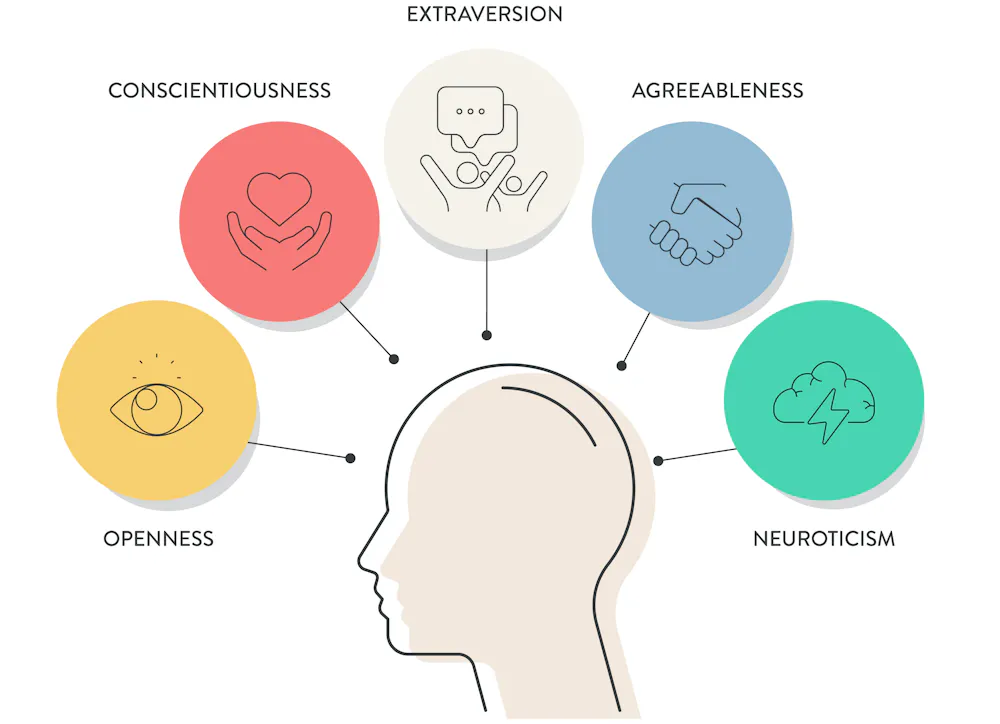
    Research suggests that all these descriptive labels can be summarized into five overarching traits – what psychologists creatively refer to as the “Big Five.”

    As early as the 1930s, psychologists literally combed through a dictionary to pull out all the words that describe human nature and sorted them in categories with similar themes. For example, they grouped words like “kind,” “thoughtful” and “friendly” together. They found that thousands of words could be accounted for by sorting them between five traits: neuroticism, extroversion, conscientiousness, agreeableness and openness.

    cartoon graphic of the Big Five personality traits: openness, conscientiousness, extraversion, agreeableness, neuroticism
    Personality traits can be sorted into the ‘Big Five’ categories. They describe how you act but not necessarily the essence of who you are. Whale Design/iStock via Getty Images Plus

    What personality is not: People often feel protective about their personality – you may view it as the core of who you are. According to scientific definitions, however, personality is not your likes, dislikes or preferences. It’s not your sense of humor. It’s not your values or what you think is important in life.

    In other words, shifting your Big Five traits does not change the core of who you are. It simply means learning to respond to situations in life with different thoughts, feelings and behaviors.

    Can you change your personality?

    Can personality change? Remember, personality is a person’s characteristic way of thinking, feeling and behaving. And while it might sound hard to change personality, people change how they think, feel and behave all the time.

    Suppose you’re not super dependable. If you start to think “being on time shows others that I respect them,” begin to feel pride when you arrive to brunch before your friends, and engage in new behaviors that increase your timeliness – such as getting up with an alarm, setting appointment reminders and so on – you are embodying the characteristics of a reliable person. If you maintain these changes to your thinking, emotions and behaviors over time – voila! – you are reliable. Personality: changed.

    Data confirms this idea. In general, personality changes across a person’s life span. As people age, they tend to experience fewer negative emotions and more positive ones, are more conscientious, place greater emphasis on positive relationships and are less judgmental of others.

    There is variability here, though. Some people change a lot and some people hold pretty steady. Moreover, studies, including my own, that test whether personality interventions change traits over time find that people can speed up the process of personality change by making intentional tweaks to their thinking and behavior. These tweaks can lead to meaningful change in less than 20 weeks, instead of 20 years.

    woman in an office leans back in her chair and looks into distance
    Identifying patterns that your thoughts frequently fall into can be the first step toward making a change. Maskot via Getty Images

    Cultivating personality traits that serve you best

    The good news is that these cognitive-behavioral techniques are relatively simple, and you don’t need to visit a therapist if that’s not something you’re into.

    The first component involves changing your thinking patterns – this is the cognitive piece. You need to become aware of your thoughts to determine whether they’re keeping you stuck acting in line with a particular trait. For example, if you find yourself thinking “people are only looking out for themselves,” you are likely to act defensively around others.

    The behavioral component involves becoming aware of your current action tendencies and testing out new responses. If you are defensive around other people, they will probably respond negatively to you. When they withdraw or snap at you, for example, it then confirms your belief that you can’t trust others. By contrast, if you try behaving more openly – perhaps sharing with a co-worker that you’re struggling with a task – you have the opportunity to see whether that changes the way others act toward you.

    These cognitive-behavioral strategies are so effective for nudging personality because personality is simply your characteristic way of thinking and behaving. Consistently making changes to your perspective and actions can lead to lasting habits that ultimately result in crafting the personality you desire.

  • The Green Ribbon: Symbol of Mental Health Awareness

    The Green Ribbon: Symbol of Mental Health Awareness

    What Does the Green Ribbon Mean? Mental Health Symbol

    The Green Ribbon: Symbol of Mental Health Awareness

    What Does the Green Ribbon Mean? Mental Health Symbol

    The Origin Story: History of the Green Ribbon

    While awareness ribbons have existed for decades, gaining massive popularity with the red ribbon for AIDS/HIV awareness, the green ribbon’s use for mental health specifically began to take hold in the early 1990s. The need for a dedicated symbol was clear: mental illness was, and often still is, treated differently than physical illness, shrouded in shame and secrecy.

    The US Catalyst: The Carter Center and the Mental Health Program

    One of the most significant moments in popularizing the green ribbon came from the United States through **The Carter Center**. Former First Lady Rosalynn Carter, a passionate advocate for mental health and a co-founder of the Center, helped establish the Rosalynn Carter Fellowships for Mental Health Journalism in 1991. The center used the green ribbon, particularly through its Mental Health Program, to symbolize hope and to encourage reporters to cover mental health issues accurately and fairly, thus battling media-driven stigma.

    **Key Development:** By associating the ribbon with journalism, The Carter Center intentionally aimed to influence public discourse and create a supportive environment for individuals and families dealing with mental health conditions. This focused, top-down strategy accelerated its recognition across the country.

    The Global Adoption

    Following its strong promotion in the US, the symbol was adopted by various grassroots movements and large international organizations. In many places, it is used specifically in May, which is **Mental Health Awareness Month**.

    • **Canada:** The symbol is widely used by provincial and national mental health organizations to encourage conversations about wellness.
    • **Ireland and UK:** Campaigns like those run by Mental Health Ireland and various UK charities have championed the green ribbon to promote compassion and reduce discrimination.

    Today, the green ribbon is an almost universally recognized symbol that transcends national borders, used in educational campaigns, fundraising efforts, and public awareness drives worldwide. It remains a silent, yet powerful, declaration against centuries of prejudice.

    Why Green? Meaning and Symbolism

    The choice of green is intentional and deeply symbolic. In many cultures and contexts, it represents:

    • **Renewal and Growth:** Like spring growth, the color symbolizes the potential for recovery and moving forward from a mental health challenge.
    • **Nature and Calm:** Green is known to have a calming effect, often associated with peace, tranquility, and the natural world, reinforcing the goal of mental well-being.
    • **Sympathy and Support:** In the context of ribbons, the color clearly communicates a supportive stance toward the cause and those affected by it.

    Its function is simple: to start a dialogue. When someone wears the green ribbon, they signal that they are a safe person to talk to about mental health, reducing the isolation felt by those who are struggling.

    Global Impact: Changing the Mental Health Conversation

    The green ribbon’s impact extends far beyond being a simple accessory. Its visibility has been instrumental in shifting public perception, moving mental health from a taboo topic to a matter of essential public health discussion.

    1. Normalizing the Discussion

    By making an outward, non-verbal statement, the ribbon acts as an icebreaker. It allows individuals who may feel isolated by their struggles to see visible evidence of support. This normalization is crucial in encouraging people to speak openly about their challenges and, most importantly, to seek professional help without fear of judgment or discrimination.

    2. Driving Policy and Funding

    The collective visibility generated by the green ribbon—especially during awareness campaigns—translates into political pressure. When the public demonstrates widespread support for a cause, it creates an environment where policymakers are more likely to allocate funding for research, community mental health services, and anti-stigma programs in schools and workplaces.

    **The Ripple Effect:** The ribbon doesn’t cure illness, but it is a powerful tool for advocacy. It helps connect the personal experiences of millions with the broader goals of healthcare parity and social equity for mental health conditions.

    3. Corporate and Workplace Wellness

    The adoption of the green ribbon has significantly influenced corporate environments. Many organizations now actively promote the ribbon during awareness weeks to signal their commitment to employee wellness, leading to better mental health benefits, Employee Assistance Programs (EAPs), and mental health days. This demonstrates that the symbol has successfully moved from a social movement into institutional policy.

    Beyond the Ribbon: How to Take Action

    While wearing the green ribbon is a wonderful first step, the true impact comes from accompanying that symbol with concrete actions to support the cause.

    • **Challenge Internal Bias:** Reflect on and challenge any unconscious biases you may hold about mental illness.
    • **Use Person-First Language:** Always refer to the person first, not their condition (e.g., “a person experiencing depression,” not “a depressive”).
    • **Advocate for Resources:** Support policies and funding that improve access to affordable, quality mental healthcare in your community.
    • **Be a Listener:** The most powerful action is often just offering a non-judgemental ear to someone who needs to talk. Remember, you don’t need to have the answers; you just need to be present.
    © 2024 Mental Health Awareness Resources. All rights reserved.
  • What Is Therapy? — A clear, evidence-based guide to healing, growth & support.

    What Is Therapy? — A clear, evidence-based guide to healing, growth & support.

    Therapy Defined

    Therapy (also known as “talk therapy,” “counseling,” or “psychotherapy”) refers to a set of treatment approaches provided by licensed professionals — such as psychologists, psychiatrists, social workers, or counselors — aimed at helping people deal with emotional distress, mental health challenges, and life difficulties. Psychology Today+2Cleveland Clinic+2

    It’s a collaborative process: during therapy sessions, the therapist and client work together to explore thoughts, feelings, behaviors, and underlying issues — whether rooted in past experiences, present stressors, relationships, or internal struggles. American Psychological Association+2nami.org+2

    Therapy can take many forms — individual, couples, family, or group — and therapists tailor their approach based on the person’s needs, goals, and circumstances. American Psychiatric Association+2Cleveland Clinic+2


    Why People Seek Therapy — Common Triggers & Uses

    People pursue therapy for a variety of reasons, not only when facing a mental illness. Some common triggers include: National Institute of Mental Health+2Harvard Health+2

    In short: therapy isn’t only for crisis — it can also be for anyone who wants more clarity, inner peace, healthier relationships, or greater self-understanding.


    What Happens in Therapy — The Process & Structure

    • Initial/First Session — Often involves assessment: background, current concerns, what you hope to work on, and collaborative discussion about frequency, approach, confidentiality, and goals. The Jed Foundation+2Cleveland Clinic+2
    • Building a Therapeutic Alliance — The relationship between you and your therapist is foundational. Trust, openness, empathy, and safety create the space for real change. American Psychological Association+2Wikipedia+2
    • Therapeutic Work — Through conversation, reflection, exercises (sometimes “homework” between sessions), you learn to identify problematic thoughts and behaviors, make sense of feelings or past trauma, and begin practicing healthier coping mechanisms. Cleveland Clinic+2Wikipedia+2
    • Tailored Approaches — Types of therapy vary depending on needs: for example, structured therapies like Cognitive Behavioral Therapy (CBT) focus on changing thoughts and behaviors; others prioritize emotion-regulation, interpersonal skills, trauma healing, or supportive guidance. Cleveland Clinic+2nami.org+2
    • Duration & Flexibility — Therapy can be short-term (weeks to months) for addressing specific issues, or longer-term for deep-rooted concerns and lasting healing. American Psychiatric Association+1

    Benefits of Therapy — What It Can Help With

    Research and mental-health experts highlight many possible benefits of therapy, including: Headspace+3Mental Health America+3Henry Ford Health+3

    • Improved coping skills and emotional resilience — helping you respond to stress, grief, trauma, or daily pressures in a healthier way. Mental Health America+2Healthline+2
    • Greater self-awareness, self-understanding, and insight into your own patterns, triggers, and behaviors. nami.org+2Verywell Mind+2
    • Stronger relationships — through better communication, improved emotional regulation, boundary-setting, and conflict-resolution skills. American Federation of Teachers+2coe.edu+2
    • Relief from symptoms of mental health conditions — such as anxiety, depression, trauma-related stress, and other disorders when appropriate. Mayo Clinic+2American Psychiatric Association+2
    • Enhanced overall well-being — including better daily functioning, more balanced emotions, improved self-esteem, and increased life satisfaction. Henry Ford Health+2coe.edu+2
    • Long-term personal growth — therapy doesn’t just address immediate problems; it can lay the foundation for healthier habits, more self-compassion, resilience, and emotional maturity. Headspace+2coe.edu+2

    Common Misconceptions & What Therapy Is Not


    Is Therapy Right for You? — When It Might Be Worth Considering

    You might benefit from therapy if you’re experiencing: Harvard Health+2Mayo Clinic+2

    • Persistent sadness, anxiety, grief, or overwhelm that interferes with daily life
    • Difficulty coping with a major change — loss, relationship issues, job stress, health challenges
    • Patterns of negative thoughts or self-criticism, low self-esteem, or recurring destructive behaviors
    • Interpersonal or family conflicts, unresolved trauma, or difficulty setting healthy boundaries
    • A desire for personal growth, self-understanding, emotional healing, or stronger relationships
    • Stress or life imbalance, even without pathology — for self-care, clarity, or preventative mental wellness

    How to Get Started — Tips for Finding a Good Therapist

    • Look for credentials: Make sure the therapist is licensed and trained in the type of therapy relevant to your needs (e.g., trauma, couples, depression, etc.). Cleveland Clinic+2The Jed Foundation+2
    • Ask about approach & fit: Therapy works best when you feel comfortable with your therapist’s style and feel safe being honest with them. The Jed Foundation+1
    • Be ready to invest: Therapy often takes several sessions to yield benefit; consistency, openness, and willingness to do the “work” help make it effective. Henry Ford Health+2The Jed Foundation+2
    • Have realistic expectations: Therapy can help enormously — but it isn’t magic. Progress often occurs gradually and at your own pace.
    • Permit yourself to heal: Seeking help is a sign of strength and courage, not weakness. It’s an act of self-care and self-respect. Henry Ford Health+1

    Bottom Line: Therapy as a Tool for Healing, Growth & Empowerment

    Therapy isn’t only for when you have a crisis — it’s a proven, flexible, and compassionate tool for anyone seeking relief, clarity, healing, growth, or simply a better quality of life. Whether you’re navigating a rough patch, healing old wounds, or striving for ongoing wellbeing, therapy offers a structured, supportive space to explore, heal, and transform.

    If you’ve ever wondered whether therapy might help, the answer is often yes.

  • Anhedonia: Why Nothing Feels Good Anymore (Causes, Symptoms & Treatment)

    Anhedonia: Why Nothing Feels Good Anymore (Causes, Symptoms & Treatment)

    Understanding the Loss of Pleasure, What Causes It, and Evidence-Based Ways to Feel Joy Again

    Quick Answer: Anhedonia is the reduced ability to experience pleasure or interest in activities you once enjoyed. Research shows it manifests as physical anhedonia (loss of pleasure from sensory experiences like eating or touch) and social anhedonia (decreased enjoyment from social interaction). While commonly associated with depression, studies link anhedonia to bipolar disorder, schizophrenia, PTSD, Parkinson’s disease, and diabetes. Brain imaging reveals anhedonia involves reduced activity in the ventral striatum and excess activity in the prefrontal cortex—areas controlling reward processing and dopamine release. Treatment typically addresses underlying conditions through therapy (especially CBT) and medication (SSRIs).


    Crisis Resources:

    • 988 Suicide & Crisis Lifeline: Call or text 988
    • Crisis Text Line: Text HOME to 741741
    • SAMHSA National Helpline: 1-800-662-4357

    If activities that once brought you joy now feel empty and meaningless—if your favorite meal tastes bland, social gatherings feel exhausting, or hobbies you loved no longer interest you—you may be experiencing anhedonia. Understanding what’s happening in your brain, why it’s occurring, and what treatments actually work can be the first step toward feeling pleasure again.

    What Is Anhedonia? The Clinical Definition

    Anhedonia is a reduced level of interest in activities you used to enjoy, and a decline in your ability to feel pleasure. While anhedonia is a common symptom of many types of depression, it can also be experienced by people with other mental health issues—or even by people who have no diagnosed mental health condition.

    The Etymology and History

    The term “anhedonia” comes from Greek: “an-” (without) and “hedone” (pleasure). It was first introduced by French psychologist Théodule-Armand Ribot in 1896 to describe the inability to experience pleasure, which he observed in patients with depression.

    Prevalence and Impact

    Research published in Schizophrenia Bulletin found that anhedonia affects approximately 70% of individuals with major depressive disorder and up to 75% of those with schizophrenia. A study in Journal of Affective Disorders revealed that anhedonia significantly predicts worse treatment outcomes and increased suicide risk, making it a critical target for intervention.

    The Two Types of Anhedonia

    Some areas of relevant research, including an article in the journal of the Belgian Association for Psychological Science (Psychologica Belgica), suggests there are two main strands of anhedonia:

    Physical (or Body) Anhedonia

    Pleasure found in physical sensations or tactile interactions is reduced. Research in Frontiers in Psychology shows that physical anhedonia involves diminished response to:

    • Touch, hugging, or physical affection from a partner
    • Eating favorite foods or tasting flavors
    • Physical intimacy and sexual activity
    • Sensory experiences like warm baths, massages, or comfortable clothing
    • Physical exercise or movement

    The neuroscience: Brain imaging studies show that people with physical anhedonia demonstrate reduced activation in the orbitofrontal cortex and ventral striatum when exposed to typically pleasurable stimuli—indicating their brain’s reward system isn’t responding normally.

    Social Anhedonia

    Socializing or spending time with other people becomes less pleasurable. Research published in Comprehensive Psychiatry found that social anhedonia predicts the development of schizophrenia-spectrum disorders and major depression.

    Important distinction: Some people with social anhedonia could have social anxiety disorder, but they are separate conditions. Symptoms of social anxiety are driven by fear of social situations and worry about judgment, whereas people with anhedonia find that they gain no reward or enjoyment from engaging with people socially—the fear isn’t present, just the absence of pleasure.

    A study in Psychiatry Research confirmed this distinction, showing that socially anhedonic individuals don’t necessarily avoid social situations due to fear; they simply derive no positive feelings from them.

    Symptoms of Anhedonia: How It Actually Feels

    Understanding the specific manifestations of anhedonia helps distinguish it from general low mood or temporary loss of interest.

    Core Symptoms

    Research in Depression and Anxiety identified these primary anhedonia symptoms:

    Decreased pleasure in daily activities: Things that once brought joy—morning coffee, favorite TV shows, listening to music—now feel neutral or empty.

    Reduced interest in hobbies: Activities you previously enjoyed and sought out (sports, reading, gaming, crafts) no longer hold appeal or feel like obligations rather than pleasures.

    Loss of libido or reduction in interest in physical intimacy: Sexual desire decreases, and physical intimacy with partners feels uninteresting or like a chore rather than a source of connection and pleasure.

    Withdrawal from social circles or avoidance of social situations: Not because of anxiety, but because spending time with friends and family simply doesn’t feel rewarding anymore.

    Additional Symptoms Identified by Research

    Studies in Journal of Psychiatric Research found these associated symptoms:

    Emotional flattening: Reduced emotional responsiveness to both positive and negative events. Good news doesn’t elicit joy; bad news doesn’t trigger appropriate sadness.

    Reduced motivation (avolition): Difficulty initiating activities even when you intellectually know they might be beneficial.

    Difficulty anticipating pleasure: Research distinguishes between “anticipatory anhedonia” (inability to look forward to events) and “consummatory anhedonia” (inability to enjoy events while they’re happening). Many people with anhedonia experience both.

    Physical manifestations: Fatigue, low energy, and psychomotor retardation (slowed physical movements and thought processes).

    Real-Life Examples: What Anhedonia Looks Like Daily

    Anhedonia can apply to many different aspects of life, so long as you notice a decrease in pleasure from that activity or have much less motivation to engage in it at all.

    Social and Recreational Activities

    Example 1: Weekly traditions lose appeal You used to regularly attend a weekly pub quiz with your friends, looking forward to it all week. Now, you no longer want to go—not because you’re avoiding people out of anxiety, but because you simply don’t get any enjoyment from it anymore.

    Example 2: Sports and team activities feel empty You participate in a sports team that you once loved. Now, you no longer look forward to your next match. The thrill of competition is gone, and you’ve also lost interest in social interactions with other team members—people you used to genuinely enjoy.

    Personal Interests and Hobbies

    Example 3: Reading becomes impossible Reading was commonly something you did to relax or pass time. You used to get lost in books for hours. Now, you can no longer get engaged—the words feel meaningless, and you can’t focus or care about what happens in the story.

    Example 4: Movies and entertainment feel pointless Watching movies at the cinema was once something you derived great enjoyment from. Now, even highly anticipated films leave you feeling nothing. You no longer respond positively to going there, and watching feels like an empty exercise.

    Relationships and Intimacy

    Example 5: Partner connection fades You have indifferent feelings toward your partner. Being intimate or physically affectionate with them has less appeal than it once did. You still care about them intellectually, but the emotional and physical connection feels absent.

    Sensory and Physical Pleasures

    Example 6: Food loses its appeal Someone cooks you your favorite meal—something that used to be a genuine highlight of your week. Now, you don’t enjoy it as much as you usually do. Food tastes bland or uninteresting, and eating feels purely functional.

    What Causes Anhedonia? The Science Behind Lost Pleasure

    Understanding the underlying mechanisms and associated conditions helps guide treatment approaches.

    Depression: The Most Common Connection

    Anhedonia is often a symptom of depression and is considered one of the two core diagnostic criteria for major depressive disorder (the other being persistent sad mood). Research in American Journal of Psychiatry found that anhedonia is present in 37-75% of people with major depression, varying by severity.

    Why depression causes anhedonia: Studies show that depression disrupts the brain’s reward circuitry, reducing dopamine signaling in areas responsible for pleasure and motivation.

    Other Mental Health Conditions

    Anhedonia has been commonly linked to other mental health disorders beyond depression:

    Bipolar disorder: Research in Bipolar Disorders journal found that anhedonia persists even during euthymic (mood-stable) periods in many people with bipolar disorder, affecting quality of life between mood episodes.

    Schizophrenia: Studies in Schizophrenia Research show that anhedonia is one of the most prevalent negative symptoms in schizophrenia, affecting social functioning and treatment outcomes.

    Post-Traumatic Stress Disorder (PTSD): There’s evidence published in Journal of Traumatic Stress that suggests people who have experienced serious trauma and are suffering with PTSD may struggle with anhedonia, particularly emotional numbing that prevents positive emotional experiences.

    Substance use disorders: Research in Drug and Alcohol Dependence demonstrates that chronic substance use alters the brain’s reward system, often leading to persistent anhedonia during withdrawal and recovery.

    Physical Health Conditions

    Anhedonia is also known to occur in people with some physical health conditions:

    Parkinson’s disease: Studies in Movement Disorders journal found that 45% of Parkinson’s patients experience anhedonia, likely due to dopamine depletion in the brain’s reward pathways.

    Diabetes: Research in Psychosomatic Medicine linked diabetes to increased anhedonia risk, potentially through inflammation affecting brain function.

    Chronic pain conditions: Studies show that persistent pain rewires the brain’s reward system, reducing capacity for pleasure from other sources.

    If you have one of these conditions, it’s likely contributing to your anhedonia.

    The Neuroscience: What’s Happening in Your Brain

    Research is ongoing, but the science suggests that changes in brain activity may be the underlying cause of anhedonia.

    A landmark study in Dialogues in Clinical Neuroscience supported the idea that anhedonia is linked to:

    Reduced activity in the ventral striatum: This subcortical brain region (particularly the nucleus accumbens) is central to reward processing. Brain imaging shows that people with anhedonia demonstrate reduced activation here when exposed to typically rewarding stimuli.

    Excess activity in the ventral region of the prefrontal cortex: Overactivity in this area may inhibit reward processing and dopamine release.

    Disrupted dopamine signaling: These areas of the brain are heavily involved in the signaling of reward and the release of the “feel good” chemical, dopamine. Research in Nature Neuroscience found that anhedonia correlates with blunted dopamine responses to rewarding stimuli.

    Reduced connectivity: Studies using functional MRI show decreased connectivity between the prefrontal cortex and limbic regions in people with anhedonia, disrupting the integration of cognitive and emotional information necessary for experiencing pleasure.

    Additional Contributing Factors

    Research in Molecular Psychiatry identified other potential contributors:

    Inflammation: Elevated inflammatory markers correlate with anhedonia severity, suggesting immune system dysfunction may play a role.

    Stress and cortisol: Chronic stress and elevated cortisol levels damage brain areas involved in reward processing.

    Genetics: Twin studies suggest heritability of anhedonia, with certain genetic variations affecting dopamine function.

    How Is Anhedonia Diagnosed?

    As anhedonia can be linked to physical or mental health, comprehensive assessment is essential.

    Starting With Your Primary Care Physician

    The best place to start if you think you have anhedonia is to speak to your doctor. They can:

    Rule out medical causes:

    • Vitamin D deficiency (very common and contributes to depression symptoms)
    • Thyroid problems (hypothyroidism commonly causes anhedonia)
    • Hormonal imbalances
    • Neurological conditions
    • Medication side effects (some antidepressants paradoxically worsen anhedonia)

    Conduct initial screening: Your doctor will ask questions about your symptoms, general mood, and lifestyle—such as any history of drug use. This helps them understand what might be driving your anhedonia.

    Provide referrals: Your doctor can outline the best next steps, including referrals to mental health professionals.

    Mental Health Professional Assessment

    If the underlying issue is a mental health condition, a comprehensive psychiatric evaluation includes:

    Standardized assessments: Research uses validated scales like the Snaith-Hamilton Pleasure Scale (SHAPS) or the Temporal Experience of Pleasure Scale (TEPS) to quantify anhedonia severity.

    Differential diagnosis: Distinguishing anhedonia from similar presentations like apathy, fatigue, or emotional numbing.

    Comprehensive history: Understanding when symptoms started, what activities are affected, and what other symptoms are present helps identify underlying conditions.

    Anhedonia Treatment: Evidence-Based Approaches

    Anhedonia can be difficult to treat as a standalone issue, given that it often comes as a result of other mental or physical health disorders. This means that treatment will be more focused on underlying or associated conditions.

    For example, if your anhedonia is related to depression, treatment will focus on improving your depression with the hope that your anhedonia decreases alongside it.

    Cognitive Behavioral Therapy (CBT): Research in Journal of Consulting and Clinical Psychology found that behavioral activation—a component of CBT focusing on engaging in potentially rewarding activities—significantly reduces anhedonia even when patients initially feel no motivation or pleasure.

    Mechanism: By systematically re-engaging with activities, even without initial pleasure, patients gradually rebuild reward circuitry through repeated exposure and small wins.

    Antidepressant Medications: Selective serotonin reuptake inhibitors (SSRIs)—a type of antidepressant—are commonly prescribed. However, research in Journal of Clinical Psychiatry shows mixed results, with some SSRIs potentially worsening anhedonia in certain individuals.

    Important note: Studies suggest that medications targeting dopamine (like bupropion) may be more effective for anhedonia than SSRIs alone. Discussing medication options specifically targeting anhedonia with your prescriber is important.

    Novel and Emerging Treatments

    Research is identifying new approaches specifically targeting anhedonia:

    Ketamine therapy: Studies in American Journal of Psychiatry found that ketamine produces rapid improvements in anhedonia, often within hours, through effects on glutamate signaling.

    Transcranial magnetic stimulation (TMS): Research in Brain Stimulation shows that TMS targeting specific brain regions can improve anhedonia by modulating activity in reward circuits.

    Mindfulness-based interventions: Studies in Mindfulness journal demonstrate that mindfulness practices can increase capacity for pleasure by enhancing present-moment awareness and reducing rumination.

    Exercise: Research in JAMA Psychiatry found that regular exercise, particularly aerobic activity, significantly improves anhedonia through effects on neuroplasticity and dopamine signaling.

    Lifestyle Interventions Supported by Research

    Social connection: Even when social interaction doesn’t feel rewarding, studies show that maintained social contact predicts better anhedonia outcomes over time.

    Behavioral activation: Systematically scheduling and engaging in potentially pleasurable activities, even without initial motivation, helps rebuild reward pathways.

    Sleep optimization: Research shows that addressing sleep problems significantly improves anhedonia, as sleep deprivation further disrupts reward processing.

    Nutrition: Studies link certain nutritional deficiencies (omega-3 fatty acids, B vitamins, vitamin D) with anhedonia. Addressing these may improve symptoms.

    When Standard Treatments Don’t Work

    For treatment-resistant anhedonia, options include:

    Combination therapy: Research supports combining psychotherapy with medication, often producing better outcomes than either alone.

    Medication adjustment: Switching from SSRIs to dopaminergic agents or combining medications may help.

    Intensive programs: Partial hospitalization or intensive outpatient programs provide structured support for severe cases.

    Living With Anhedonia: Coping Strategies

    While pursuing treatment, these evidence-based strategies can help:

    Challenge All-or-Nothing Thinking

    Research shows that anhedonia doesn’t mean zero pleasure—it means reduced pleasure. Using a 0-10 scale to rate enjoyment helps identify activities that still provide some reward, even if reduced.

    Practice “Acting As If”

    Studies on behavioral activation show that engaging in activities despite lack of motivation gradually rebuilds pleasure capacity. The key is consistency, not waiting to “feel like it.”

    Set Micro-Goals

    Breaking activities into tiny, manageable steps increases likelihood of engagement. Research shows that small wins accumulate to rebuild motivation and reward sensitivity.

    Track Progress

    Journaling about activities and any small pleasures noticed helps you recognize subtle improvements that might otherwise go unnoticed during recovery.

    Connect With Others

    Even when it doesn’t feel rewarding, maintaining social contact prevents isolation and provides structure that supports recovery.

    When to Seek Professional Help

    Contact a mental health professional if:

    • Anhedonia persists for more than two weeks
    • Symptoms interfere with work, relationships, or daily functioning
    • You’re experiencing suicidal thoughts
    • Self-help strategies aren’t producing improvement
    • Anhedonia is worsening over time
    • You’re using substances to try to feel pleasure

    Key Takeaways

    What anhedonia is:

    • Reduced ability to experience pleasure or interest in once-enjoyed activities
    • Two types: physical anhedonia (sensory pleasure) and social anhedonia (interpersonal pleasure)
    • Different from temporary boredom or burnout—it’s a persistent, pervasive loss of pleasure capacity

    What causes it:

    • Most commonly associated with major depression (37-75% of cases)
    • Also linked to bipolar disorder, schizophrenia, PTSD, substance use disorders
    • Physical conditions: Parkinson’s, diabetes, chronic pain
    • Brain changes: reduced ventral striatum activity, excess prefrontal cortex activity, disrupted dopamine signaling

    How it’s diagnosed:

    • Medical evaluation to rule out physical causes
    • Mental health assessment using validated scales
    • Comprehensive history and differential diagnosis

    Treatment approaches:

    • Address underlying conditions (depression, etc.)
    • Cognitive behavioral therapy, especially behavioral activation
    • Medications (dopaminergic agents often more effective than SSRIs alone)
    • Emerging treatments: ketamine, TMS, mindfulness
    • Lifestyle interventions: exercise, social connection, sleep, nutrition

    Remember:

    • Anhedonia is a symptom, not a character flaw
    • It involves real, measurable changes in brain function
    • Treatment works—recovery is possible
    • Even small improvements accumulate over time
    • You don’t have to wait to “feel motivated” to start treatment

    If you’re experiencing anhedonia with suicidal thoughts, get help immediately:

    • Call or text 988 (Suicide & Crisis Lifeline)
    • Text HOME to 741741 (Crisis Text Line)
    • Call 1-800-662-4357 (SAMHSA National Helpline)

    If cost is a barrier to treatment: Many mental health care funds and sliding-scale services can help make therapy accessible.


    Disclaimer: This article provides educational information about anhedonia and should not replace professional medical or mental health treatment. If you’re experiencing symptoms of anhedonia, please consult with a qualified healthcare provider for proper diagnosis and treatment.
  • Emotional Support & Online Counseling | Theraconnect

    Emotional Support & Online Counseling | Theraconnect

    People today are looking for flexible, accessible ways to receive emotional support, and online platforms like https://theraconnect.net/ are making it easier than ever to connect with qualified professionals. By offering a centralized Therapist Directory and a user-friendly Mental Health Platform, individuals can explore Online Mental Health Care options that fit their lifestyle, schedule, and personal preferences. Instead of navigating long waitlists or struggling to locate available specialists in their area, clients can now Find a Counselor Online with just a few clicks and begin their healing journey with greater confidence and convenience.

    One of the strongest benefits of using an online Mental Health Platform is the ability to browse a comprehensive Therapist Directory that features a wide range of clinicians. This eliminates the limitations of geography and gives people access to Mental Health Professionals who specialize in many different areas. Whether someone is looking for Therapy for Anxiety, Therapy for Depression, help with stress management, relationship concerns, lifestyle changes, or emotional regulation, they can easily match with a therapist who understands their experience. This tailored approach ensures that each client receives support that feels relevant and meaningful.

    Virtual Counseling Sessions have become a valuable alternative to traditional in-person appointments. Many individuals appreciate being able to talk with a therapist from the comfort of their home, office, or private space. This level of convenience helps reduce the stress that often comes with commuting or rearranging schedules. Because online sessions eliminate these barriers, clients tend to stay more consistent with their appointments, leading to stronger long-term progress. Online Mental Health Care also opens the door for people who may feel nervous or hesitant about seeking therapy in person. The calm, familiar environment of home can make it easier to open up and explore personal emotions.

    The ability to Connect with Therapists across different regions is another major advantage. Some clients live in rural or underserved areas where mental health resources are limited. Others may have specific cultural, linguistic, or therapeutic preferences that are difficult to meet locally. By using an online Therapist Directory, these individuals gain access to a broader pool of Mental Health Professionals who can meet their unique needs. This expands opportunities for high quality care and ensures that no one is left without support simply because of their location.

    Therapy for Anxiety and Therapy for Depression are among the most commonly requested services today. Many people experience stress, overwhelm, racing thoughts, or persistent low mood, and online support offers a safe, structured environment to address these challenges. Virtual Counseling Sessions allow therapists to teach coping strategies, explore underlying triggers, and help clients build emotional resilience. Over time, this guidance can improve daily functioning, strengthen problem solving skills, and create healthier patterns of thinking.

    Online Mental Health Care is not only effective but also highly adaptable. Some people prefer weekly sessions, while others may need biweekly check-ins or short-term support during stressful life periods. Virtual platforms make it simple to adjust session frequency and scheduling based on life changes. This flexible structure allows clients to receive the right level of care without feeling pressured or overwhelmed.

    Another valuable feature of online platforms is how quickly clients can begin therapy. Traditional systems often involve long delays, but a digital Mental Health Platform usually offers faster matching and quicker access to Mental Health Professionals. When someone is struggling, timing matters. The sooner they can talk to a trained therapist, the sooner they can begin working through difficult emotions in a supportive environment.

    Virtual Counseling Sessions are also beneficial for people who travel frequently or face unpredictable schedules. Because sessions can take place anywhere with a secure connection, therapy remains uninterrupted even during busy or transitional periods. This continuity helps maintain emotional stability and supports ongoing progress.

    For individuals exploring therapy for the first time, online platforms offer an approachable entry point. The process of finding a therapist can feel overwhelming, but a clear and organized Therapist Directory simplifies the search. Instead of calling multiple offices or waiting for callbacks, clients can browse profiles, read specializations, and choose someone who feels like the right fit. Many people find comfort in being able to review their options privately before making a decision.

    As more people recognize the importance of mental health care, online platforms play a growing role in making support more accessible. They bridge the gap between clients and professionals, offering a practical, flexible, and comfortable way to begin therapy. Whether someone is searching for Therapy for Anxiety, Therapy for Depression, or general emotional guidance, online services provide real solutions that fit modern needs.

    If you would like more information or want help connecting with a professional, you can explore the available services on the platform or reach out through the contact options provided on the website. Online mental health care continues to expand because it empowers people to Find a Counselor Online, connect with compassionate specialists, and take meaningful steps toward emotional wellbeing.

  • Enhancing Emotional Wellness: NIH’s Essential Tips

    Enhancing Emotional Wellness: NIH’s Essential Tips

    Emotions play a significant role in the human experience, influencing how we view the world, connect with others, and handle life’s difficulties. Whether you feel anger, sadness, fear, or joy, your emotions are closely tied to your mental health and physical well-being. By understanding the link between your emotional state and physiological responses, you can gain deeper self-awareness and develop effective strategies to manage stress and foster emotional wellness.

    In today’s fast-paced environment, where mental health challenges are increasingly common, recognizing and addressing your emotions with intention and compassion is more essential than ever. This blog post delves into the science of emotions and shares evidence-based insights from the National Institutes of Health (NIH) to help you improve your emotional wellness and strengthen your emotional intelligence in everyday life.

    The Importance of Emotional Wellness

    Definition of Emotional Wellness

    Emotional wellness refers to the ability to handle life’s challenges effectively while maintaining fulfilling relationships and a stable emotional state. It involves recognizing and accepting your feelings as valid and learning to express a range of emotions—such as anger, fear, sadness, and joy—in healthy and constructive ways. This includes cultivating skills like emotional regulation, assertiveness, and resilience, which enable you to adapt to change and stress while building positive self-esteem and meaningful interpersonal connections.

    The Impact of Emotional Health on Physical Well-being

    Your emotional state is intricately connected to physiological responses controlled by the autonomic nervous system, such as the fight-or-flight reaction. Prolonged exposure to emotions like stress, fear, or anger can negatively impact physical health, increasing the risk of illness and slowing the recovery process.

    On the other hand, effectively managing emotions can improve mental health, enhance immune function, promote quicker healing, and boost overall well-being. Positive emotional experiences also foster stronger social connections and provide a deeper sense of meaning and purpose in life, which help mitigate the effects of stress and support physical health.

    NIH’s Essential Tips for Enhancing Emotional Wellness

    The National Institutes of Health has created an Emotional Wellness Toolkit to empower you in taking charge of your mental health. This toolkit provides six proven strategies to strengthen emotional intelligence and effectively navigate the complexities of daily life.

    By integrating these tips into your routine, you can develop skills to manage stress, build meaningful relationships, and foster a more resilient and balanced emotional state.

    Build Resilience

    Resilience refers to your ability to recover from adversity and adapt to life’s challenges with strength and flexibility. Developing resilience begins with cultivating healthy physical habits that support both your mind and body.

    Regular exercise, proper nutrition, and sufficient rest are essential components of emotional strength. Practicing gratitude can also enhance resilience by training your brain to focus on positive aspects of life, fostering joy and appreciation. Connecting with your community through volunteering, attending events, or participating in group activities builds a network of support and shared purpose, further reinforcing resilience.

    These practices collectively strengthen your emotional foundation, enabling you to face life’s challenges with confidence and hope.

    Reduce Stress

    Chronic stress activates your autonomic nervous system, potentially leading to harmful mental and physical effects. To effectively reduce stress, prioritize quality sleep, engage in regular physical activity, and build a supportive social network.

    Limiting exposure to news and social media can also help lower stress levels, as constant negativity can fuel anxiety. Dedicate time to activities you enjoy, such as journaling, spending time outdoors, or pursuing relaxing hobbies. Simple techniques like deep breathing, stretching, or short meditation sessions can trigger your body’s relaxation response, reducing daily stress.

    Get Quality Sleep

    Sleep is a cornerstone of emotional wellness, yet it is often overlooked. Establishing a consistent sleep schedule by going to bed and waking up at the same time daily helps regulate your body’s internal clock and improves sleep quality.

    Creating a sleep-friendly environment is equally important. Reduce blue light exposure from screens before bedtime, maintain a cool and dark bedroom, and minimize distractions. Adults should aim for seven or more hours of sleep each night, as sleep deprivation can amplify negative emotions, hinder emotional regulation, and impair cognitive and physical health.

    Prioritizing sleep enhances your ability to manage emotions effectively and supports overall mental well-being.

    Be Mindful

    Mindfulness involves being fully aware of the present moment without judgment, including your thoughts, feelings, and bodily sensations. Practicing mindfulness helps create space between emotions and reactions, enabling intentional responses rather than impulsive ones.

    Techniques like deep breathing, body scanning, and mindful eating allow you to tune into your physical experiences and understand the messages your emotions convey. Physical signals like butterflies in your stomach or tension in your shoulders provide insights into your emotional state and needs.

    Regular mindfulness practice, even for a few minutes daily, strengthens your ability to observe emotions without judgment and choose deliberate actions. This enhances emotional intelligence and equips you to manage complex feelings such as anger, fear, and sadness.

    Cope with Loss

    Loss is an inevitable part of life, and learning how to navigate grief with compassion for yourself is essential for emotional wellness. When facing loss, seek support from trusted friends and family members who can provide both emotional comfort and practical assistance during this difficult time. Consider joining grief support groups where you can connect with others who understand your experience and share their own journeys through loss.

    Allow yourself adequate time to mourn without rushing the process or judging yourself for the range of emotions you experience—grief involves many feelings, including sadness, anger, and even occasional moments of peace. Creating rituals or engaging in meaningful activities that honor what you’ve lost can also help you process your experience and integrate the loss into your life narrative in a healthy way.

    Strengthen Social Connections

    Human connection is vital to your emotional and physical well-being, serving as a protective buffer against stress and contributing significantly to your overall quality of life. Actively build strong relationships by spending quality time with people who matter to you, having genuine conversations, and offering authentic support when others are struggling.

    Participate in community activities, volunteer for causes you care about, or engage with faith-based organizations that align with your values—these involvements create a sense of belonging and purpose. When you feel isolated or overwhelmed, reaching out to friends or family members who can provide both emotional support and practical help is one of the most effective ways to manage your feelings and strengthen your resilience. By investing in your relationships and community connections, you create a network of people who understand you and can support you through both joyful and challenging times, ultimately enhancing your emotional wellness and your sense of meaning in life.

    Implementing NIH’s Tips in Daily Life

    Understanding the theory behind emotional wellness is one thing, but applying these concepts to your daily life is where true transformation occurs. The NIH’s six strategies for enhancing emotional wellness are designed to be flexible and practical, not overwhelming or perfectionistic. Think of them as tools you can use depending on your needs at any given moment.

    The key to success is to be purposeful and intentional when incorporating these practices into your routine. Focus on quality rather than quantity, and avoid trying to implement everything at once.

    Begin by choosing one or two strategies that resonate with you and align with your current circumstances. If you’re facing significant stress at work, prioritizing stress reduction and building resilience might be most helpful. If you’re feeling isolated, focusing on strengthening social connections could be your starting point.

    By selecting practices that are relevant and meaningful to you, you’re more likely to stay consistent. Remember, small and regular steps are more effective than occasional, intensive efforts. For instance, practicing mindfulness for two minutes five days a week can create stronger neural pathways and resilience than attempting a two-hour session once every few months.

    As you adopt these strategies, be kind to yourself and understand that emotional wellness is an ongoing process rather than a one-time achievement. Some days you might feel like you’re successfully incorporating all six strategies, while other days simply getting enough sleep or taking a short walk might be all you can manage—and that’s perfectly okay.

    The goal is to develop sustainable habits that support your emotional and mental health over time, not to strive for perfection. By consistently returning to these practices and paying attention to your emotions and physical well-being, you’ll gradually notice improvements in managing stress, recovering from challenges, and experiencing greater overall well-being in your daily life.

    Conclusion

    Improving your emotional wellness is important for maintaining both your mental and physical health. Focus on building resilience, managing stress, ensuring quality sleep, practicing mindfulness, coping with loss, and fostering strong social connections. These are all key aspects of effectively managing your emotions.

    By consistently applying these tips from the NIH, you can enhance your emotional intelligence and handle life’s challenges more effectively. Start with small, mindful steps, show compassion to yourself, and make your emotional well-being a daily priority. This commitment will lead to a healthier, more balanced, and fulfilling life.

    FAQ

    The six key NIH strategies for enhancing emotional wellness are: Build resilience, Reduce stress, Get quality sleep, Strengthen social connections, Cope with loss, and Be mindful. These strategies focus on adapting to stress and change through practical habits and social support.

    How can building resilience contribute to better emotional health according to the NIH?

    Building resilience helps you effectively manage life’s stresses and adapt to changes. It enhances wellness, safeguards your well-being, and utilizes your strengths—referred to as protective factors—that buffer stress and promote well-being. Healthy habits, strong social connections, expressing emotions, and reframing challenges as opportunities for growth all contribute to strengthening resilience.

    What practical steps does the NIH suggest for reducing stress and improving sleep quality?

    The NIH recommends maintaining a consistent sleep schedule, engaging in regular exercise, spending time outdoors, avoiding nicotine, caffeine, and heavy meals before bedtime, limiting alcohol consumption, and establishing a relaxing bedtime routine to help reduce stress and improve sleep quality.

    Where can I find and download the NIH Emotional Wellness Toolkit and its checklists?

    You can find the NIH Emotional Wellness Toolkit at www.nih.gov/health-information/your-healthiest-self-wellness-toolkits/emotional-wellness-toolkit. The toolkit includes interactive cards, articles, and a downloadable Emotional Wellness Checklist in PDF format. It is available in both English and Spanish.