

A therapist’s profile may tell you what they specialize in, how they approach treatment, and when they are available. But before any of that can become a useful therapeutic relationship, there is a less visible foundation: credentialing. This therapist credentialing guide explains what that process means, why it affects both providers and clients, and how to approach it without letting paperwork overshadow the human side of care.
For clients, credentialing is part of the reason a platform can confidently present a provider as qualified. For therapists, it is the work that supports ethical practice, accurate representation, and, when applicable, insurance reimbursement. It is detailed by design, because mental health care deserves safeguards that are more than a quick profile review.
What therapist credentialing actually means
Therapist credentialing is the process of confirming that a mental health professional has the education, license, training, and professional standing needed to provide care. Depending on the provider’s credentials and the services they offer, the review can include graduate education, supervised clinical hours, state licensure, identity verification, liability coverage, and disciplinary history.
Credentialing is sometimes confused with licensing, but they are not the same thing. A state licensing board grants a professional license after someone meets its requirements. Credentialing verifies that license and other qualifications for a particular purpose, such as joining a care platform, working with a healthcare organization, or participating in an insurance network.
The exact requirements vary. A licensed clinical social worker, licensed professional counselor, marriage and family therapist, psychologist, and psychiatrist all follow different educational and licensing paths. Requirements also differ by state. That variation is normal, but it makes careful verification essential, especially in virtual care where a therapist and client may be in different places.
Why credentialing matters in online therapy
Virtual therapy can make care more practical for people managing busy schedules, transportation barriers, limited local options, or the need for privacy at home. It does not, however, remove the professional standards that apply to mental health treatment. In many cases, a therapist must be authorized to practice in the state where the client is physically located during the session, not simply where the therapist lives.
Credentialing helps confirm that a provider can legally and ethically serve a client in the relevant location. It also helps platforms and organizations identify expired licenses, restrictions, or gaps in required documentation before they create risk for clients or providers.
For clients, this process offers a meaningful layer of trust. It cannot promise that every therapist will be the right personal fit. Therapy still depends on comfort, communication, clinical needs, and shared expectations. What credentialing can do is establish that the person offering care has met baseline professional requirements and has been reviewed appropriately.
For providers, a thorough process protects the integrity of a practice. It creates a clear record of qualifications, reduces administrative surprises, and signals to prospective clients that professional standards are taken seriously. That matters when people are deciding whether it feels safe to discuss anxiety, grief, trauma, relationship concerns, or another deeply personal issue through a screen.
A therapist credentialing guide for providers
For clinicians, credentialing often becomes easier when it is treated as an ongoing practice task rather than a one-time application. The most common delays are not necessarily complicated. They usually come from incomplete forms, an old liability policy, a license that is nearing expiration, name inconsistencies across documents, or requests for records that take time to arrive.
Start with a current credential file
Keep one secure, organized file with your core professional documents. This typically includes your government-issued identification, current state license, degree verification, résumé or curriculum vitae, professional liability insurance, National Provider Identifier if applicable, and any certifications relevant to your scope of practice.
Also keep a simple renewal calendar. State licenses, malpractice coverage, continuing education requirements, and certifications may follow different schedules. Updating information before a deadline is far less stressful than discovering a problem when a client needs an appointment or an insurance panel requests proof of eligibility.
Be precise about your scope and locations
Credentialing forms often ask what services you provide, which populations you treat, and where you are authorized to practice. Answer these questions carefully. A specialty listed on a profile should reflect real education, experience, or training, not simply an area of interest.
Location is especially important for telehealth. Before accepting a client, confirm the state in which they will be located during sessions and whether your license or an interstate practice pathway permits you to work there. Rules can change, and temporary allowances that once applied may no longer be active. When in doubt, check directly with the relevant licensing board or seek qualified legal or compliance guidance.
Understand insurance credentialing as a separate track
Joining an insurance network generally requires payer credentialing, which can take longer than a platform review. The payer may verify your education, license, work history, malpractice history, and practice information. Some also require enrollment steps that are separate from credentialing.
There is a trade-off. Insurance participation may help clients use their benefits and reduce out-of-pocket costs, but it can involve longer timelines, documentation obligations, reimbursement rules, and less control over certain administrative processes. Private-pay practice can offer more flexibility, yet affordability may become a barrier for some clients. Neither model is automatically better. The right choice depends on your practice goals and the communities you hope to serve.
What clients can look for before scheduling
You do not need to become an expert in licensing law before starting therapy. Still, a few practical questions can help you choose with confidence. Look for a clear professional title and license type, such as LCSW, LPC, LMFT, psychologist, or psychiatrist. Confirm that the provider works with your concerns and is authorized to see clients in your state.
It is also reasonable to ask how fees work, whether insurance is accepted, and what you may owe before your first appointment. A trustworthy care experience should not leave you guessing about basic logistics. If you use insurance, remember that a therapist’s participation status does not always guarantee a specific out-of-pocket cost. Your plan’s deductible, copay, coinsurance, and coverage rules can all affect the final amount.
Credentials matter, but they are only the starting point. After an initial session or two, ask yourself whether you feel heard, respected, and able to speak openly. Consider whether the therapist explains their approach in a way you understand and collaborates with you on goals. If the fit is not right, changing therapists is not a failure. It can be a thoughtful step toward finding care that better supports you.
Questions that build clarity early
A good first conversation can reduce uncertainty without turning therapy into an interview. You might ask about a therapist’s experience with your primary concern, how they typically structure sessions, whether they offer virtual appointments from your location, and what to do if you need support between sessions.
Providers should welcome reasonable questions about licensure, experience, fees, privacy, and availability. Clear answers are part of informed consent. They help clients decide whether to move forward and help establish expectations before sensitive work begins.
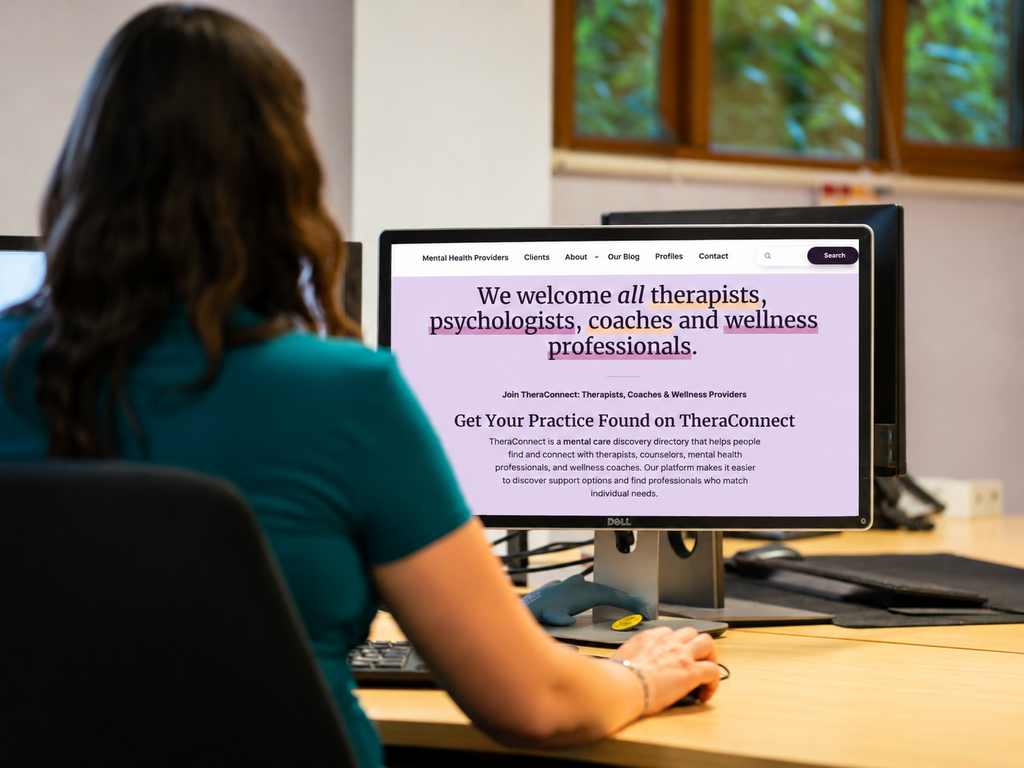
At TheraConnect, thoughtful provider vetting and meaningful matching are designed to make that first step feel more manageable. The goal is not to reduce therapy to a checklist. It is to give clients a trustworthy place to begin and give qualified providers a way to connect with people seeking the care they offer.
Credentialing may happen behind the scenes, but its purpose is personal: helping people enter therapy with more clarity, safety, and confidence. When qualifications are verified and expectations are transparent, there is more room for the conversation that matters most – what you need, what you hope will change, and who can help you get there.
Your Expertise Deserves to Be Found.
People are searching for support. Make it easier for them to discover you.
Leave a Reply