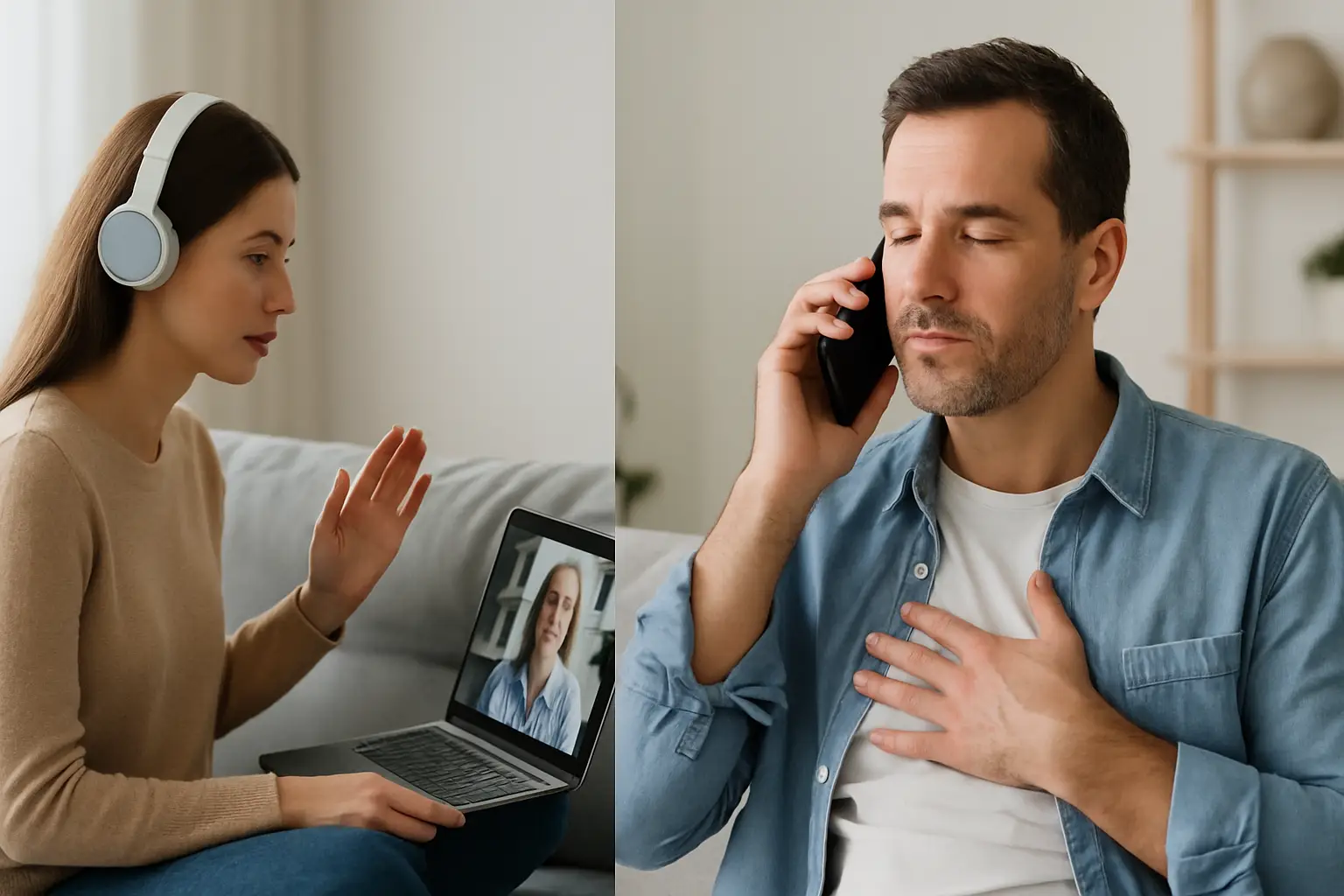
You finally get a quiet hour on your calendar, you are ready to talk, and then the practical question hits: should you meet by video or just pick up the phone? When you are already carrying stress, anxiety, grief, or burnout, the last thing you need is a confusing decision.
Both options are real therapy. Both can be effective. The difference is less about which one is “better” and more about which one makes it easier for you to show up consistently and feel safe enough to be honest.
Teletherapy vs phone therapy: what each one really is
Teletherapy usually means therapy over secure video, where you and your therapist can see and hear each other. It may also include secure messaging, but most people mean live video sessions when they say “teletherapy.”
Phone therapy is therapy delivered through an audio-only call. It can happen on a regular phone line or through an app-based call, depending on the provider’s setup.
In both cases, you are working with a licensed professional using the same clinical skills they use in an office: assessment, goal-setting, evidence-based approaches (like CBT, DBT skills, ACT, trauma-informed care), and the relationship that makes therapy work. The format changes the environment, not the core work.
What tends to feel different in the room (even when there is no room)
Video creates more of an “in-person” feel. You can read facial expressions, posture, and small shifts in emotion. For some people, that helps them feel understood faster. For others, being seen can feel intense, especially early on, or when talking about shame, trauma, or relationship conflict.
Phone therapy often feels lower-pressure. Many clients report they open up more quickly when they are not on camera. If you are someone who worries about how you look when you cry, or you get self-conscious watching yourself on-screen, audio-only can remove a big barrier.
Neither reaction is unusual. The best format is the one that helps you stay present instead of performing.
Privacy and confidentiality: where each format shines and where it can get tricky
Privacy is not just about encryption. It is also about where you physically are during sessions.
With teletherapy, you may need a private space where you can speak freely and keep your screen away from roommates, partners, kids, or coworkers. Headphones help. So does sitting with your back to a wall. But video can be harder to pull off if you live in a small space or you are often on the go.
Phone therapy can be easier to make private because you can take a walk, sit in your car, or talk from a quiet corner without worrying about a camera angle. That said, moving around can increase the risk of interruptions. If you choose phone sessions, it helps to decide ahead of time where you will be, how you will keep the conversation from being overheard, and what you will do if someone walks in.
A practical middle ground many people use: schedule therapy when the home is quiet, use headphones, and tell the people around you that you are unavailable for that time – even if you are “just on a call.”
Technology and accessibility: the hidden decision-maker
If your internet drops, your session drops. That reality shapes a lot of people’s experiences with teletherapy.
Video usually requires a stable connection, a device with a working camera, and comfort with troubleshooting basic tech. If you live in an area with unreliable Wi-Fi, share bandwidth with family, or feel stressed by apps and settings, teletherapy can start to feel like an obstacle course.
Phone therapy is typically more forgiving. Audio needs less bandwidth, and even a basic phone can work. That makes phone sessions a strong option if you travel often, have limited data, or need something dependable.
Accessibility also includes disability and neurodiversity needs. Some clients with social anxiety, PTSD hypervigilance, or autism find phone sessions easier because they reduce sensory and social demands. Others find video helpful because they can read cues and feel more grounded.
Connection and rapport: does seeing your therapist matter?
Therapy outcomes depend heavily on the therapeutic alliance – your sense that your therapist “gets it,” takes you seriously, and is working with you toward goals you care about.
Video can strengthen that alliance quickly because nonverbal communication is richer. A therapist can notice your expression change when you mention a parent, or your shoulders tense when you talk about work. Those details can guide the conversation in a way that feels supportive and precise.
Phone therapy can absolutely create strong rapport too, just through different cues. Tone, pacing, silence, and the words you choose carry more weight. Some people actually feel more attuned on the phone because they are not distracted by facial expressions, eye contact, or the temptation to multitask.
If you are worried you will not “connect” without video, try reframing: connection is not a camera feature. It is consistency, trust, and the therapist’s skill.
What works best for different goals and situations
Your needs may change over time, and that is normal. The “right” choice can shift depending on what you are working on.
If you are starting therapy for the first time, teletherapy can feel more orienting. It resembles an office visit and can help you build familiarity. If you are highly anxious about being judged, phone therapy can be a gentler entry point.
If you are doing trauma work, it depends. Some people feel safer with video because they can see a calm, steady therapist and use grounding exercises together. Others do better with phone because eye contact and being observed can trigger shutdown or dissociation. A trauma-informed therapist can help you test what feels stabilizing.
If your therapy includes skills practice, video sometimes helps. For example, a therapist might guide breathing, progressive muscle relaxation, or mindfulness and notice if you are tensing or holding your breath. But phone therapy can still work well here if you describe what you are experiencing and your therapist gives clear prompts.
For relationship counseling, video is usually the better fit because communication patterns are easier to observe. Some couples still use phone successfully, but it can be harder for the therapist to track dynamics when voices overlap.
Cost, scheduling, and consistency: the factors that make therapy actually happen
Most people do not stop therapy because it is not helpful. They stop because it becomes too hard to fit into life.
Phone therapy tends to win on convenience. It is easier to do from a car between shifts, during a lunch break, or while traveling. That flexibility can be the difference between weekly support and “I will reschedule next month.”
Teletherapy can require a more controlled setup: a stable internet connection, a quiet space, and a predictable time. But for clients who need structure, that setup can be a feature, not a drawback. It creates a ritual: sit down, close the door, and focus.
If budget is part of the equation, ask directly about fees for different formats. Some clinicians charge the same for video and phone because the clinical work is the same. Others price differently. Transparent pricing and scheduling options matter, especially if you are planning for longer-term care.
Safety and crisis considerations
Remote therapy can still be safe and effective, but the plan needs to be clear.
With either video or phone therapy, your therapist should confirm your location at the start of sessions and discuss what to do in an emergency. If you have active suicidal thoughts, severe self-harm urges, or a situation involving immediate danger, audio-only may feel less containing, while video can offer more real-time assessment. But the biggest safety factor is not the format – it is whether you have a solid plan and the right level of care.
If you are in crisis or think you might be, be upfront when you schedule and at the start of the session. That helps your therapist support you appropriately.
How to choose between teletherapy and phone therapy (without overthinking it)
Start with the question that matters most: what is most likely to help you show up and talk honestly each week?
If privacy is hard where you live, phone therapy may be the easiest. If you want to feel more connected and grounded by seeing your therapist, teletherapy may be better. If you are tech-stressed or have unreliable internet, phone may reduce friction. If you tend to dissociate or feel unreal when you are anxious, video might help you stay anchored.
You can also choose a flexible approach. Many clients begin with video to build familiarity, then switch to phone when life gets busy, or alternate based on what they are working on that week.
One practical move: ask for a short trial period. Commit to three sessions in one format, then reassess with your therapist. You do not need to make a forever decision before you have any data.
If you are still searching for a therapist who offers the format you want at a price you can manage, a matching platform can reduce the back-and-forth. For example, TheraConnect helps clients find vetted providers and filter for fit, including telehealth options, so you can spend less time hunting and more time getting support.
What to ask a therapist before you decide
A good therapist will not pressure you. They will help you choose what supports your goals.
Ask how they handle privacy and secure communication, what platform they use for video, and what happens if the connection drops. Ask whether they can switch between video and phone if your needs change. If you have a specific concern – like social anxiety, panic attacks, or trauma triggers related to being seen – say it plainly. The answer you get will tell you a lot about their flexibility and clinical judgment.
The most reassuring truth here is simple: you are allowed to optimize for what makes therapy doable. If phone sessions help you start, that is a strong choice. If video helps you feel held and understood, that is a strong choice too. Your job is not to pick the “perfect” format – it is to pick the one that helps you keep coming back to yourself, week after week.
Your Expertise Deserves to Be Found.
People are searching for support. Make it easier for them to discover you.
Leave a Reply