
Blog

  • The AI Therapist Will See You Now: Can Chatbots Really Improve Mental Health?

    The AI Therapist Will See You Now: Can Chatbots Really Improve Mental Health?

    Recently, I found myself pouring my heart out, not to a human, but to a chatbot named Wysa on my phone. It nodded – virtually – asked me how I was feeling, and gently suggested trying breathing exercises.

    As a neuroscientist, I couldn’t help but wonder: Was I actually feeling better, or was I just being expertly redirected by a well-trained algorithm? Could a string of code really help calm a storm of emotions?

    Artificial intelligence-powered mental health tools are becoming increasingly popular – and increasingly persuasive. But beneath their soothing prompts lie important questions: How effective are these tools? What do we really know about how they work? And what are we giving up in exchange for convenience?

    Of course, it’s an exciting moment for digital mental health. But understanding the trade-offs and limitations of AI-based care is crucial.

    Stand-in Meditation and Therapy Apps and Bots

    AI-based therapy is a relatively new player in the digital therapy field. But the U.S. mental health app market has been booming for the past few years, from apps with free tools that text you back to premium versions with an added feature that gives prompts for breathing exercises.

    Headspace and Calm are two of the most well-known meditation and mindfulness apps, offering guided meditations, bedtime stories, and calming soundscapes to help users relax and sleep better. Talkspace and BetterHelp go a step further, offering actual licensed therapists via chat, video, or voice. The apps Happify and Moodfit aim to boost mood and challenge negative thinking with game-based exercises.

    Give Now and Get a Free e-Book with Insightful Articles on Solving the Housing Crisis

    Support our work

    Somewhere in the middle are chatbot therapists like Wysa and Woebot, using AI to mimic real therapeutic conversations, often rooted in cognitive behavioral therapy. These apps typically offer free basic versions, with paid plans ranging from US$10 to $100 per month for more comprehensive features or access to licensed professionals.

    While not designed specifically for therapy, conversational tools like ChatGPT have sparked curiosity about AI’s emotional intelligence.

    Some users have turned to ChatGPT for mental health advice, with mixed outcomes, including a widely reported case in Belgium where a man died by suicide after months of conversations with a chatbot. Elsewhere, a father is seeking answers after his son was fatally shot by police, alleging that distressing conversations with an AI chatbot may have influenced his son’s mental state. These cases raise ethical questions about the role of AI in sensitive situations.
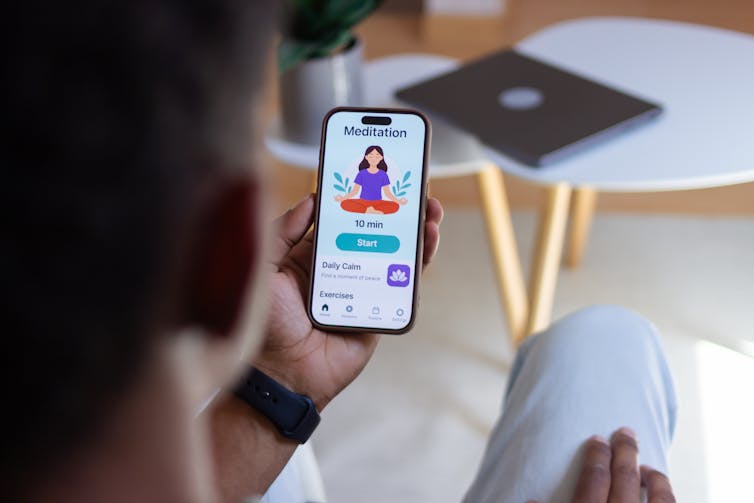
    Back view of a person using a meditation app on a smartphone.
    Guided meditation apps were one of the first forms of digital therapy. IsiMS/E+ via Getty Images

    Where AI Comes in

    Whether your brain is spiraling, sulking, or just needs a nap, there’s a chatbot for that. But can AI really help your brain process complex emotions? Or are people just outsourcing stress to silicon-based support systems that sound empathetic?

    And how exactly does AI therapy work inside our brains?

    Most AI mental health apps promise some flavor of cognitive behavioral therapy, which is basically structured self-talk for your inner chaos. Think of it as Marie Kondo-ing, the Japanese tidying expert known for helping people keep only what “sparks joy.” You identify unhelpful thought patterns like “I’m a failure,” examine them, and decide whether they serve you or just create anxiety.

    But can a chatbot help you rewire your thoughts? Surprisingly, there’s science suggesting it’s possible. Studies have shown that digital forms of talk therapy can reduce symptoms of anxiety and depression, especially for mild to moderate cases. In fact, Woebot has published peer-reviewed research showing reduced depressive symptoms in young adults after just two weeks of chatting.

    These apps are designed to simulate therapeutic interaction, offering empathy, asking guided questions, and walking you through evidence-based tools. The goal is to help with decision-making and self-control, and to help calm the nervous system.

    The neuroscience behind cognitive behavioral therapy is solid: It’s about activating the brain’s executive control centers, helping us shift our attention, challenge automatic thoughts, and regulate our emotions.

    The question is whether a chatbot can reliably replicate that, and whether our brains actually believe it.

    A User’s Experience, and What It Might Mean for the Brain

    “I had a rough week,” a friend told me recently. I asked her to try out a mental health chatbot for a few days. She told me the bot replied with an encouraging emoji and a prompt generated by its algorithm to try a calming strategy tailored to her mood. Then, to her surprise, it helped her sleep better by week’s end.

    As a neuroscientist, I couldn’t help but ask: Which neurons in her brain were kicking in to help her feel calm?

    This isn’t a one-off story. A growing number of user surveys and clinical trials suggest that cognitive behavioral therapy-based chatbot interactions can lead to short-term improvements in mood, focus, and even sleep. In randomized studies, users of mental health apps have reported reduced symptoms of depression and anxiety – outcomes that closely align with how in-person cognitive behavioral therapy influences the brain.

    Several studies show that therapy chatbots can actually help people feel better. In one clinical trial, a chatbot called “Therabot” helped reduce depression and anxiety symptoms by nearly half, similar to what people experience with human therapists. Other research, including a review of over 80 studies, found that AI chatbots are especially helpful for improving mood, reducing stress, and even helping people sleep better. In one study, a chatbot outperformed a self-help book in boosting mental health after just two weeks.

    While people often report feeling better after using these chatbots, scientists haven’t yet confirmed exactly what’s happening in the brain during those interactions. In other words, we know they work for many people, but we’re still learning how and why.AI chatbots don’t cost what a human therapist costs – and they’re available 24/7.

    Red Flags and Risks

    Apps like Wysa have earned FDA Breakthrough Device designation, a status that fast-tracks promising technologies for serious conditions, suggesting they may offer real clinical benefit. Woebot, similarly, runs randomized clinical trials showing improved depression and anxiety symptoms in new moms and college students.

    While many mental health apps boast labels like “clinically validated” or “FDA approved,” those claims are often unverified. A review of top apps found that most made bold claims, but fewer than 22% cited actual scientific studies to back them up.

    In addition, chatbots collect sensitive information about your mood metrics, triggers, and personal stories. What if that data winds up in third-party hands, such as advertisers, employers, or hackers, a scenario that has occurred with genetic data? In a 2023 breach, nearly 7 million users of the DNA testing company 23andMe had their DNA and personal details exposed after hackers used previously leaked passwords to break into their accounts. Regulators later fined the company more than $2 million for failing to protect user data.

    Unlike clinicians, bots aren’t bound by counseling ethics or privacy laws regarding medical information. You might be getting a form of cognitive behavioral therapy, but you’re also feeding a database.

    And sure, bots can guide you through breathing exercises or prompt cognitive reappraisal, but when faced with emotional complexity or crisis, they’re often out of their depth. Human therapists tap into nuance, past trauma, empathy, and live feedback loops. Can an algorithm say “I hear you” with genuine understanding? Neuroscience suggests that supportive human connection activates social brain networks that AI can’t reach.

    So while in mild to moderate cases, bot-delivered cognitive behavioral therapy may offer short-term symptom relief, it’s important to be aware of its limitations. For the time being, pairing bots with human care – rather than replacing it – is the safest move.

    Pooja-Shree-Chettiar

    Pooja Shree Chettiar

    Ph.D. Candidate in Medical Sciences, Texas A&M University

  • How to Overcome Your Device Dependency and Manage a Successful Digital Detox by Kelley Cours Anderson and Karen Wallach

    How to Overcome Your Device Dependency and Manage a Successful Digital Detox by Kelley Cours Anderson and Karen Wallach

    Life in the digital world can be rewarding. It’s convenient to order groceries for pickup, share photographs or music, and keep in touch with family and friends, no matter the distance. However, it can also be draining. The feeling of being constantly “on” and productive has driven people to reconsider their balance in the saturated digital world.

    More than 70% of American adults are concerned about how technology affects their mental health and personal relationships. This worry is reinforced by the media, which points to people’s unhealthy habits with social media and phones.

    What to do? There is a fuzzy line between healthy and unhealthy digital consumption. Some folks feel the need to fully disconnect from the digital world to understand this boundary. The idea of digital detoxing is gaining popularity. This practice involves intentionally unplugging from digital technologies in the pursuit of balance and digital well-being. Nearly half of Americans report that they are making a conscious effort to regularly step away from their screens.

    But is this attempt enough? It’s no surprise that 62% of Americans confess to feeling addicted to their devices and the internet. Despite people’s best efforts to unplug and strike a balance, research indicates that digital detoxes often fall short.

    two men in a park grin as one tosses a bean bag
    Getting outside, being with someone else and having fun are all good approaches to disconnecting from the digital world. kali9/E+ via Getty Images

    Digital well-being is subjective. We research technology and consumer behavior. Our recent research studied the digital detox journey, where people take a much-needed break from digital consumption, aiming to uncover what supports or sabotages those seeking digital well-being. Our findings highlighted four key strategies to improve the outcome of this journey toward achieving a healthier digital balance: replacement practices, social bonds, mindfulness, and digital well-being as a journey.

    1. Finding Replacement Practices

    We found that feelings of withdrawal during a digital detox are quite common. For many, reaching for their phones and scrolling has become such a ritual that they often don’t realize they are doing it. Many turn to their devices when bored or stressed, much like an adult pacifier. As a result, finding an alternative to distract your mind and occupy your hands can be crucial during a digital detox.

    These replacement practices often involve hobbies or activities that result in play. As adults, people sometimes forget what it feels like to have fun. By separating fun from your task list and engaging in play for its own sake, you can significantly reduce stress levels and boost your digital well-being.

    2. Shoring up Social Bonds

    Humans are inherently social creatures. Indeed, tools such as email, text messages, and social media offer ways to enhance social connections. This innate desire for connection, however, combined with people’s reliance on technology, can lead to feelings of FOMO – fear of missing out – and anxiety during a digital detox.

    The average adult now spends 70% less time with friends than they did two decades ago. Digital devices offer connection, but pieces of the experience are missing, such as the joy of in-person contact and trust in others that can be difficult to get online. So while we’re a more connected society, relationships suffer, and people are more lonely than ever.

    Therefore, during a digital detox, it is vital to fill your cup with community, whether through existing friendships or by creating new ones. We recommend engaging in a digital detox alongside others, because FOMO may rear its ugly head if your friend pulls out their phone during a night out. Taking a short digital detox with the Offline Club.

    3. Emphasizing Mindfulness

    In today’s fast-paced environment, finding a moment to pause can feel nearly impossible. Many experience solitude deprivation, meaning people often don’t have moments to be alone with their own thoughts. Yet, the ability to just be can allow time for reflection, helping you consider what makes you happy and healthy. Finding moments where you can step away – to be still and silent – can provide a much-needed recharge.

    With adults spending about 90% of their time indoors, breaking the routine and heading outside can offer a more holistic perspective on both personal and global well-being. In our study, yoga and meditation were common ways that detoxers found moments to become more aware of their own thoughts, which helped foster more intentional behaviors.

    4. Viewing Digital Well-being as an Ongoing Journey

    Ultimately, digital well-being is a journey. It is not a checklist that, once completed, means you are fulfilled.

    Unfortunately, a single detox isn’t enough to cure digital imbalance. Instead, a successful detox often leaves people feeling introspective and curious. Our research participants shared that relapses are common, especially if they don’t set and monitor ongoing goals. Importantly, your needs change and evolve over time. In other words, what works now might not be what you need in the future.

    Willpower just isn’t enough. We recommend identifying specific goals for yourself related to your own digital well-being. These aren’t productivity goals but goals to be unproductive. The aim is to unplug in more fulfilling ways. Whether planning a weekly game night with friends or taking a 10-minute walk without your phone, making time to unplug is worth it in the long run.

    Researchers still have more to learn to help support digital wellness. We should remember, though, that individual differences play a crucial role in this equation, meaning that the journey to achieving digital harmony is uniquely personal. Thus, as people navigate their tech-saturated lives, it’s clear that finding the right balance is a complex, highly individualized process.

    The digital detox journey can be challenging, but many people discover it to be rewarding in the end. People are not machines, however, so recognizing your limits and finding ways to reconnect with yourself and others during a detox can significantly enhance your sense of humanity and digital well-being.

    Kelly Cours Anderson

    Kelley Cours Anderson

    Karen-Anne-Wallach

    Karen Anne Wallach

  • 7 Signs You’re In a Healthy, Non-Narcissistic Relationship

    7 Signs You’re In a Healthy, Non-Narcissistic Relationship

    After a history of complex or toxic relationships, it can be hard to know what a truly healthy partnership looks like. You might find yourself questioning every interaction, wondering if you’re overthinking things, or just waiting for the other shoe to drop.

    The truth is, healthy relationships aren’t defined by grand gestures or constant drama. They’re built on a foundation of respect, trust, and mutual support. If you’re wondering what a healthy relationship really feels like, here are seven clear signs that you’re in one.

    1. You Feel Emotionally Safe

    In a non-narcissistic relationship, you don’t have to walk on eggshells. You can express your feelings—good or bad—without fear of ridicule, gaslighting, or explosive reactions. Your partner listens to you, validates your emotions, and makes you feel heard, even when they disagree with you. You know that it’s okay to be vulnerable.

    2. They Take Responsibility for Their Actions

    When they make a mistake, they own it. They don’t blame you, make excuses, or try to shift the focus. Instead, they apologize sincerely, take steps to correct their behavior, and work to rebuild your trust. This shows maturity and a genuine desire to do better.

    3. Your Opinions Are Respected

    A healthy partner treats you as an equal. They value your thoughts and opinions and are genuinely interested in hearing your perspective. You’re part of a team, and decisions are made through collaboration and compromise, not through one person’s demands.

    4. You Have Your Own Space and Identity

    In a healthy relationship, you are encouraged to maintain your own hobbies, friendships, and interests. Your partner doesn’t try to isolate you or make your life revolve solely around them. They celebrate your independence and want you to thrive as an individual.

    5. You Feel a Sense of Calm

    One of the most noticeable differences in a non-narcissistic relationship is the lack of constant chaos. There isn’t an ongoing cycle of love-bombing, devaluation, and discard. Instead, you feel a sense of stability and peace. This calm allows you to relax and be yourself truly.

    6. Your Partner Celebrates Your Successes

    A supportive partner is your biggest cheerleader. They are genuinely happy for your achievements and milestones, big or small. You don’t feel a sense of competition or jealousy from them; instead, you feel their pride and encouragement.

    7. Empathy is a Two-Way Street

    Genuine empathy is the cornerstone of any healthy relationship. It’s about being able to understand and share the feelings of another. In a non-narcissistic relationship, your partner shows you empathy, and you show it to them. It’s a mutual exchange that deepens your connection and ensures both of your emotional needs are being met.

    If you recognize these signs in your own partnership, you’re on the right track. A healthy relationship is one where you feel seen, valued, and respected.

  • 🤝 When to Seek Therapy with TheraConnect

    🤝 When to Seek Therapy with TheraConnect

    Seeing a therapist is a proactive step toward well-being, not just a reaction to a crisis. At TheraConnect, we believe it’s time to connect with a professional when challenges start to affect your daily life, happiness, and ability to function, or when you simply want to invest in personal growth.

    Here are the key indicators that you would benefit from beginning your journey with a TheraConnect professional:


    🚨 When Daily Life is Impacted

    It’s time to connect when your emotional or mental state begins to interfere with your core responsibilities and well-being:

    • Changes in Function: You experience significant, persistent changes in appetite or sleep patterns (e.g., chronic insomnia, oversleeping, or major shifts in eating).
    • Work and School Performance: Your mood (anxiety, depression, persistent stress) is actively lowering your effectiveness and productivity in your job or education.
    • Unhealthy Coping: You’re frequently resorting to coping mechanisms that are introducing new problems (e.g., excessive substance use, overeating, or constantly avoiding responsibilities).
    • Loss of Interest: You have lost the desire to engage in activities you used to find pleasurable—a common sign that your mental health needs attention.

    🧱 When You Need Skills and Support

    Therapy is essential for building robust skills and navigating difficult transitions:

    • Difficulty Regulating Emotions: You are struggling to manage intense or uncomfortable emotions like anger, stress, or anxiety, and they often feel overwhelming or uncontrollable.
    • Major Life Transitions: You are going through significant changes (e.g., job loss, divorce, relocation, becoming a parent) and need support, guidance, and tools to adapt.
    • Processing Trauma: You need help processing the emotional fallout of a traumatic event and want to reduce its long-term impact.
    • Relationship Challenges: You are struggling to set boundaries, maintain healthy relationships, or continually find yourself in the same problematic relationship patterns.

    🌱 When You Seek Growth

    You don’t need to be in crisis to seek therapy. Many TheraConnect clients use sessions for growth and optimization:

    • Self-Awareness: You want to uncover underlying behavioral patterns or self-limiting beliefs that are holding you back from achieving your goals.
    • Goal Achievement: You are struggling with motivation, perfectionism, or self-sabotage and need a professional to help you bridge the gap between where you are and where you want to be.
    • Seeking Happiness: You feel that while nothing is actively “wrong,” you are not as happy as you could be, and you want to proactively improve your quality of life.

    If you’re on the fence, consider therapy an investment in becoming the best version of yourself. Connect with a TheraConnect professional today.

  • Decoding the Narcissist: Why They’re Nice & Then Mean

    Decoding the Narcissist: Why They’re Nice & Then Mean

    Navigating a relationship with a narcissist can feel like an emotional rollercoaster. One moment, they’re charming, attentive, and incredibly kind. Next, they can be cold, critical, or even cruel. This confusing, hot-and-cold behavior—often referred to as a “Jekyll and Hyde” dynamic—leaves you feeling dizzy and questioning your own reality.

    Understanding why this happens is the first step toward finding clarity and emotional safety.

    1. The Need for Narcissistic Supply

    A narcissist’s entire self-worth is dependent on external validation, or what’s known as narcissistic supply. This can come in the form of admiration, attention, or control. When they are being “nice,” they are actively charming you to secure this supply. They may love-bomb you with compliments and grand gestures to ensure you remain a source of their self-esteem.

    However, when they feel their supply is threatened—either because you are focusing on yourself, expressing a different opinion, or simply not giving them the attention they crave—they may quickly switch to being “mean.” This is a tactic to provoke a reaction and regain control of the situation and of you.

    2. A Fragile and Deflated Ego

    Behind the mask of superiority lies a profoundly fragile ego. A narcissist’s self-esteem is not solid; it’s like a balloon that needs constant air. The slightest criticism, a perceived insult, or even a simple disagreement can cause their ego to deflate.

    When this happens, they often lash out with anger and cruelty. This behavior isn’t really about you; it’s a defensive reaction to protect their vulnerable self-image. Their “mean” side is the real, insecure self they work so hard to hide.

    3. Empathy as a Tool for Manipulation

    As noted in a previous document, covert narcissists, like other types of narcissists, generally struggle with genuine empathy. While they may act caring, this is often a superficial and strategic display. Their “empathy” is conditional—they might show concern when it benefits them, helps them maintain a desired image, or serves as a tool for manipulation. This can make their sporadic acts of kindness feel especially confusing. They may use a display of caring to keep you emotionally invested, even after a cruel episode.

    4. The Power of Emotional Manipulation

    The nice-and-mean cycle is a powerful form of emotional manipulation. It keeps you off-balance and in a constant state of confusion. You become addicted to the “nice” moments, always holding out hope for a return to the person you first met. This intermittent reinforcement makes it incredibly difficult to break away from the relationship. When they are kind, you may forget the pain they caused, and when they are cruel, you may feel an urge to fix things to get back to the “good” times.

    5. A Lack of Object Permanence

    Narcissists may lack emotional object permanence, which is the ability to maintain a positive emotional connection to someone when they are not physically present or actively meeting their needs. To put it simply, if you are not in their direct line of sight or fulfilling their immediate desires, you may cease to exist positively for them. This can be why their mood and attitude toward you can change so drastically when you’re apart.

    If you are experiencing this kind of behavior, remember that it’s not a reflection of your worth. It’s a core component of how a narcissist’s mind operates.

    It is essential to get space from your abuser. Be sure to document the events as they happened, rather than how your abuser tells you they happened. Record text messages, voice messages, emails, audio or video recordings (if your state’s laws allow it) that can help you remember the facts in case of brain fog, instead of subscribing to distortions and delusions from the narc .

    Seek help from a third party, such as a trauma therapist, and go through incidents of abuse together to substantiate what you have experienced. Clever narcissists can try to rewrite your reality, but you don’t have to let then control the narrative.

    Follow us on Facebook for more details.

  • Narcissism: Key Signs to Recognize in Others and Yourself

    Narcissism: Key Signs to Recognize in Others and Yourself

    Narcissism is a term that is frequently used, often in heated arguments or when interacting with challenging personalities. But what does it mean, and how can you tell if someone in your life (or even you) shows narcissistic traits?

    Contrary to popular belief, narcissism exists on a spectrum. Not every self-centered person has narcissistic personality disorder (NPD), but chronic patterns of manipulation, entitlement, or lack of empathy can signal deeper issues. Understanding these traits can help you protect your boundaries and foster greater honesty and self-awareness.


    What Is Narcissism, Really?

    At its core, narcissism involves an inflated sense of self-importance, a deep need for admiration, and a lack of empathy for others (American Psychiatric Association, 2013). While healthy self-confidence is good, narcissistic traits cross the line into emotional harm, especially when they affect relationships.

    There are two primary forms of narcissism:

    • Grandiose narcissism: Exhibited through arrogance, dominance, and attention-seeking behavior.
    • Vulnerable narcissism: Characterized by hypersensitivity, insecurity, and passive-aggressive tendencies.

    Many people show some narcissistic traits—especially in times of stress or insecurity. The issue arises when these traits become chronic and toxic.


    Common Signs of Narcissism in Others

    Here are red flags to look for in friends, family, or partners:

    1. They dominate conversations.

    They rarely listen unless it’s about them, and tend to steer the topic back to themselves.

    2. They lack empathy.

    They dismiss your feelings or struggles, often reacting with indifference or irritation.

    3. They manipulate through guilt or charm.

    Whether it’s love-bombing or gaslighting, narcissists often use emotional tactics to control others (Campbell & Foster, 2007).

    4. They can’t take criticism.

    Even gentle feedback may be met with rage, denial, or blame-shifting.

    5. They crave constant admiration.

    They may fish for compliments, compare themselves to others, or exaggerate accomplishments.

    6. They blame others for their mistakes.

    Narcissists struggle to take responsibility and often create a narrative where they’re the victim or hero.

    7. They exploit relationships.

    They may use people to meet their needs, often without guilt or remorse.


    Signs You Might Be Struggling With Narcissistic Traits

    Self-reflection is challenging, but it’s one of the most effective steps toward personal growth. Here’s what to look for in yourself:

    • You react defensively to criticism, even when it’s constructive.
    • You struggle to feel genuine happiness for others’ successes.
    • You secretly believe you’re “better” or more deserving than most.
    • You often need external validation to feel “enough.”
    • You manipulate situations to maintain control or superiority.

    If these patterns sound familiar, it doesn’t mean you have NPD, but it may be a sign to explore deeper with the help of a therapist.


    Why People Become Narcissistic

    Narcissistic traits often stem from childhood environments, particularly those characterized by inconsistent validation, excessive praise, or emotional neglect (Millon et al., 2004). In some cases, narcissism is a coping mechanism to mask deep-rooted feelings of inadequacy.


    What to Do if Narcissism Is Affecting Your Life

    If it’s someone else:

    • Set clear boundaries and stick to them.
    • Limit emotional dependence on that person for approval or support.
    • Consider distancing yourself if the relationship is chronically abusive or draining.

    If it’s yourself:

    • Practice radical self-honesty. Be willing to admit patterns that aren’t serving you or others.
    • Develop empathy intentionally—by listening more, judging less, and validating others’ experiences.
    • Seek professional support. Therapy, particularly cognitive-behavioral therapy (CBT) or schema therapy, can help you unpack patterns and build healthier self-esteem.

    Final Thoughts

    Narcissistic traits don’t make someone “bad”—but unchecked narcissism can erode trust, empathy, and connection. Whether you’re recognizing it in someone else or acknowledging it in yourself, the most crucial step is awareness.

    Because once you can name it, you can begin to change it.


    References

    • American Psychiatric Association. (2013). Diagnostic and statistical manual of mental disorders (5th ed.).
    • Campbell, W. K., & Foster, C. A. (2007). The narcissistic self: Background, an extended agency model, and ongoing controversies. In C. Sedikides & S. Spencer (Eds.), Frontiers in social psychology: The self. Psychology Press.
    • Millon, T., Grossman, S., Meagher, S., Millon, C., & Ramnath, R. (2004). Personality Disorders in Modern Life (2nd ed.). John Wiley & Sons.

    “Minna Lyons, a former winner of the Ig Nobel Prize, a research award that ‘first makes people laugh, and then makes them think,’ ran a study to find out if narcissism is linked to estimates of head size. Along with her colleagues from the Universities of Liverpool and Sunderland, Lyons recruited over 300 male and female volunteers.”

    Yes, you read that right. The narcissist says they have a bigger head than the rest of us. The Deciphering Covert and Grandiose Narcissists says her lungs are bigger. The study also showed that people who stay up much later than the rest of us also ranked higher on the narcissist scale.

    We are not saying that if someone says they have a big head and stays up later, they are true of that crowd. We advise watching for the red flags, and if you notice these tendencies, then take action!

    • Sense of self-importance
    • Preoccupation with power, beauty, or success
    • Entitled
    • Can only be around people who are important or special
    • Interpersonally exploitative for their own gain
    • Arrogant
    • Lack empathy
    • Must be admired
    • Envious of others or believe that others are envious of them
  • You make decisions quicker and based on less information than you think By Nadav Klein

    You make decisions quicker and based on less information than you think By Nadav Klein

    We live in an age of information. In theory, we can learn everything about anyone or anything at the touch of a button. All this information should allow us to make super-informed, data-driven decisions all the time.

    But the widespread availability of information does not mean that you actually use it even if you have it. In fact, decades of research in psychology and behavioral science find that people readily make data-poor snap judgments in a variety of instances. People form lasting impressions of others in the span of milliseconds, evaluators judge teachers in less than a minute and consumers make shopping decisions based on little deliberation. Even voting decisions can seemingly be predicted from preliminary impressions formed during incredibly brief time periods.

    If these findings seem remarkable to you, recent research by my colleague and me suggests that you are not alone. The immediacy of human judgment generally surprises people. Individuals fail to anticipate how little information they and others use when making decisions.

    And this disconnect can have implications in daily life: After all, recognizing how much – or little – information people actually use to make judgments and decisions could influence how much you try to share with others. A job candidate should have a sense of how much of her resume prospective employers will actually read so she can prioritize her efforts accordingly.

    And it would help when you’re deciding how much information to acquire when making your own decisions. How long should you try out a subscription service before deciding whether you like it enough to pay? How much time should you date a love interest before deciding to tie the knot?

    File 20181210 76965 4sqgad.jpg?ixlib=rb 4.1
    You probably believe you take a ton of research into account before you make a big choice … but you probably don’t. Akira Kaelyn/Shutterstock.com

    Comparing predictions and reality

    In our research, my co-author Ed O’Brien and I tested whether people can correctly anticipate how much information they and others use when making varied judgments. We consistently found that people were surprised by how quickly they make judgments and how little information they use doing so.

    In one study, we asked participants to imagine having pleasant or unpleasant interactions with another person. In comparison, we asked another group of participants to predict how many of those interactions they would need to experience to determine someone’s character. We found that people believed they would need many interactions to make this judgment, when in fact the first group needed few.

    In another study, we asked MBA students to write applications for hypothetical management positions, and then asked actual HR people to read their materials. Our applicants wrote and shared much more material than the hiring professionals cared to read.

    We also asked people who have never been married to predict how long, after meeting their future spouse, it would take them to decide that this person is “the one.” Fully 39 percent of these never-marrieds thought they would need to date this person more than year before they’d feel ready to spend the rest of their lives with him or her. In contrast, married people reported having made this judgment much more quickly, with only 18 percent stating that it took them more than a year to do so.

    Similar mispredictions occur when evaluating subscription services based on trial periods, tasting novel beverages, and evaluating streaks of luck, athletic performances and academic grades. In all cases, people believed they would use more information than they actually did.

    Misunderstanding this human tendency

    There are several reasons why people might have the wrong impression about how quickly they and others make judgments.

    One possibility is a belief that the human mind processes information incrementally. A naive perspective might imagine that new information stacks on top of old information until some mental threshold is reached for making a decision. In reality, however, preliminary research suggests that information aggregation is much closer to an exponential function; the first few pieces of information are weighted much more heavily than later information.

    Another possibility is that people fail to realize how rich and engrossing each separate piece of information is. In psychology, this is called an empathy gap. Consider the question of how many interactions are necessary for you to decide whether you like and trust someone. It may be tempting to believe you’ll rationally evaluate each interaction as you would a dry statistic. But social encounters are vivid and engaging, and the first experience may simply be so absorbing as to tilt your judgment irrevocably, making future interactions unnecessary.

    Recognizing the rush to judgment

    File 20181210 76971 Xdzhwd.jpg?ixlib=rb 4.1
    In plenty of cases, a quick decision is just fine. Raquel Martínez/Unsplash, CC BY

    It’s not clear that quick decisions are always bad. Sometimes snap judgments are remarkably accurate and they can save time. It would be crippling to comb through all the available information on a topic every time a decision must be made. However, misunderstanding how much information we actually use to make our judgments has important implications beyond making good or bad decisions.

    Take the problem of self-fulfilling prophesies. Imagine a situation in which a manager forms a tentative opinion of an employee that then cascades into a series of decisions that affect that employee’s entire career trajectory. A manager who sees an underling make a small misstep in an insignificant project may avoid assigning challenging projects in the future, which in turn would hamstring this employee’s career prospects. If managers are unaware how willing they are to make quick and data-poor initial judgments, they’ll be less likely to nip these self-fulfilling destructive cycles in the bud.

    Another example might be the human tendency to rely on stereotypes when judging other people. Although you may believe that you’ll consider all the information available about another person, people in fact are more likely to consider very little information and let stereotypes creep in. It may be a failure to understand how quickly judgments get made that make it so hard to exclude the influence of stereotyping.

    Modern technology allows virtually any decision made today to be more informed than the same decision made a few decades ago. But the human reliance on quick judgments may forestall this promise. In the quest for more informed decision-making, researchers will need to explore ways to encourage people to slow down the speed of judgment.

    Nadav Klien C

    Nadav Klein is an experimental psychologist working on increasing our understanding of how we judge our own and other people’s actions and character.